

Hemianthus callitrichoides, better known as HC or HC Cuba, is the plant behind many of the lush, bright green lawns you see in award-winning aquascapes. Its tiny round leaves form a dense, creeping carpet that looks like moss on soil. It is also one of the more demanding carpeting plants, so a little knowledge goes a long way.
Here is how to give it the best chance of becoming a proper lawn.
What Is HC Cuba?
HC is a creeping stem plant from Cuba, now often listed as Micranthemum callitrichoides. Each stem is thin and delicate, with tiny leaves that grow densely along it. When conditions are right, it spreads across the substrate as a low, tight carpet. When they are not, it grows leggy and floats up in clumps.
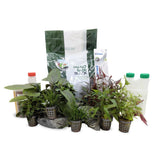
In a tissue culture cup, such as Tropica Micranthemum callitrichoides Cuba 1-2-GROW, it arrives clean, pest-free and easy to divide into many small portions, which is the most economical way to cover a large area. You can read more about this format in our guide to tissue culture plants.
What HC Needs to Thrive
Strong Light
HC grows best under medium to high light. Weak light makes stems stretch upwards, while strong, even light keeps it low and dense. Make sure the light reaches the whole planting area evenly, as patchy light gives a patchy carpet. Our guide to lighting basics explains how to match intensity to your plants.
CO2 Makes a Big Difference
Many people grow HC successfully without CO2, but it is slower and fussier. With injected CO2, it is faster, tighter and much more reliable, which is why most successful carpets use it. If you are considering it, see our guide to aquarium CO2 systems.
A Nutrient-Rich Substrate
HC roots are fine and shallow, so it appreciates a fine-grained, nutrient-rich planted tank substrate and regular liquid feeding from our plant fertilisers range.
From Aqua Essentials
Building a lawn? Browse our carpeting plants, from easy starters to the finest foreground carpets.
Shop carpeting plants →How to Plant HC
Separate the plant into small portions of a few stems each, then plant them with fine-tipped tweezers into the substrate in a grid, a couple of centimetres apart. Push the base in just far enough to hold, and press the substrate gently around it. Using more portions covers the area faster, but you can start sparse and let it spread.
Fill the tank slowly so you do not lift the new plants, and consider a damp planting method, with just a thin layer of water over the substrate, for the first few days. HC often floats up if it is not anchored well, so replant any stray portions straight away.
Trimming and Maintenance
Once the carpet starts to fill in, trim it regularly with curved scissors. Cutting the tops encourages dense, sideways growth and stops the lower layers from being shaded and dying off. Remove the trimmings with a net so they do not root elsewhere or collect in the filter.
Gentle flow across the carpet helps keep debris from settling on it. If you also like shallow tanks, our guide to the best carpeting plants for shallow aquariums suggests other options.
Common Problems
If HC grows tall and stringy, it wants more light. If it floats up in rafts, it has not rooted yet, or there is too much flow or disturbance. Algae on the leaves usually means light, carbon and nutrients are out of balance: reduce the photoperiod and keep up with water changes.
If you want something simpler, there are easier carpeting plants that stay low and spread steadily, and our carpeting plant range includes several to try before moving up to HC.
HC rewards good light, CO2 and patience with one of the most beautiful carpets in the hobby. Have a look around aquaessentials.co.uk, or get in touch if you would like help planning your foreground.