Floating Aquarium Plants — The Easiest Live Plants You Can Add to Any Tank
Floating aquarium plants are the simplest live plants you can add to a freshwater aquarium. There is no substrate to plant into, no CO2 required, and no specialist lighting needed — place them on the water surface and they establish immediately. Despite how easy they are to keep, aquarium floating plants deliver some of the most significant benefits of any plant type in your tank.
Why Add Floating Plants to Your Aquarium?
Floating plants for aquariums work continuously at the water surface — the most nutrient-rich zone in any fish tank. Their dangling roots absorb ammonia, nitrite, and excess nitrates directly from the water, acting as a natural biological filter alongside your mechanical setup. This makes them particularly effective in high-stock tanks and shrimp aquariums where nutrient levels rise quickly.
Beyond filtration, floating plants aquarium keepers value them for natural shade and cover for fish that prefer lower light, dangling root systems that provide ideal habitat for shrimp and juvenile fry, and the way they starve algae of nutrients before it can establish. Labyrinth fish like bettas and gouramis also use floating plants to build bubble nests at the surface — something no potted aquarium plant can provide.
Popular Species in This Collection
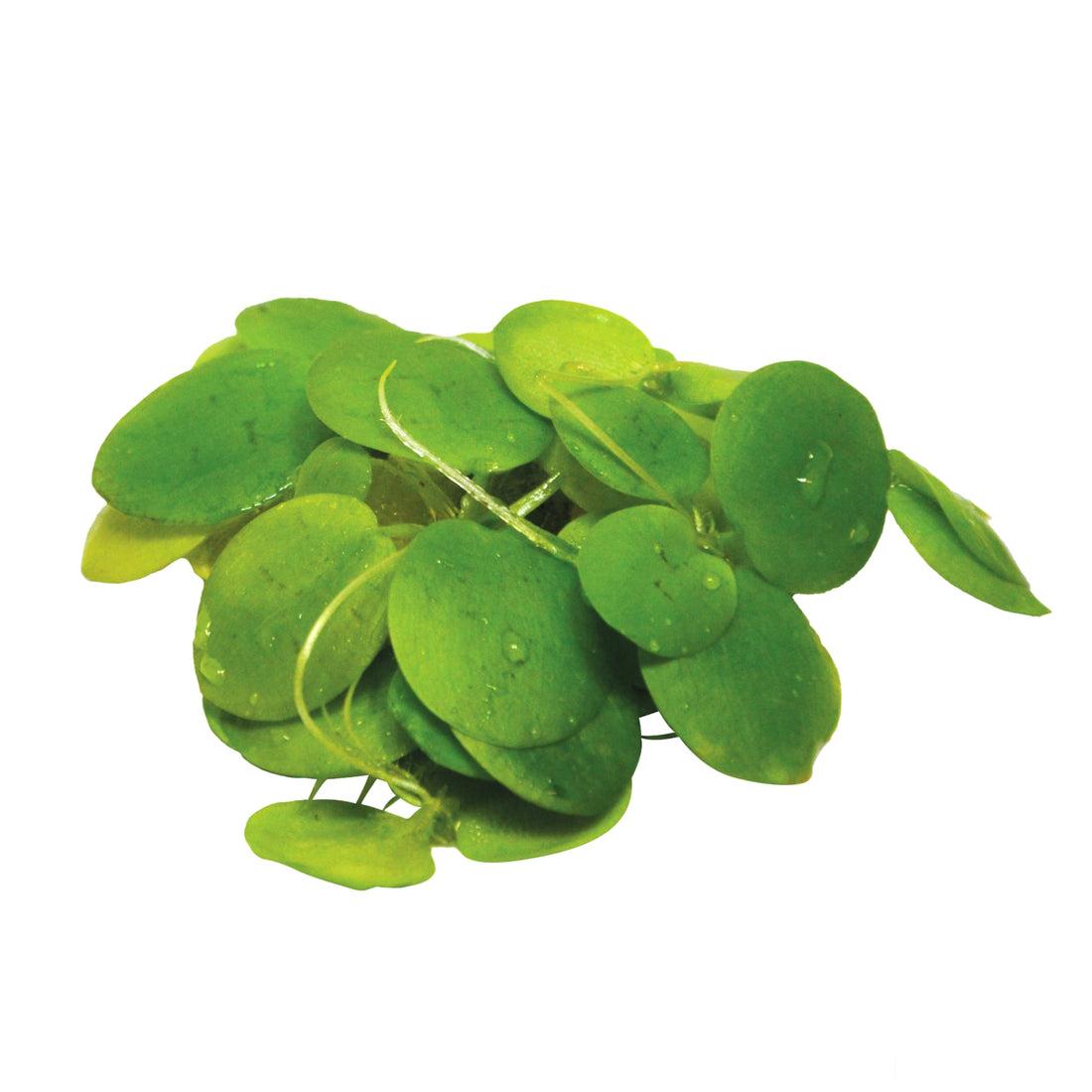
Frogbit (Limnobium laevigatum), Salvinia natans, Water Lettuce (Pistia stratiotes), Red Root Floater (Phyllanthus fluitans), and Duckweed (Lemna minor) are among the most popular floating aquarium plants we stock. Several of these — including Frogbit and Duckweed — also tolerate cooler temperatures, making them a natural crossover with our coldwater aquarium plants collection if you keep goldfish or an unheated tank.
If you are setting up a new aquarium and want a full planted look from day one, our mixed plant bundles include a hand-picked selection of rooted and floating species chosen to work together — a straightforward way to cover every zone of the tank in one order.
Getting the Best Results
Floating plants grow fast. Thin them out regularly before they cover more than half the water surface, to maintain gas exchange and ensure enough light reaches any potted or carpeting plants growing below. In most tanks, a quick scoop with a jug or net every one to two weeks is all the maintenance these plants need.
Each product page details the ideal temperature range, light requirements, and suitability for shrimp and coldwater setups — so you can choose the right species for your aquarium before you buy.