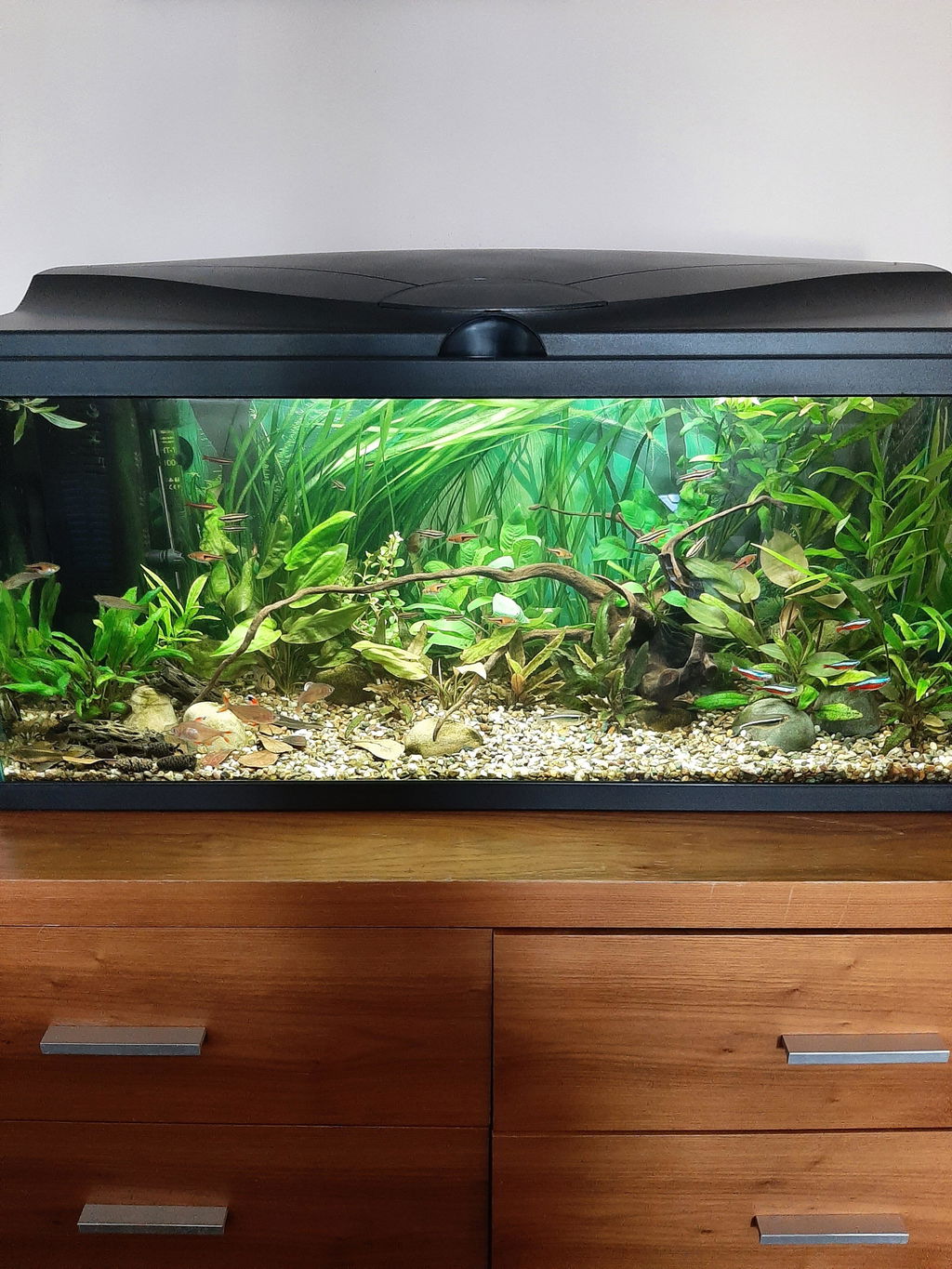


Anubias, Java fern, Amazon sword, Cryptocoryne wendtii and Vallisneria can all grow without injected CO₂. Choose plants that suit your tank size, keep the lighting moderate and feed them consistently, and you can enjoy a healthy planted aquarium without a pressurised CO₂ system.
These are often called low-tech plants. They still need carbon, but can use the carbon naturally available in aquarium water. “No CO₂ required” means no additional CO₂ injection is needed, rather than no carbon at all. Growth will generally be slower than in a well-balanced aquarium with injected CO₂.
This guide helps you choose five reliable plants, shows where to put them and explains the care they still need.
Which aquarium plants grow without injected CO₂?
Start with the space you have. Anubias and Java fern attach to wood or rock, while Amazon sword, Cryptocoryne and Vallisneria root into the substrate.
| Plant | Where to plant | Light | Space to allow |
|---|---|---|---|
| Anubias nana | Wood or rock, foreground to midground | Low to medium | Compact |
| Java fern (Microsorum pteropus) | Wood or rock, midground to background | Low to medium | Allow room for taller leaves |
| Amazon sword (Echinodorus bleheri) | Substrate, background or centrepiece | Medium | Large, up to around 50–60cm |
| Cryptocoryne wendtii Green | Substrate, foreground to midground | Low to medium | Usually around 15–25cm |
| Vallisneria spiralis Red | Substrate, background | Low to medium | Tall ribbon leaves; spreads by runners |
1. Anubias nana

Anubias nana is a dependable starting point if you want broad green leaves without frequent trimming. Its slow growth suits a low-tech aquarium, and it works well around the base of driftwood or between rocks.
How to plant and care for it: Remove the pot and growing medium, then attach the plant to wood or rock. Keep the rhizome, the thick horizontal stem from which leaves and roots emerge, above the substrate. Give it a little shade if algae starts collecting on the older leaves.
2. Java fern (Microsorum pteropus)

Java fern gives a natural, leafy backdrop without needing nutrient-rich soil. It is particularly useful when your aquarium already has sand or gravel and you want to add plants without replacing the substrate.
How to plant and care for it: Attach it to wood or rock and leave its rhizome exposed. New plantlets can develop on mature leaves. Once they have leaves and roots of their own, they can be separated and attached elsewhere.
View Java fern (Microsorum pteropus) →
3. Amazon sword (Echinodorus bleheri)

Choose an Amazon sword when you have room for a substantial centrepiece. Its broad leaves and extensive roots make it better suited to a larger aquarium than a small nano tank. A young potted plant can become much bigger once established.
How to plant and care for it: Remove the pot and growing medium. Plant the roots into the substrate, keeping the crown where the leaves meet the roots above the surface. Use a nutrient-rich substrate or root tabs, following the product instructions.
View Amazon sword (Echinodorus bleheri) →
4. Cryptocoryne wendtii Green

Cryptocoryne wendtii Green is a useful choice for filling the space between smaller foreground plants and taller background planting. Its softly textured leaves create a natural look, and it needs relatively little attention once established.
How to plant and care for it: Plant the roots with the crown exposed and avoid repeatedly moving it. Some older leaves may melt after planting as it adjusts to your water. Remove deteriorating leaves, keep the roots in place and look for healthy new growth.
View Cryptocoryne wendtii Green →
5. Vallisneria spiralis Red

Vallisneria creates a grass-like background with long leaves that move in the current. Once settled, it can produce runners and daughter plants, helping you build a fuller backdrop over time. Colour varies with conditions, so do not expect every leaf to be red.
How to plant and care for it: Plant individual plants with space between them and keep each crown above the substrate. Thin out runners when needed. Avoid liquid carbon with Vallisneria, as it can cause the leaves to melt.
View Vallisneria spiralis Red →
A simple planting combination for beginners
For a straightforward layout, attach Anubias to a small piece of wood near the front, place Java fern behind it and plant Cryptocoryne wendtii in the surrounding substrate. This gives you different leaf shapes and heights without relying on demanding plants.
In a larger aquarium, add an Amazon sword as a centrepiece or Vallisneria along the back. Allow for their mature size and leave open swimming space. Check the needs of your fish before choosing the final layout.
How to care for aquarium plants without injected CO₂
Keep the lighting moderate and consistent
Start with around six hours of aquarium lighting each day on a timer. Stronger lighting and longer days increase demand for carbon and nutrients, so turning the light up is not automatically the answer to slow growth. If your LED is adjustable, begin with a moderate output and make gradual changes based on plant growth and algae.
Feed the leaves and roots appropriately
Low-tech does not mean fertiliser-free. Plants still need nutrients to produce healthy leaves and roots. Anubias and Java fern benefit from nutrients in the water, while rooted plants also benefit from nutrients in the substrate.
Neutro T is our liquid fertiliser for low-tech aquariums. Dose according to the current bottle instructions and maintain a consistent routine. For Amazon sword, Cryptocoryne and Vallisneria in plain sand or gravel, consider root tabs placed as directed.
Understand the difference between fertiliser and liquid carbon
Neutro T is a fertiliser; Neutro CO₂ is a liquid carbon supplement. They serve different purposes. Liquid carbon does not supply CO₂ gas in the same way as a pressurised system and is not required to grow the five plants in this guide.
Our Neutro Combo Low Tech pairs Neutro T with Neutro CO₂ for suitable setups. If you keep Vallisneria, avoid liquid carbon and choose a fertiliser-only routine instead. Always check compatibility with your plants and follow the label dosage.
Keep up with regular maintenance
Change at least 30% of the water each week, remove damaged leaves and clear debris from around the plants. Keep gentle circulation through the planting and avoid repeatedly uprooting plants that are settling in.
Common mistakes to avoid
- Burying the rhizome: keep the thick stem of Anubias and Java fern exposed.
- Leaving plants in their nursery pots: gently remove the pot and growing medium before planting or attaching them.
- Buying a large plant for a small tank: Amazon swords and tall Vallisneria need room to develop.
- Expecting instant growth: allow several weeks for plants to adjust, and judge progress by healthy new leaves.
- Reacting to Crypt melt by throwing the plant away: if the base and roots remain healthy, leave it planted and watch for new growth.
- Increasing lighting to fix every problem: check nutrients, planting depth and general maintenance first.
Frequently asked questions
Can I grow aquarium plants in gravel without CO₂?
Yes. Anubias and Java fern can be attached to wood or rock above the gravel. Rooted plants can grow in suitable gravel too, but plain gravel contains little nutrition, so root feeding is useful alongside appropriate liquid fertilisation.
Which are the easiest plants to start with?
Anubias nana and Java fern are good first choices if you want plants attached to decor. Cryptocoryne wendtii Green is a useful starting point for planting directly into the substrate.
Can I grow a carpet without injected CO₂?
Some lower-demand plants can spread without injection, but a dense carpet is usually slower and less predictable. For an easier first aquarium, focus on healthy foreground, midground and background planting rather than expecting a tight carpet straight away.
Will these plants stop algae?
Healthy planting supports a balanced aquarium, but no plant guarantees an algae-free tank. Consistent feeding, sensible lighting, water changes and manual algae removal all matter.
Choose plants for your low-tech aquarium
Start with plants that fit your tank and the amount of maintenance you want to do. Browse our easy aquarium plants to choose individually, or explore our mixed boxes if you would prefer a ready-selected collection. Check the planting and care requirements of the option you choose.