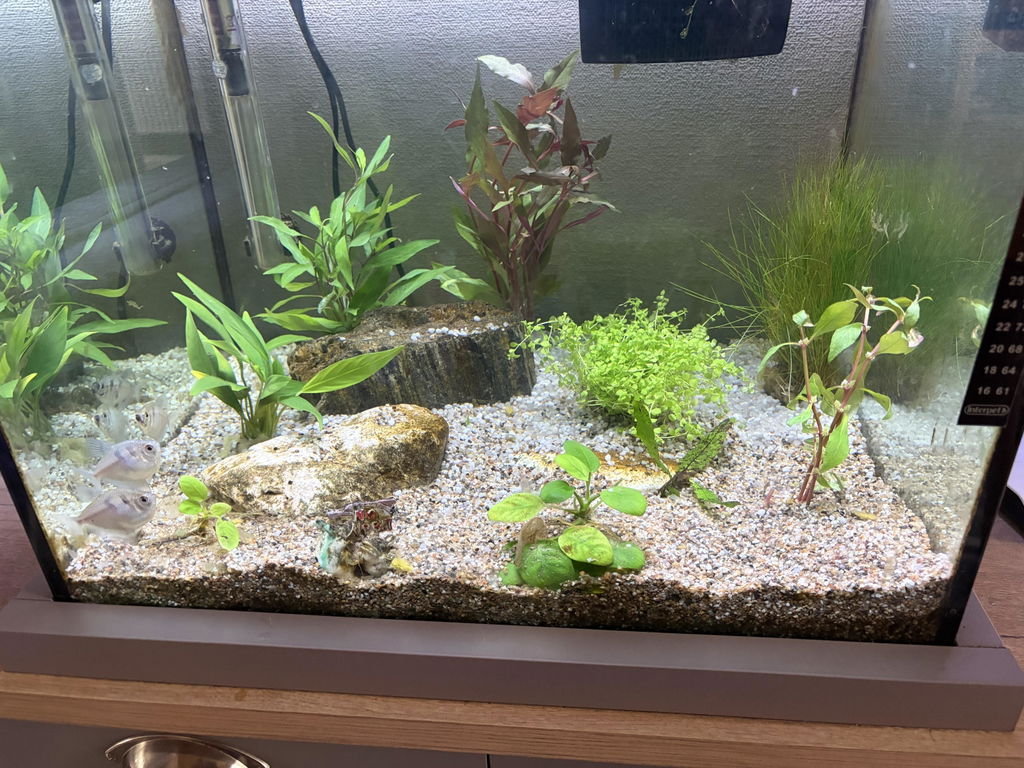


It's one of the most common questions in the planted hobby: should you drag a gravel vacuum through your substrate the way you would in a fish-only tank? For a planted tank the short answer is no — at least not the deep, plunging kind. Here's why, and what to do instead to keep things clean.
Do You Need to Gravel Vacuum a Planted Tank?
In a planted tank, the substrate isn't just decoration — it's a living root zone. Plant roots, beneficial bacteria, and slowly breaking-down organic matter all work together down there to feed your plants. A traditional deep gravel vac, plunged right into the bed every week, tears through all of that.
So the honest answer is: you don't need to deep-vacuum a planted substrate, and doing so usually causes more problems than it solves. You hover over the surface to lift the loose debris that settles on top — you don't dig the vacuum down into the bed.
Why Deep Vacuuming Hurts a Planted Tank
Three things happen when you plunge into planted substrate. You disturb the roots, often lifting carpeting plants and smaller species straight out of the ground. You break up the bacterial colonies living in the substrate that quietly process waste and keep the tank stable. And you release the mulm — the fine organic matter that's been settling around the roots — which clouds the water and, more importantly, throws away a slow-release source of nutrients your plants were feeding on.
In a healthy planted tank, a bit of mulm in the substrate is a good thing, not something to scrub out.
How to Actually Keep Planted Substrate Clean
Keeping a planted substrate clean is about gentle surface maintenance, not deep cleaning:
Hover, don't plunge. During a water change, hold the siphon just above the substrate and let it lift the loose debris sitting on the surface. Move across open areas and around the base of plants without burying the tube.
Let flow do the work. Good circulation keeps fine detritus suspended in the water so your filter catches it, instead of letting it settle and rot in the substrate.
Use a cleanup crew. Shrimp, snails and bottom-feeders like Corydoras constantly graze the surface, breaking down waste before it builds up.
From Aqua Essentials
A gentle Superfish Siphon (£7.99) is ideal for surface cleaning during water changes — enough to lift debris without digging into the bed. You'll find it alongside the rest of our care kit in Aquarium Maintenance.
Shop Maintenance Tools →Gravel Tanks Are a Different Story
If your tank is unplanted gravel, the rules flip. There are no roots to disturb, and waste simply collects and rots down in the gravel. In that case a proper deep gravel vacuum at every water change is exactly right — it's the main way you keep an unplanted tank clean. A Superfish Gravel Cleaner (from £8.99) is the standard tool for the job.
How Often Should You Do It?
For a planted tank, a light surface clean as part of your normal weekly water change is plenty — there's no need to do more. For an unplanted gravel tank, a full gravel vac with each water change keeps waste from accumulating. Either way, consistency beats the occasional deep overhaul.
Common Questions
Do you need to gravel vacuum a planted tank? No — not deeply. Hover the siphon above the substrate to remove loose surface debris, but don't plunge into the bed. The roots, bacteria and mulm down there are part of what keeps a planted tank healthy.
How do you clean the substrate in a planted tank without vacuuming it? Surface-siphon the loose debris during water changes, keep good flow so the filter catches the rest, and let a cleanup crew of shrimp, snails and bottom-feeders graze the surface. That's all a planted substrate needs.
How often should you vacuum a fish tank? Tie it to your water changes — roughly weekly. Planted tanks get a light surface pass; unplanted gravel tanks get a full gravel vac each time.
Should I gravel vacuum an unplanted gravel tank? Yes. With no plant roots involved, debris just rots in the gravel, so a deep gravel vacuum every water change is the right approach there.
What is substrate in a fish tank? It's the material on the bottom of the tank — gravel, sand, or a nutrient-rich planted aquarium substrate. In a planted tank it also acts as the root bed and home for beneficial bacteria, which is exactly why how you clean it matters.