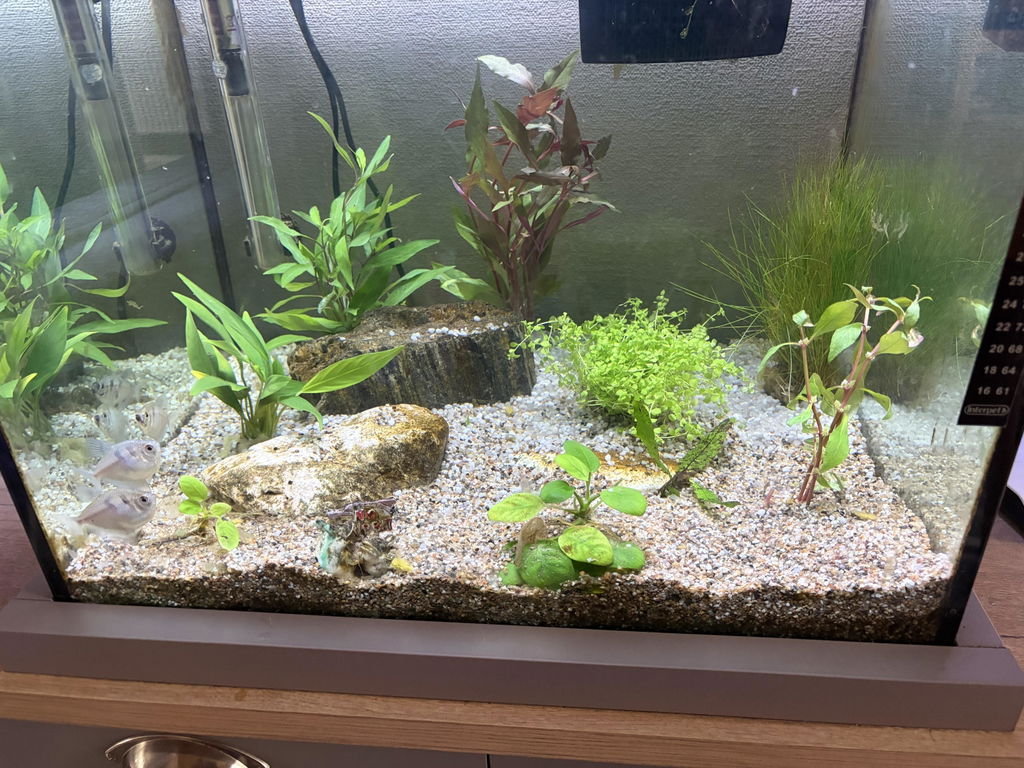


Carpeting plants are one of the most striking things you can do with a planted aquarium. A dense, low green lawn across the substrate transforms a tank — it looks immediately professional, creates depth, and signals that the conditions in the tank are well-balanced.
But it's worth being honest about what carpeting plants require. Most of the classic carpet species are demanding. They grow at substrate level where light is reduced, and they need strong light and stable CO² to spread properly. A few are more forgiving. This guide tells you exactly what each plant needs, so you can choose the right one for your setup.
1. Dwarf Baby Tears (Hemianthus callitrichoides)
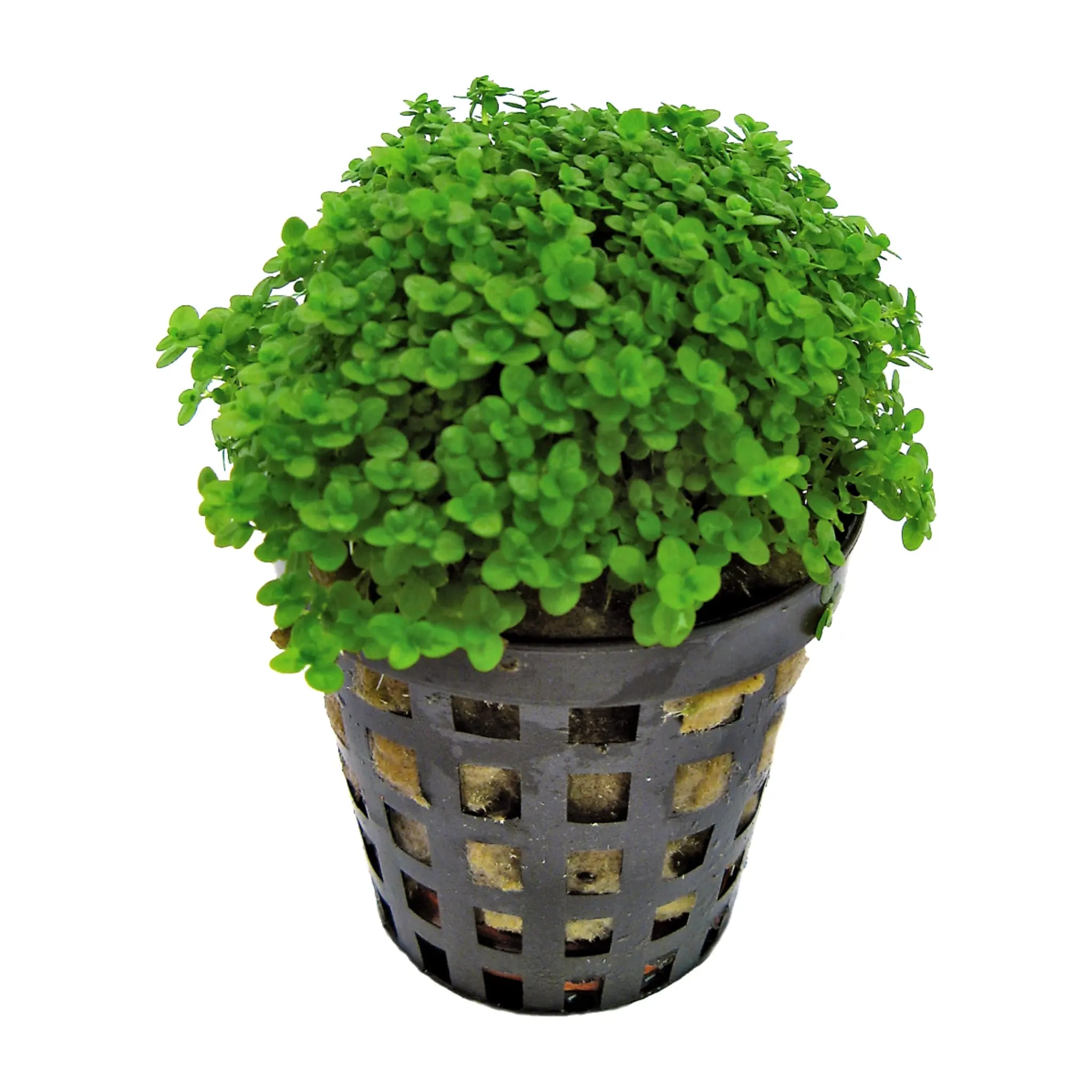
HC Baby Tears produces the smallest leaves of any aquarium plant — each leaf is just 1–2mm across — and creates an impossibly fine-textured carpet that looks stunning in high-resolution aquascapes. It's the iconic foreground plant of the Nature Aquarium style.
Be honest about requirements: HC is the most demanding plant on this list. It needs strong lighting, consistent CO² injection, and soft to moderately hard water. Without CO², HC grows very slowly, stays compact without spreading, and can melt in the establishment phase. It can work without CO² in a very shallow tank with strong light — but most aquarists trying this get frustrating results.
If you have CO² and strong light, the reward is exceptional. HC spreads by runners across the substrate and, in the right conditions, creates a seamless green carpet in 6–8 weeks. Plant individual stems or small portions 1–2cm apart into fine substrate, pressing down firmly so they don't float up.
Best for: High-tech CO² tanks, experienced aquascapers, competitive aquascaping.
2. Monte Carlo (Micranthemum tweediei)
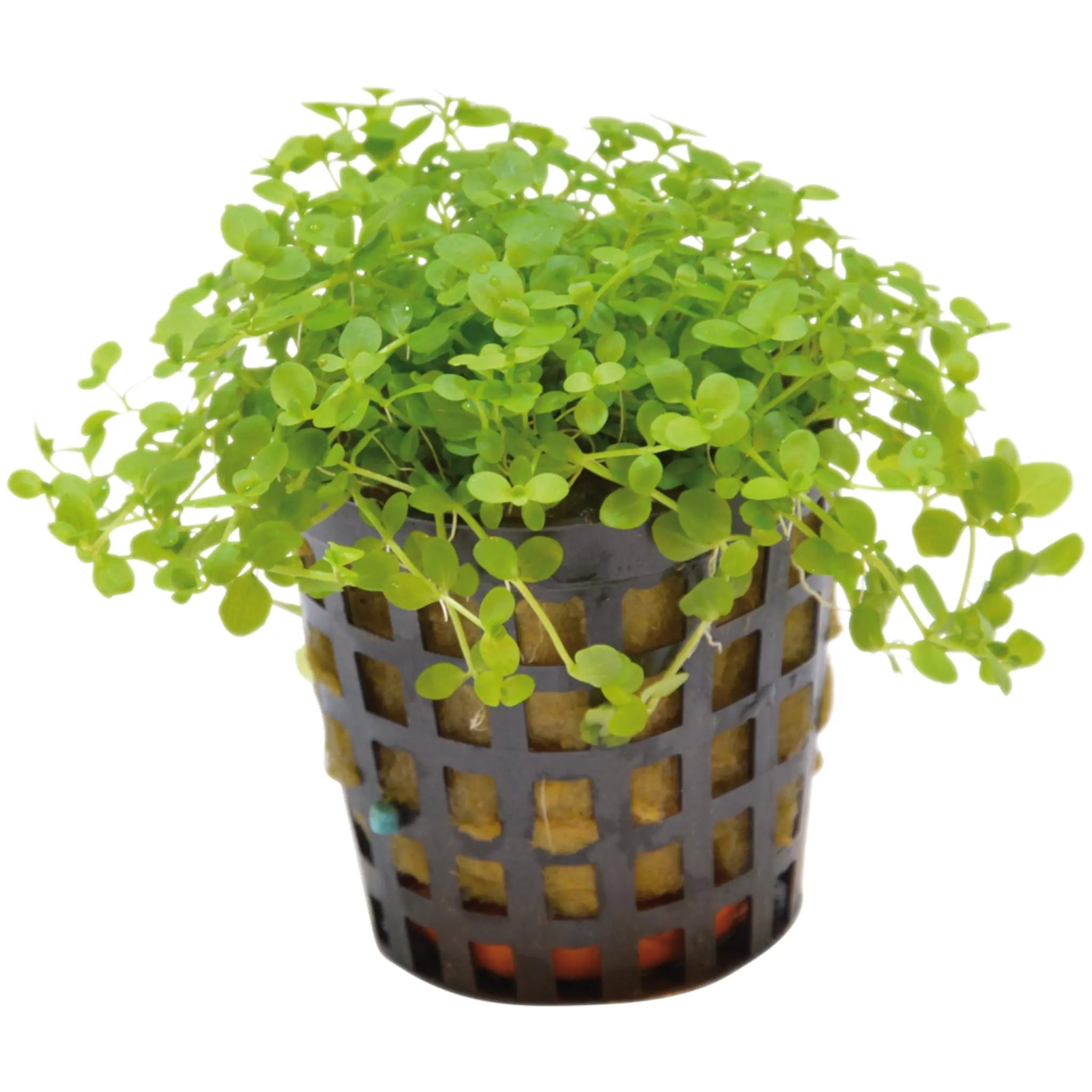
Monte Carlo is the best accessible alternative to HC for aquascapers who want a fine-textured foreground plant without the extreme demands. Its leaves are slightly larger than HC (3–4mm), and it's considerably more forgiving about CO². In a well-lit tank with good liquid fertilisation and a quality substrate, Monte Carlo can establish and spread without injected CO² — though CO² will significantly speed up coverage.
It spreads via runners across the substrate surface, sending out new growth in all directions once established. The key to success is initial planting technique: separate into small individual portions and press each one firmly 1–2cm into fine substrate, spacing about 2cm apart. Don't plant in large clumps — individual portions establish faster and spread more evenly.
Monte Carlo is much more likely to succeed in a low-tech setup with strong lighting. It's a genuinely good plant for intermediate aquascapers who want carpet results without a CO² system.
Best for: Intermediate aquascapers, low to high tech setups, beginner-friendly carpeting with the right light.
From Aqua Essentials
A fine-grained, nutrient-rich substrate makes a significant difference for all carpeting plants. Browse our aquarium substrates. If you're running CO², check our pressurised CO² sets.
Browse Aquarium Substrates →3. Dwarf Hairgrass (Eleocharis pusilla)
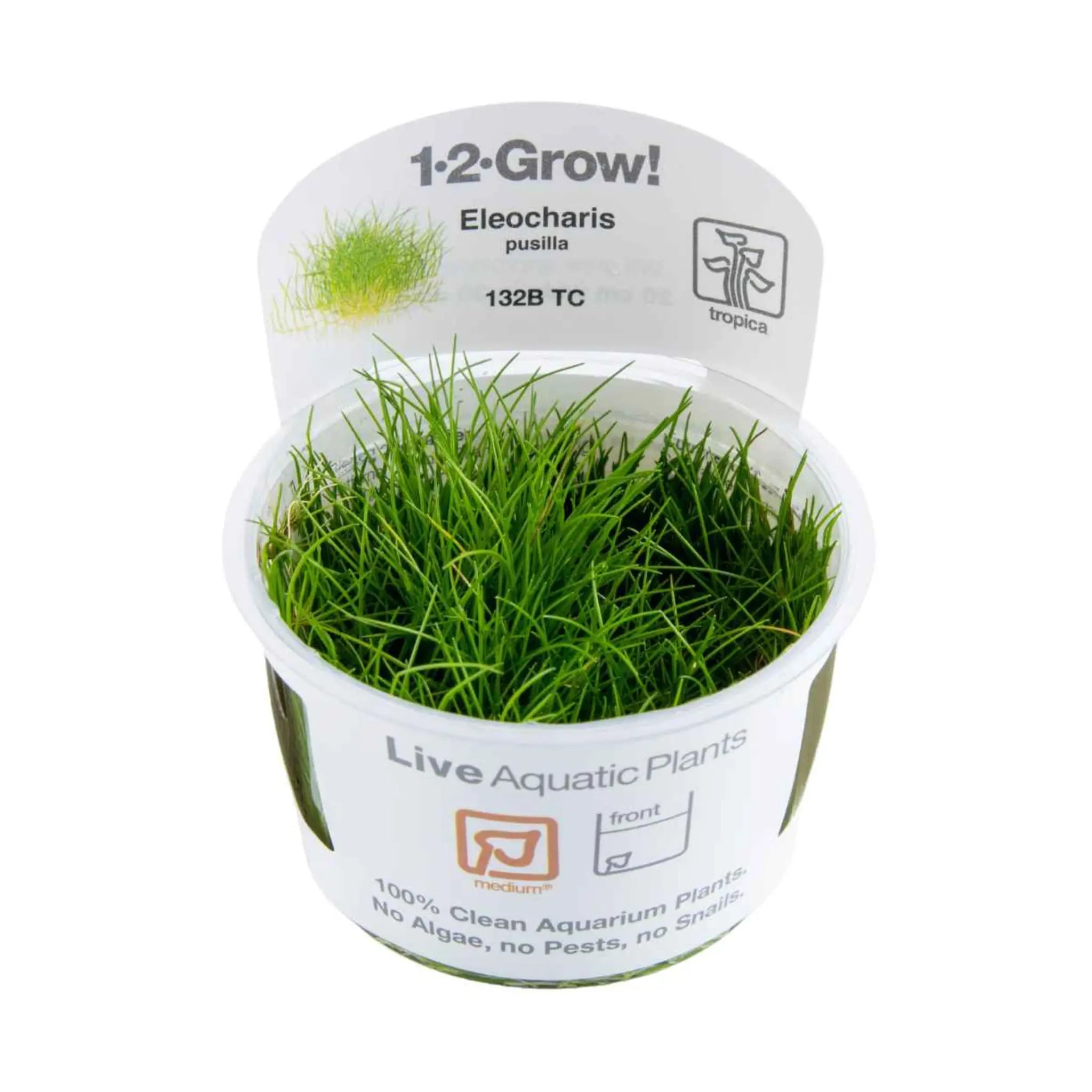
Dwarf Hairgrass creates a very different look from the broad-leaved carpet plants. Its fine, grass-like leaves grow upright in tight clusters, creating a texture that resembles a closely mown lawn — especially in the Eleocharis pusilla (mini) variety, which stays compact at around 5–10cm.
It's considerably more tolerant than HC and can establish and spread in moderate-light, low-tech tanks, though it will grow faster and more densely with CO². It spreads by sending out runners horizontally just beneath the substrate surface, which then send up new shoots. This makes it quite effective at filling in gaps over time even without CO² intervention.
Plant individual portions 1–2cm apart in fine substrate. It can look sparse for the first few weeks while the runner network develops, then fill in relatively quickly. Root tabs placed near the planting area improve establishment speed noticeably.
Best for: Natural river and meadow aquascapes, moderate-tech setups, tanks where a grass texture suits the design better than a broad-leaf carpet.
4. Glossostigma (Glossostigma elatinoides)
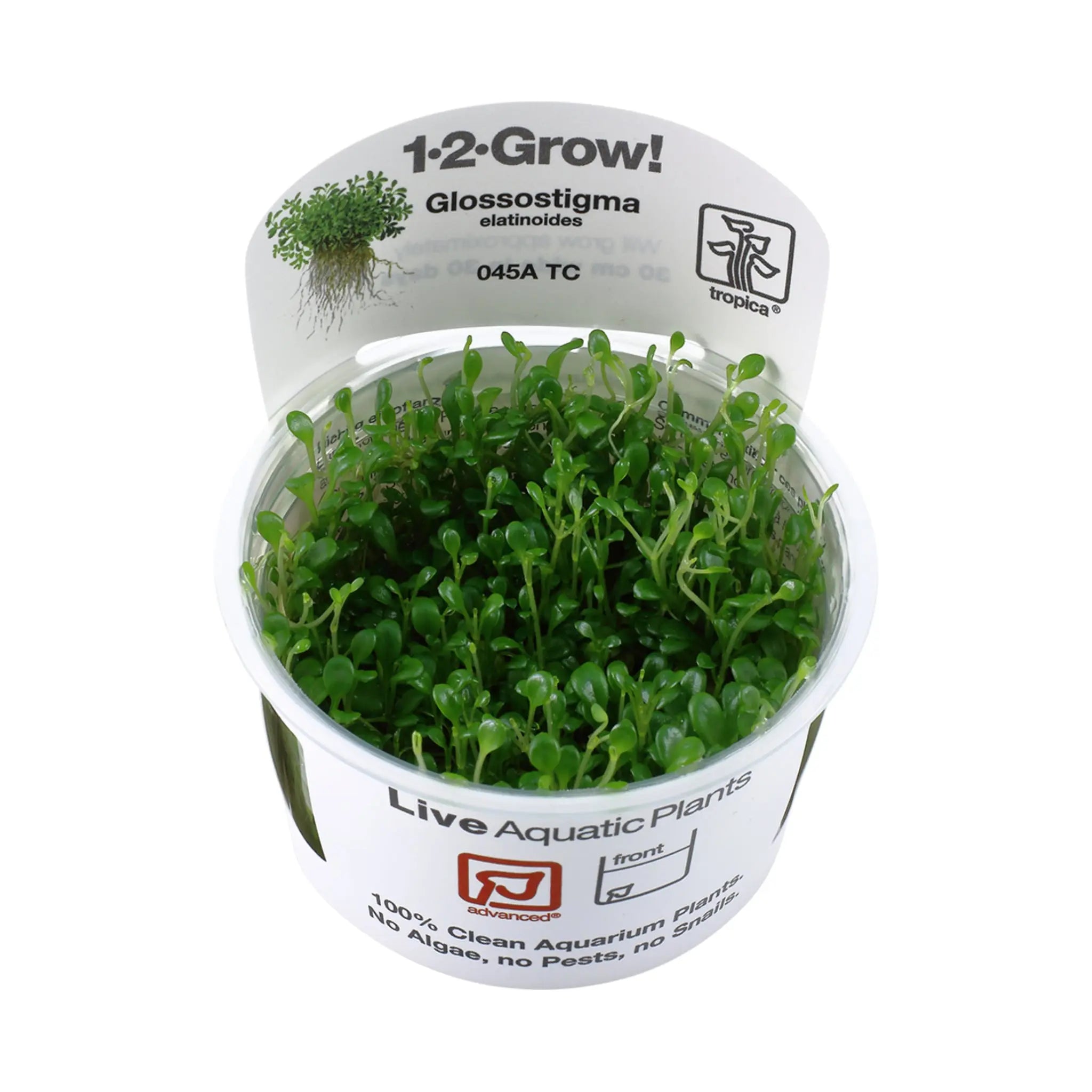
Glossostigma elatinoides was one of the original carpet plants made famous by Takashi Amano and remains a classic in competitive aquascaping. At its best, it creates an impossibly dense, 1–2cm tall bright green carpet that looks like a manicured lawn under water.
Be clear about requirements: Glossostigma is a high-demand plant. It requires strong lighting and CO² injection to stay compact and spread as a carpet. Without CO², it will grow, but the stems become leggy and reach upward toward the light rather than spreading horizontally. The result is a tangle of upright stems rather than a carpet — not the look most people are after.
With CO² and strong light, it's one of the fastest carpets to establish. Glossostigma spreads rapidly by stolons and can cover a 60cm tank in 4–6 weeks under optimal conditions. It needs regular trimming — the carpet can get too thick and start lifting from the substrate if left untrimmed for more than 3–4 weeks.
Best for: High-tech CO² tanks, competitive aquascaping, Nature Aquarium foregrounds, experienced aquascapers.
5. Brazilian Micro Sword (Lilaeopsis brasiliensis)
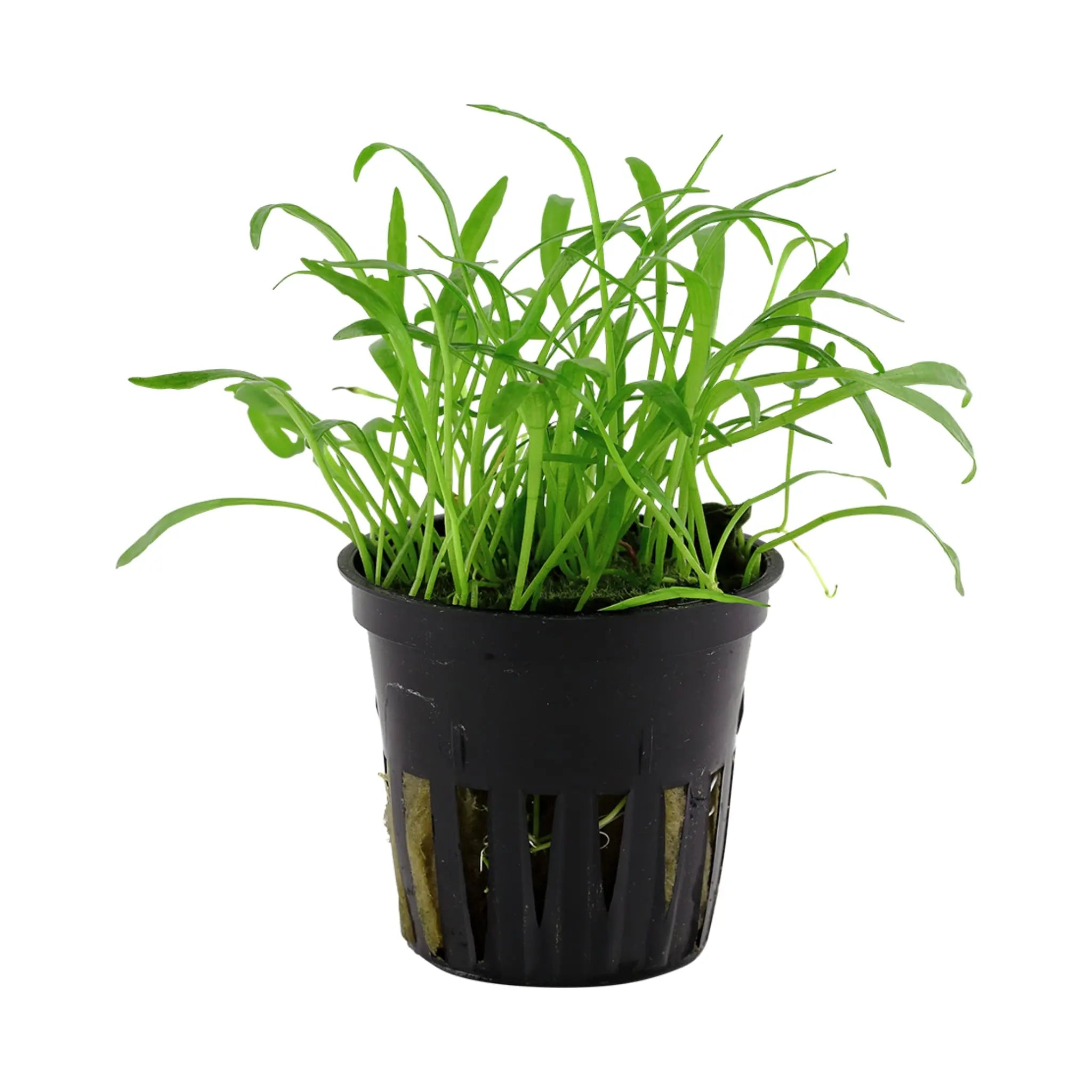
Lilaeopsis brasiliensis (Brazilian Micro Sword) is the most low-tech friendly carpet plant on this list. Its narrow, flat, 3–5cm leaves grow upright from a horizontal rhizome that spreads slowly across the substrate — creating a sparse, grass-like effect that fills in over several months rather than weeks.
It won't create the dense, seamless carpet of HC or Glossostigma in a low-tech tank. What it will do is spread slowly and consistently, maintaining a manageable grass-like foreground even without CO². Under stronger lighting with CO², it fills in much faster and produces a denser result.
Plant small clumps 2–3cm apart in fine substrate. It spreads by sending horizontal rhizomes outward, so give it room. Root tabs nearby will improve growth rate in inert substrate.
Best for: Low-tech tanks where a gradual foreground grass is preferred, biotope setups, aquarists who want a manageable foreground without CO².
Choosing the Right Carpet Plant for Your Setup
The honest summary: if you don't have CO² injection, the most likely candidates for a successful carpet are Monte Carlo (with strong light), Dwarf Hairgrass (moderate to strong light), and Lilaeopsis (low-tech, slow result). HC and Glossostigma require CO² to behave as carpet plants.
In all cases, a fine nutrient-rich substrate is critical. Carpeting plants root shallowly and spread horizontally — they can't reach nutrients deep in the substrate. Aqua soil or a dedicated plant substrate makes a significant difference compared to plain gravel or sand.
Good water circulation also matters more for carpet plants than for most other species. Stagnant water at substrate level encourages algae growth on the carpet itself. Position a pump or powerhead to create gentle flow across the substrate surface.