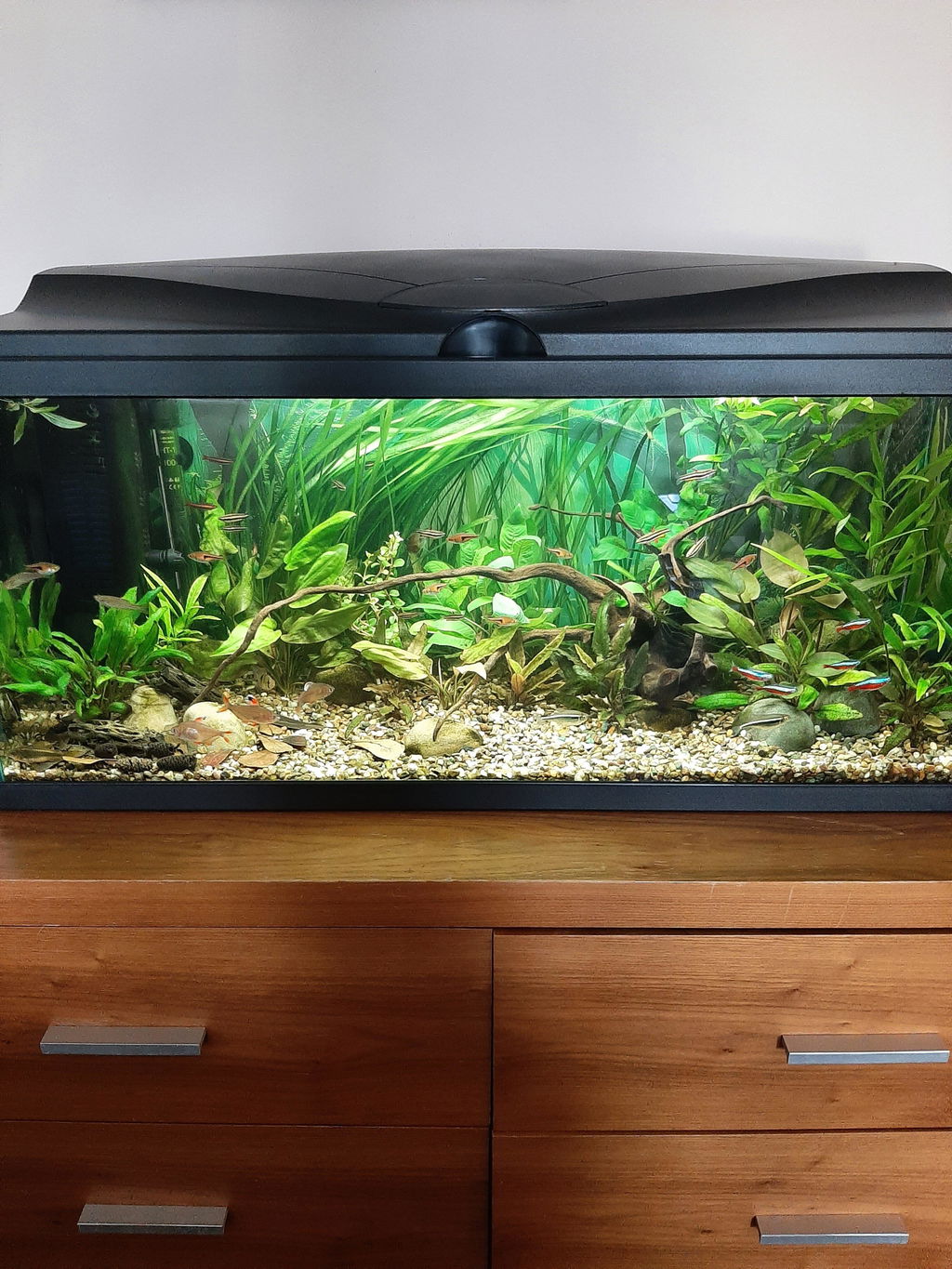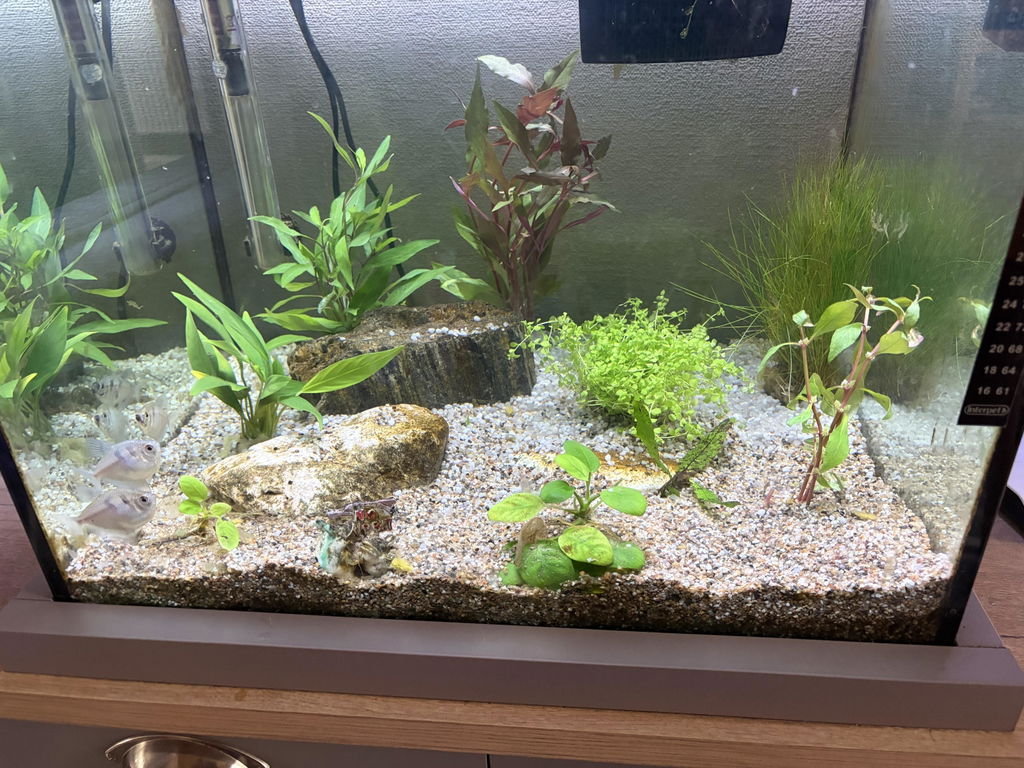


Cold water tanks get unfairly overlooked in the planted aquarium hobby. Most planted tank content assumes a tropical setup — heaters, CO², tropical fish. But if you're keeping goldfish, a native species setup, or simply want a tank without a heater, there's a genuinely good selection of plants that thrive in unheated or cool-water conditions.
The plants below all tolerate temperatures from around 10–24°C, making them suitable for unheated tanks in UK homes as well as dedicated cold water setups. None require CO² injection.
1. Elodea (Egeria densa)

Elodea — also known as Egeria densa or Anacharis — is the definitive cold water aquarium plant. It's a stem plant with dense whorls of bright green leaves, sold in bunches, and grows at impressive speed without any supplementation. That rapid growth is its greatest advantage: Elodea absorbs excess nutrients and CO² from the water column faster than most algae can compete, making it one of the best natural algae preventers available.
It grows well planted in substrate or left floating freely. In goldfish tanks particularly, it often does better left loose — goldfish will graze on it, but the plant grows fast enough to keep pace. In cooler water (12–18°C), growth slows compared to tropical conditions, but the plant remains healthy and robust.
Care: Remove the lead weight before planting, separate into individual stems, strip lower leaves, and push 3–4cm into substrate. Alternatively leave floating freely. Trim from the top when it gets leggy — cut off 15cm and replant the top section as a new stem.
2. Hornwort (Ceratophyllum demersum)
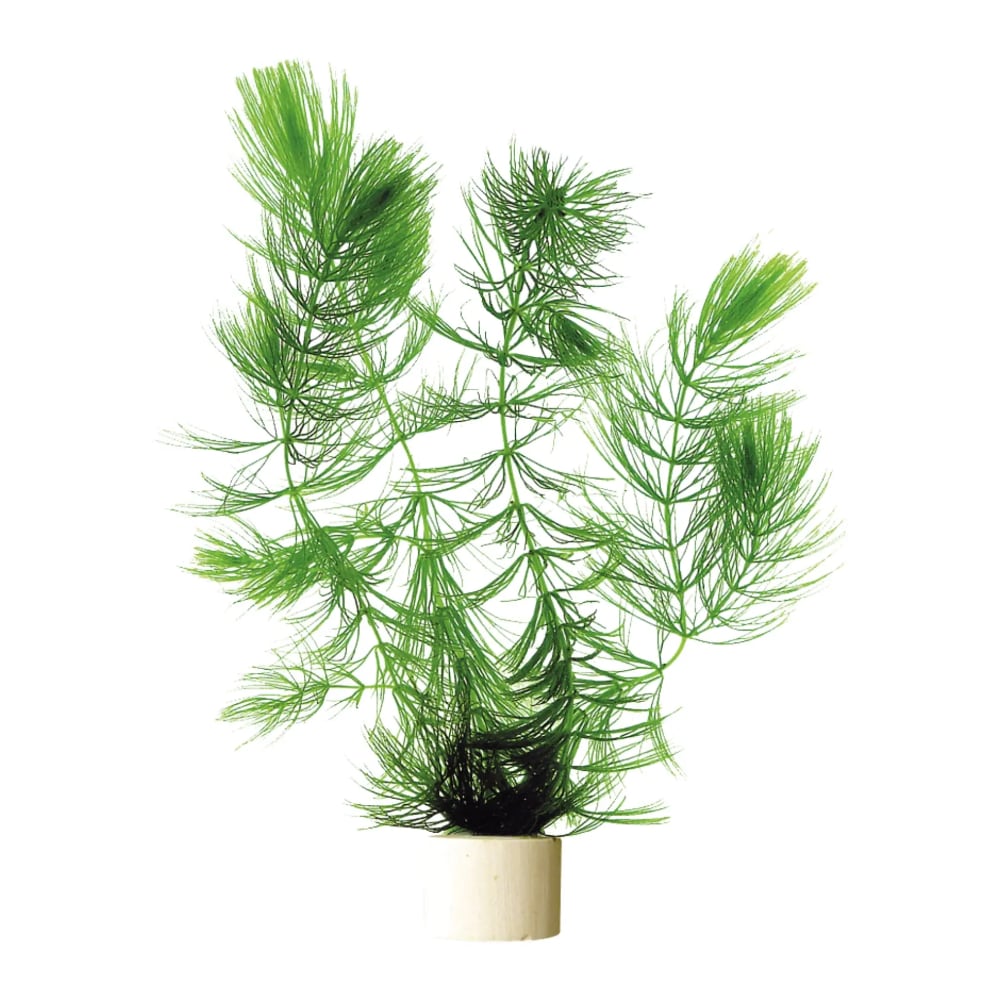
Hornwort is one of the most adaptable aquatic plants in existence. Found growing wild in ponds, lakes, and slow-moving rivers across the UK and Europe, it's naturally suited to cold water conditions and will grow in temperatures as low as 5°C. It produces dense, feathery stems that provide excellent cover for fish and fry.
Unlike most plants, hornwort doesn't have true roots — it absorbs everything it needs directly from the water column. This makes it particularly effective at stripping out excess nutrients, and it's one of the best natural defences against algae in a new or unbalanced tank. It also releases allelopathic compounds that actively inhibit algae growth.
Care: Leave floating or lightly anchor at one end. It can shed needles in the first week or two after introduction as it adjusts — this is normal and temporary. Trim regularly to prevent it taking over the tank. Does fine in low light but grows faster with moderate illumination.
3. Java Fern (Microsorum pteropus)

Java fern is one of the go-to midground plants for cold water aquariums. It's an epiphyte — it attaches to wood or rock rather than rooting into substrate — and it's almost indestructible once established. Its tough, dark green leaves are slow to decompose, which matters in goldfish tanks where softer plants get shredded. Most goldfish and cichlids leave Java fern alone entirely.
In cold water, Java fern grows more slowly than in tropical conditions, but it never stalls. It reproduces by producing tiny plantlets on the undersides of mature leaves, which drop off and attach to nearby surfaces. Over time a single plant becomes a dense, self-propagating clump.
Care: Attach the rhizome to a piece of rock or driftwood using cotton thread or superglue gel. Never bury the rhizome — it will rot. Low to medium light is sufficient. No CO² needed; a fortnightly dose of liquid fertiliser will keep it looking its best.
From Aqua Essentials
Java fern, Anubias, and moss are available already attached to wood or rock — perfect for cold water tanks where fish can't easily uproot them. Browse our epiphytes collection or plants on rock.
Browse Epiphytes →4. Lobelia cardinalis (Scarlet Lobelia)

Lobelia cardinalis is one of the most visually striking plants you can keep in a cold water setup. Its leaves are a rich mid-green on the top and vivid reddish-purple underneath, creating a beautiful two-tone effect when viewed from the side. It's a stem plant that grows upright in the midground to background, reaching 20–30cm when mature.
What makes Lobelia particularly interesting is its versatility. Above the waterline it's a true amphibious plant, familiar from bog gardens and pond margins. Submerged, it takes on its aquatic form — more compact, with smoother leaf edges. It adjusts between forms over a few weeks, so don't be alarmed if leaves change shape after planting. In optimal conditions it can produce delicate flowers at the waterline.
Care: Plant individual stems 3–4cm into substrate after removing lower leaves. Grows moderately slowly without CO², which makes it very manageable. Medium light brings out the best colour. In very cold water (below 15°C), growth slows but the plant remains viable.
5. Java Moss (Taxiphyllum barbieri)

Java moss is one of the most useful plants in any aquarium — cold water or tropical. It can be tied to wood or rock, left floating, used as a foreground carpet, or tucked into crevices in hardscape. It's incredibly resilient, happy in a very wide temperature range (5–28°C), and requires no substrate, no CO², and no specialist fertiliser.
In cold water tanks, it's especially valuable as spawning and refuge habitat. Fish fry, shrimp, and snails use the dense tangles as cover. Goldfish will occasionally graze on it, but because it grows from all points rather than a single crown, they rarely kill it outright — they just trim it for you.
Care: Attach to wood or rock with cotton thread. It grips with rhizoids over 3–4 weeks. Trim with scissors if it gets too bushy — it responds well to regular pruning and grows back denser. See our guide to aquarium mosses for more species options.
From Aqua Essentials
All five plants above are in stock and dispatched from our UK facility. For more options, browse our full cold water plants collection.
Shop Cold Water Plants →Tips for a Successful Cold Water Planted Tank
Don't chase tropical conditions. Cold water plants are adapted to lower temperatures — resist the urge to add a heater. Most grow well at 15–20°C, which covers the typical unheated UK home environment.
Fertilise even without CO². Cold water doesn't mean zero nutrients. A weekly dose of liquid fertiliser keeps plants healthy and competitive with algae. The Neutro Combo is a good starting point — all-in-one fertiliser plus liquid carbon for algae control.
Use epiphytes if you have goldfish. Goldfish are persistent plant diggers and grazers. Java fern and Java moss attached to rocks or wood are far more likely to survive in a goldfish tank than soft-leaved substrate-planted species.
Control your lighting duration. Keep the photoperiod to 6–8 hours. In cooler water, plant metabolism is slower, so long photoperiods relative to plant growth rate encourage algae. A plug-in timer is the easiest way to manage this.