



How can you not love Micranthemum Monte Carlo? It carpets beautifully, it's forgiving for beginners, pots are always a generous size, and the finished result — a lush, bright green foreground carpet — looks like something out of a professional aquascape. Yet the care required is remarkably simple.
In this guide, we'll cover everything you need to know about Micranthemum Monte Carlo care: its origins, how to plant it, how to trim it, how many pots you need, and what conditions help it thrive.
What Is Micranthemum Monte Carlo?
Micranthemum Monte Carlo (Micranthemum sp. 'Monte Carlo') is a relatively recent addition to the planted aquarium hobby. It originates from South America — specifically Argentina — where it grows along riverbanks and in shallow water. Its small, rounded leaves reach no more than 4mm in diameter, making it closely comparable in appearance to the world-famous carpeting plant Hemianthus callitrichoides (HC Cuba). The key difference, however, is how much easier it is to grow.
It was introduced to the hobby by Tropica, initially sold under the name Elatine hydropiper. After several months, DNA sequencing revealed it actually belonged to the Micranthemum family, and the name was corrected. The 'Monte Carlo' common name has stuck in the hobby, though it remains something of a placeholder until a full Latin classification is confirmed — so don't be surprised if the name evolves further.
Classified as Easy by Tropica, Micranthemum Monte Carlo care is straightforward and suitable for beginners upwards.
Why Has Micranthemum Monte Carlo Shot to Fame?
The short answer: it does everything Hemianthus callitrichoides does, but without the demanding care requirements.
HC Cuba — the previous go-to foreground carpet plant — requires high light, injected CO₂, precise water parameters, and careful planting to get established. It's stunning when done right, but it's unforgiving. Micranthemum Monte Carlo, by contrast, is genuinely adaptable. You can grow it in:
High or low light
CO₂-injected or non-CO₂ tanks
A wide range of water parameters
Beginner and expert setups alike
Yes, you'll get faster, denser growth with a high-tech CO₂ setup — that's true of almost any aquarium plant. But the fact that Monte Carlo performs well without it makes it uniquely accessible. It's as close to a "plant it and forget it" carpet plant as the hobby currently offers.
If you're building a low-tech planted tank, see our guide to the best aquarium plants that thrive without CO₂ for more ideas alongside Monte Carlo.
Micranthemum Monte Carlo Care: Key Parameters
| Parameter | Ideal Range |
|---|---|
| Difficulty | Easy |
| Light | Low to high (medium recommended) |
| CO₂ | Not required, but beneficial |
| Temperature | 20–28°C |
| pH | 6.0–7.5 |
| Position | Foreground carpet |
| Growth rate | Moderate |
How to Plant Micranthemum Monte Carlo
Planting technique makes a significant difference to how quickly Monte Carlo establishes and begins to spread. Here's the step-by-step process:
Remove the plant from its pot and gently loosen the rockwool from around the roots.
Trim the rockwool so that roughly 10mm remains around the base of the plant. Don't remove it entirely — the rockwool helps anchor the plant in the substrate.
Divide the pot into 6–8 sections depending on the size of the pot. Use scissors or your fingers to tease the plant apart rather than pulling — this minimises root damage.
Plant each section into the substrate using aquascaping tweezers, pushing each piece down until the rockwool is just below the surface. Space sections approximately 2–3cm apart.
Leave undisturbed for at least 2 weeks before trimming. Monte Carlo needs time to anchor its roots before it can handle the stress of cutting.
For best results, plant into a quality aquarium substrate rather than plain gravel or sand. A nutrient-rich substrate gives the roots something to feed on as the plant establishes, accelerating the rate at which it begins to spread and carpet.
How to Trim Micranthemum Monte Carlo
Trimming is where many beginners go wrong with carpeting plants. With Monte Carlo, the principle is simple: trim regularly and trim heavily.
Use a pair of curved aquascaping scissors and cut across the top of the carpet in a flat, even line. Don't be precious about it — taking the top 30–50% off is perfectly fine and encourages the plant to grow laterally (spreading outward) rather than vertically (growing tall and leggy).
Why regular trimming matters: If Monte Carlo is left untrimmed, the upper layer of growth shades the lower layers, cutting off light and causing the bottom stems to die. Once the lower stems die, the plant loses its anchor and lifts off the substrate entirely. This is one of the most common Monte Carlo problems — and it's entirely preventable with routine maintenance.
A good rule of thumb: trim once the carpet reaches approximately 3–4cm in height, and never let it exceed 5cm without cutting back.
Browse our full plant maintenance tools range — curved scissors, straight scissors, and long-handled tweezers are all worth having for carpet plant work.
The Role of Water Flow in Monte Carlo Care
One often-overlooked factor in successful Micranthemum Monte Carlo care is water circulation. Carpeting plants grow close to the substrate, which means they can sit in a low-flow zone where nutrients and CO₂ are depleted and waste accumulates.
Positioning a circulation pump directly above or angled towards your Monte Carlo carpet makes a measurable difference to growth rate and health. The current pushes nutrient-rich water directly over and through the plant, ensuring every leaf has access to what it needs. This is particularly important in non-CO₂ tanks, where dissolved carbon in the water column is already at a lower level.
Fertilising Micranthemum Monte Carlo
Even in a low-tech setup, Monte Carlo needs nutrients to grow well. The most common deficiency to watch for is iron — a lack of iron causes pale, yellowing new leaves while older growth remains green.
Dose a quality liquid fertiliser weekly to keep the plant well-fed. Our Neutro fertiliser range is an excellent choice for low-tech tanks, providing a balanced mix of macro and micronutrients without pushing plants into growth rates that demand CO₂.
In high-tech tanks, you may want to split your fertiliser dosing across more frequent, smaller doses to keep nutrient levels stable alongside faster growth.
Does Micranthemum Monte Carlo Need CO₂?
No — and this is one of its most appealing qualities. Monte Carlo grows and carpets successfully in non-CO₂ tanks, making it accessible to a much wider range of hobbyists than HC Cuba.
That said, CO₂ injection will produce noticeably faster, denser growth and a more vivid green colour. If you're considering adding CO₂ to your setup, browse our CO₂ pressurised sets for complete beginner-friendly systems, or our liquid carbons range for a no-equipment alternative that provides an organic carbon supplement.
How Many Pots of Monte Carlo Do I Need?
This is the question we get asked most often about carpeting plants, and the answer is straightforward: one pot per 225cm² of foreground area.
Use this simple calculation:
Tank length (cm) × tank width (cm) ÷ 225 = number of pots needed
Example: A 60cm × 30cm tank has 1,800cm² of base area. Divided by 225, you'd need 8 pots to achieve a full initial coverage.
If budget is a concern, you can use fewer pots and allow the plant to spread over time — Monte Carlo will fill in gaps naturally, it just takes a few extra weeks. For a faster, denser result from day one, stick to the formula above.
Micranthemum Monte Carlo vs HC Cuba — Which Should You Choose?
| Monte Carlo | HC Cuba | |
|---|---|---|
| Difficulty | Easy | Advanced |
| CO₂ required | No | Yes |
| Light required | Low–high | High |
| Leaf size | ~4mm | ~2mm |
| Carpeting speed | Moderate | Fast (with CO₂) |
| Best for | Beginners & low-tech | Experienced, high-tech |
If you're new to carpeting plants or running a low-tech tank, Monte Carlo is the clear choice. HC Cuba is a rewarding challenge for experienced aquascapers with high-tech setups — but it is unforgiving of the conditions that Monte Carlo handles easily.
Common Micranthemum Monte Carlo Problems
Plant floating off the substrate Usually caused by the lower stems dying due to lack of light (from overgrowth above). Trim more regularly and ensure good water flow across the carpet.
Slow or no spreading Check lighting duration (aim for 8 hours), nutrient levels, and CO₂ if applicable. In very low light, Monte Carlo will survive but won't actively spread.
Yellowing leaves Most commonly an iron deficiency. Dose a liquid fertiliser containing micronutrients, or switch to a more comprehensive fertiliser like Neutro+ from our fertiliser range.
Algae growing on the carpet This is usually a sign of excess light relative to nutrients and CO₂. Reduce the photoperiod by one hour and consider adding a small dose of liquid carbon as an algae suppressant. See our anti-algae collection for targeted treatments.
Summary
Micranthemum Monte Carlo is one of the best carpeting aquarium plants available in the hobby today. It's beautiful, adaptable, and genuinely easy to grow — in low or high light, with or without CO₂. The key to getting the most out of it is good planting technique, regular heavy trimming, consistent fertilisation, and decent water flow across the foreground.
If you're looking to try a carpet plant for the first time, this is where to start.
Shop Micranthemum Monte Carlo — available in tissue culture pots, ideal for pest-free setups
Explore our full carpeting plants collection for alternatives including dwarf hairgrass, Glossostigma, and more
Want a ready-to-go setup? Our Beginner Box includes a curated selection of easy-care plants — perfect alongside Monte Carlo
FAQ: Micranthemum Monte Carlo
Is Micranthemum Monte Carlo easy to grow? Yes. It's classified as Easy by Tropica and is one of the most beginner-friendly carpeting plants in the hobby. It grows without CO₂ injection and tolerates a wide range of light levels and water parameters.
How long does Monte Carlo take to carpet? In a CO₂-injected tank with good lighting, Monte Carlo can form a full carpet in 4–6 weeks. In a low-tech tank, expect 8–12 weeks for full coverage. Planting sections closer together accelerates the process.
Can Monte Carlo grow in low light? Yes, though growth will be slower. In low light, Monte Carlo will maintain itself and spread gradually. For faster carpeting, medium light (around 30–50 PAR at the substrate) is recommended.
Why is my Monte Carlo not carpeting? The most common causes are insufficient light reaching the foreground, lack of nutrients, or too little water flow across the substrate. Ensure your light is positioned correctly, dose fertiliser weekly, and add a circulation pump if needed.
Can I grow Monte Carlo without CO₂? Yes. Monte Carlo is one of the few carpeting plants that performs well in non-CO₂ tanks. Growth is slower than in a CO₂-injected setup, but the plant will spread and carpet successfully with good light and regular fertilisation.


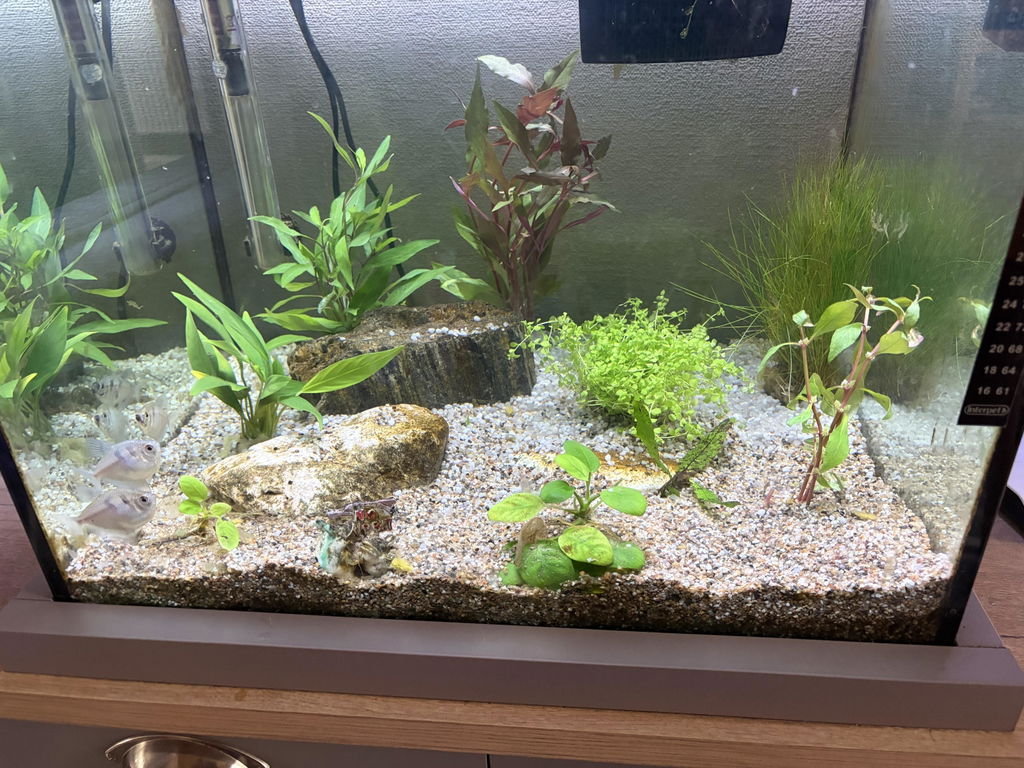
33 comments
Yes it’s a root feeder
Hi Jonny
The fungi on your wood sounds very normal and is the sap coming out. It won’t effect plants so avoid putting 2 and 2 together and getting 5.
When fungi appears on wood, just scrape it off. It might take several goes but this is why it’s always best to leave wood soaking in a bucket for a couple of weeks.
Regarding the health of your monte carlo – what fertilisers are you using and are you using liquid carbon?
Do you ship M.montecarlo and P.HELFERI TO srilanka? What is the lowest possible shipping cost? Thank you