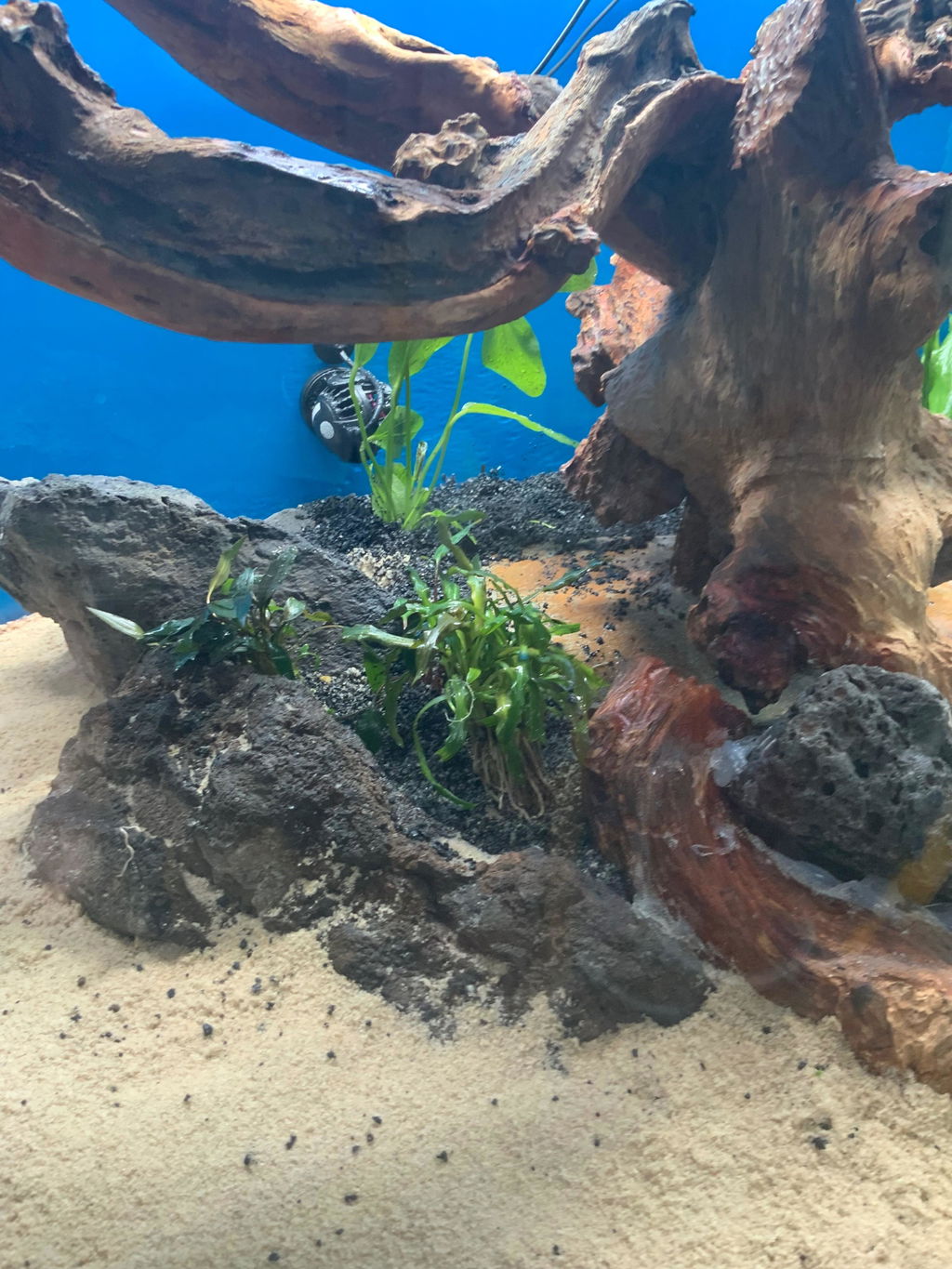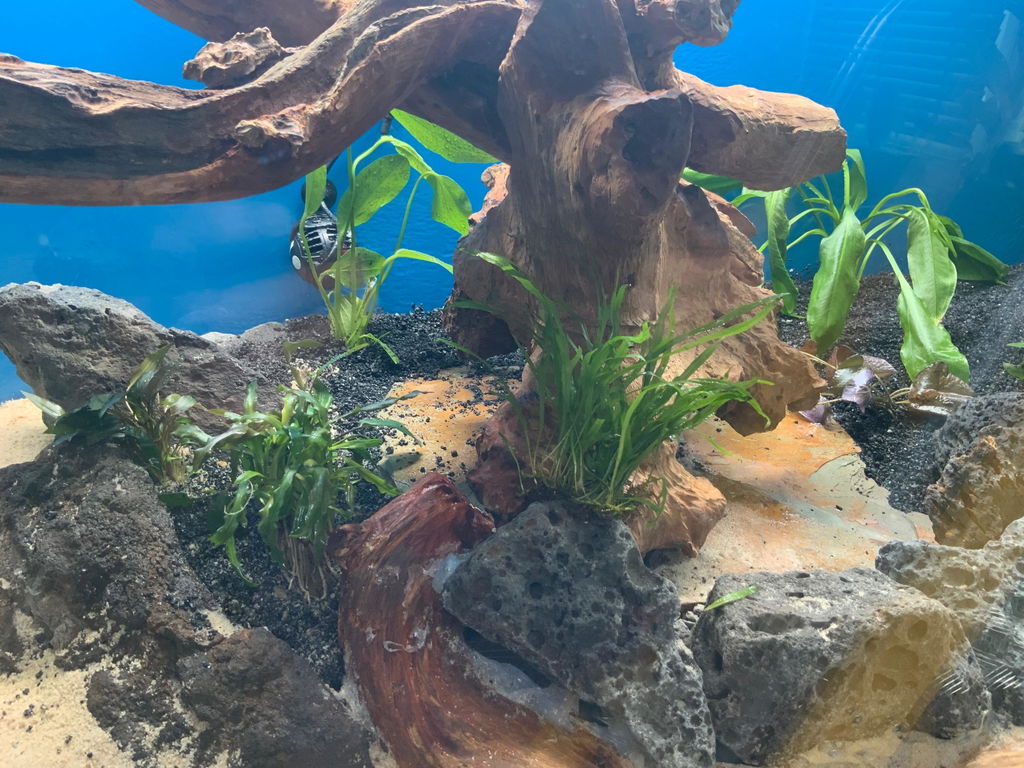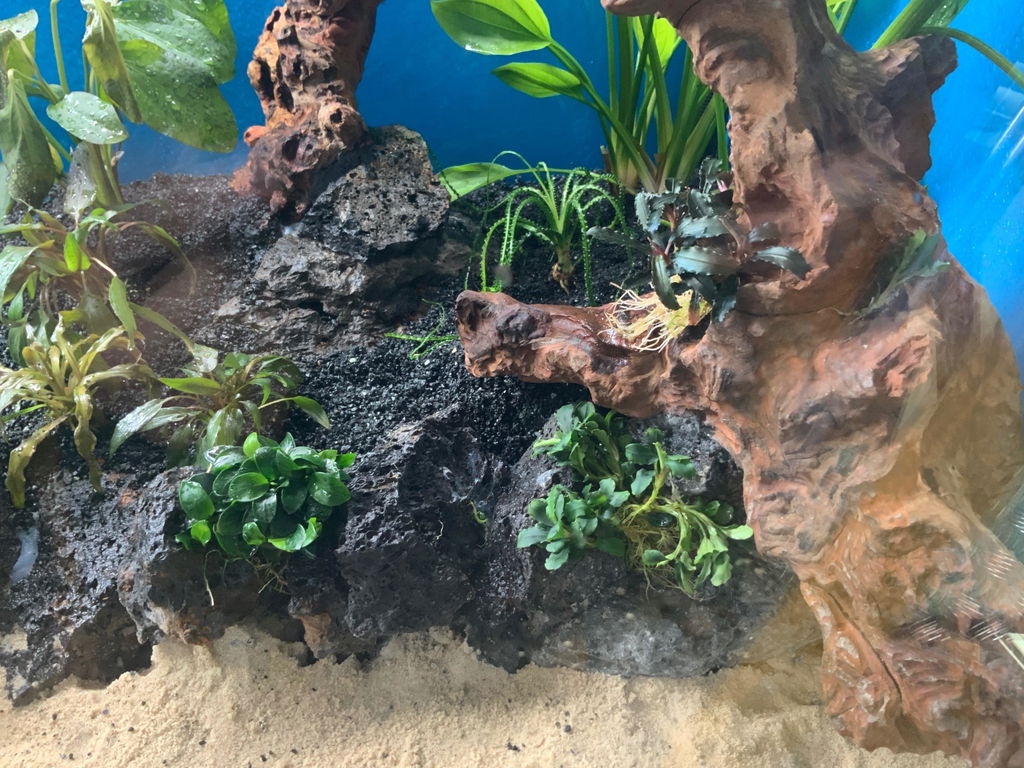


A planted discus tank can look magnificent, but it asks more of plants than the average tropical aquarium. Discus are normally kept in warm water, often around 28°C or above, and plenty of familiar aquarium plants begin to struggle when kept that warm for long periods. The solution is not to give up on plants. It is to choose heat-tolerant species, leave generous swimming room and build the layout around the needs of the fish.
Why Are Discus Tanks Difficult for Aquarium Plants?
Warm water speeds up biological processes. Plants may grow faster when all their needs are met, but deficiencies and decline can also appear quickly. Warmer water holds less oxygen than cooler water, while large fish, feeding and higher temperatures place additional demands on filtration and maintenance.
Discus also need open space. A densely packed aquascape may look impressive in a photograph but can restrict swimming and make cleaning difficult. The most successful planted discus tanks usually place taller plants at the back and sides, use wood or rock for structure and keep a broad open area through the centre.
The Best Aquarium Plants for Discus Tanks
No plant is indestructible, but the following groups are proven choices for warm aquariums when light, nutrition and water quality are kept stable.
Echinodorus and Amazon Sword Plants
Echinodorus species are classic discus-tank plants. Their broad leaves create a natural South American appearance, give fish visual cover and work well as large background specimens. Echinodorus grisebachii Tropica is a strong choice for a warm, spacious aquarium, while Echinodorus radicans can make an imposing focal plant.
Sword plants are hungry root feeders. Use root tabs beneath them and allow room for both their leaves and root systems to spread. Position them where mature leaves will not block the entire surface or shade every smaller plant below.
Cryptocoryne wendtii
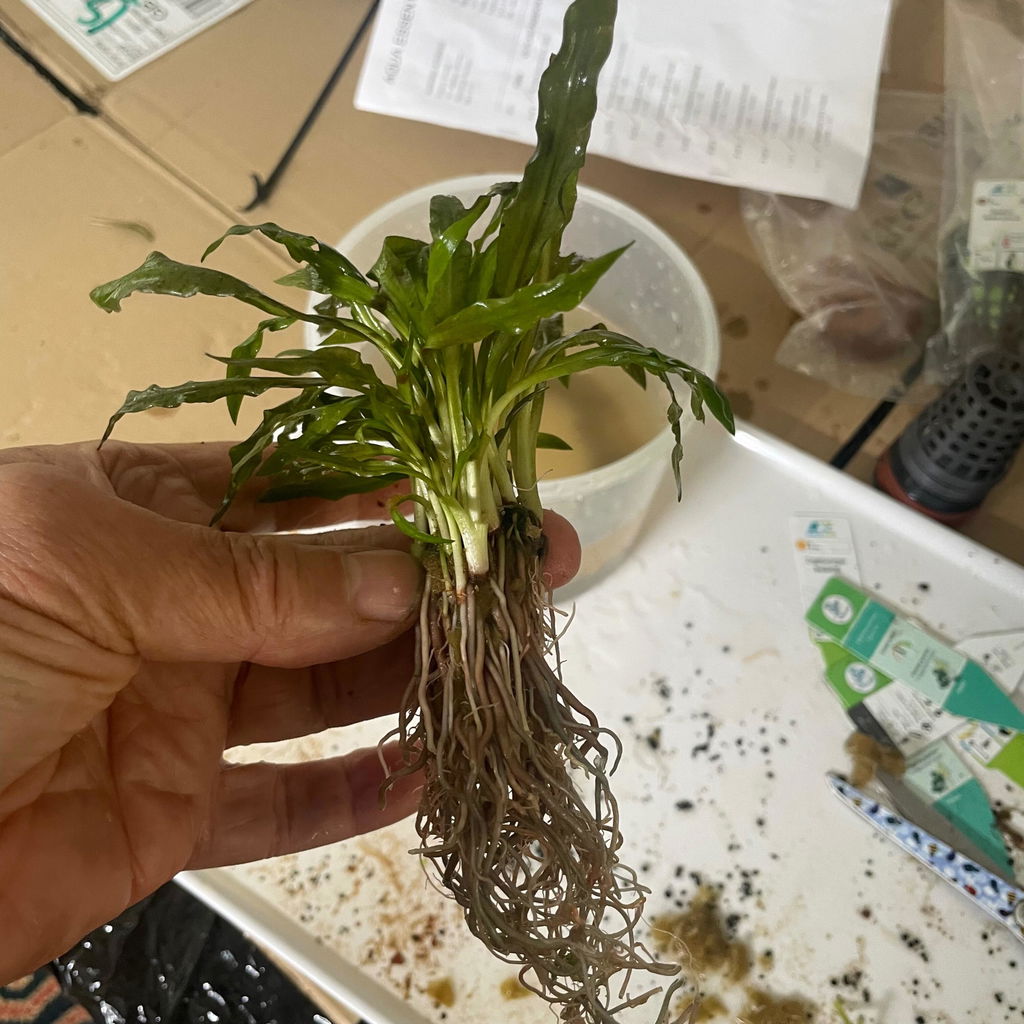
Cryptocoryne wendtii Green is useful in the midground, where its lower, leafy growth can soften the base of wood and taller sword plants. It is tolerant of moderate light and can adapt to warm conditions once settled.
A newly planted crypt may shed some leaves after the move. This is a reaction to changed conditions rather than proof that the plant has failed. Keep the crown above the substrate, leave healthy roots in place and wait for new leaves suited to the aquarium.
Java Fern
Java fern is one of the most practical plants for a discus setup. It attaches to wood or rock, tolerates shade and does not depend on a nutrient-rich substrate. This makes it easy to create planted areas around the edges while keeping the centre open.
Do not bury its thick rhizome. Secure it to décor and let the roots take hold naturally. Older leaves can be removed at the rhizome when they become damaged or heavily covered with algae.
Bolbitis
Bolbitis brings a finer, more delicate texture than Java fern while sharing the advantage of growing on hardscape. It appreciates good water movement and looks especially natural on branching wood. A ready-attached Bolbitis heudelotii on driftwood can be positioned without disturbing the substrate or sacrificing swimming space.
Anubias
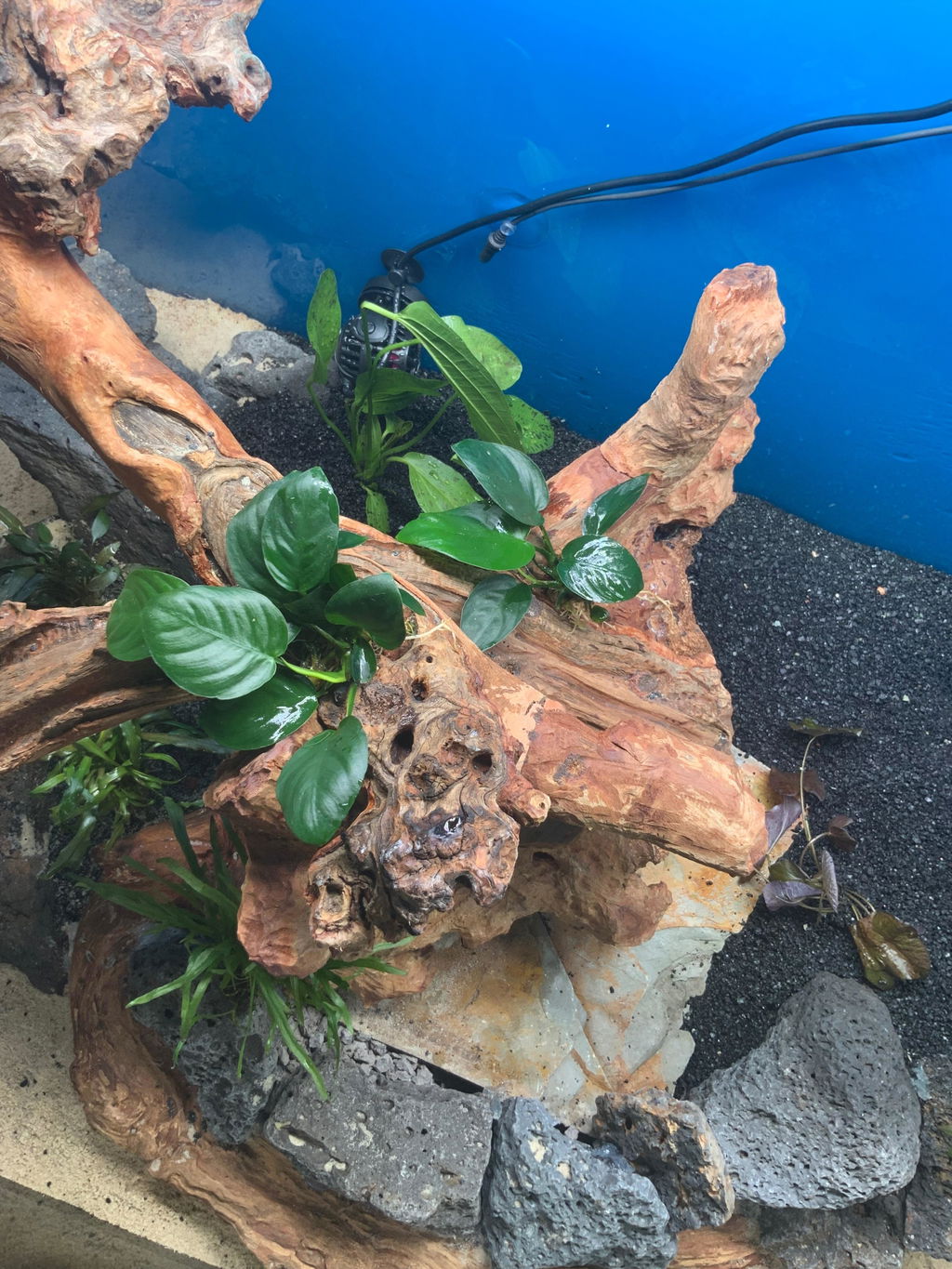
Anubias has tough leaves, grows in lower light and can be attached to rock or wood. Anubias congensis provides useful upright growth, while an Anubias on mini lava rock is easy to place in a shaded gap.
Its slow growth means patience is needed, and slow leaves can collect algae under intense lighting. Keep the rhizome uncovered and use it in the shaded areas created by swords, wood or floating leaves.
Java Moss
Java moss can soften wood and rock, but it needs more attention in a warm tank. Use it in controlled patches rather than allowing it to form a dense mat that traps food and waste. Regular trimming keeps water moving through it and makes the aquarium easier to clean.
Vallisneria
Vallisneria can create a tall green backdrop and is useful along the rear corners of a discus aquarium. Its long leaves move gently with the flow while the central swimming area remains clear. Give it space to send out runners, and remove unwanted plantlets before they spread into open areas.
From Aqua Essentials
Keep the centre open by adding plants directly to wood and rock around the edges of the aquarium.
Shop Plants On Wood →How to Lay Out a Planted Discus Tank
Begin with the swimming area rather than the plants. Decide where the fish will move, feed and gather, then keep that route open. Place the largest swords at the rear or off-centre so they frame the fish instead of hiding them. Use crypts around their bases and attach ferns or Anubias to upright wood.
This edge-heavy layout makes maintenance easier. Food and waste remain visible, a siphon can reach the open substrate and the fish can be observed clearly. It also prevents new plants being crushed into every available space before their mature size is understood.
Lighting, CO2 and Fertiliser for Discus Plants
Discus do not need a glaringly bright aquarium. Choose plants that perform in moderate light and build up the daily lighting period gradually. Strong light without matching plant growth often produces algae, particularly on slow-growing Anubias leaves.
Added CO2 can improve plant growth, but it is not essential for a simple collection of swords, crypts, Java fern and Anubias. If CO2 is used, stability matters more than chasing an extreme level. Fish behaviour should always take priority, and good surface movement remains important in warm water.
Feed sword plants and crypts at the roots with aquarium root tabs. Use a balanced liquid fertiliser for ferns, mosses and Anubias that feed from the water. Warm conditions can make plant demand change quickly, so adjust in small steps and judge the response from healthy new growth.
Plants to Avoid or Use Carefully
Avoid buying solely from a photograph or a generic list of tropical plants. Some species prefer cooler water and slowly weaken at sustained discus temperatures. Delicate carpeting plants can also be a poor fit because they often demand intense light, stable CO2 and a pristine foreground, while large fish need accessible feeding and cleaning areas.
Very fine, brittle stems may be uprooted or damaged in a busy tank. Fast-growing stems can still be useful for nutrient control, but they need regular trimming and enough space so they do not close off the swimming area.
How to Start the Plants Successfully
Whenever possible, establish the aquarium plants before adding discus. This gives roots time to anchor, allows you to correct fertilisation and lighting and makes it easier to confirm that the tank is stable. Add plant groups gradually rather than changing the entire layout at once.
Inspect new leaves each week. Remove decaying growth, keep moss open and clean, and clear waste from beneath wood and around plant bases. Stability is especially valuable in a warm aquarium: consistent temperature, regular water changes and sensible feeding support both the plants and the fish.
Can a Discus Tank Be Heavily Planted?
It can, but heavily planted should not mean crowded. Use tall, heat-tolerant plants to create height and cover around the perimeter, then leave deliberate negative space. A few mature swords, grouped crypts and well-positioned epiphytes can make the aquarium feel lush without filling every centimetre.
The best planted discus tank is not the one with the greatest number of species. It is the one where each plant can tolerate the temperature, the fish have room to behave naturally and routine cleaning remains straightforward.
Choose strong plants for the warmest parts of your aquarium
Shop Potted Aquarium Plants →Warm water narrows the plant list, but it does not rule out a beautiful planted aquarium. Start with Echinodorus, Cryptocoryne, Java fern, Bolbitis, Anubias and controlled patches of moss, then build the layout around open water. For instant structure without burying rhizomes, browse our Plants On Rock collection.