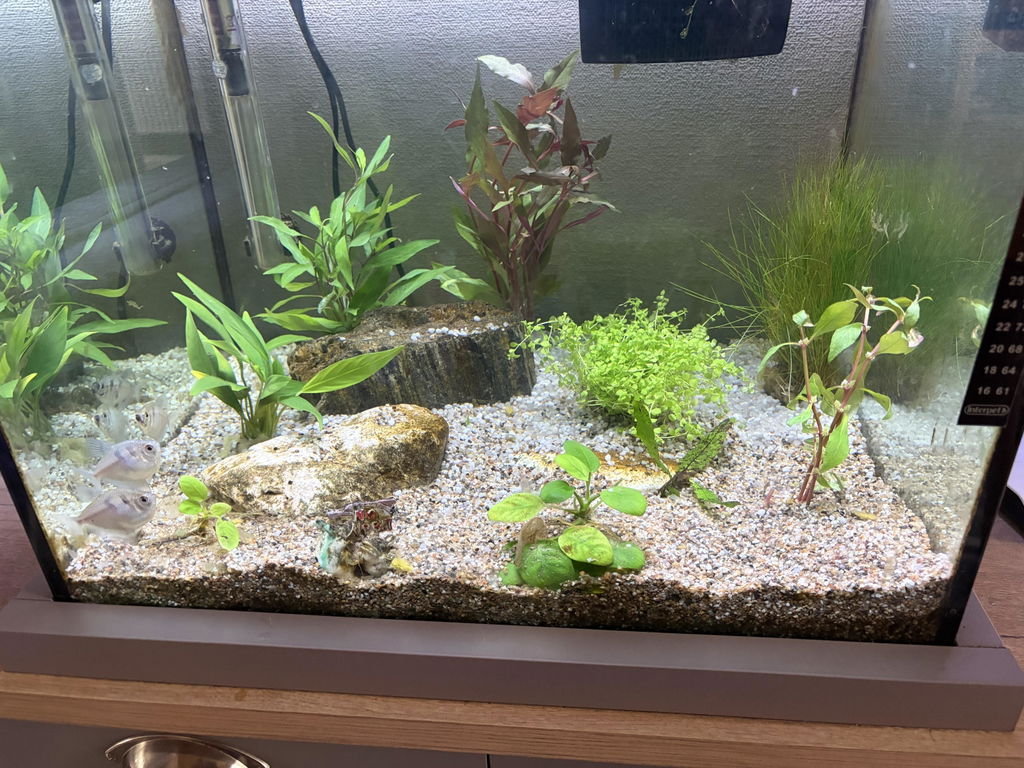


Sand can make an aquarium look natural, clean and beautifully bright, but it often leaves plant keepers with one nagging question: will anything actually grow in it? The short answer is yes. Aquarium plants can grow very well in sand, provided you choose suitable plants, anchor them correctly and replace the nutrition that plain sand does not contain. If you are planning a new setup, start by choosing an aquarium sand or gravel that suits both the look of the tank and the fish you keep.
Can Aquarium Plants Really Grow in Sand?
Yes. Sand is a planting medium, not a plant food. It can hold roots securely, but most aquarium sands are inert, which means they contain little or no nutrition of their own. Root-feeding plants therefore need fertiliser placed close to their roots, while plants that mainly feed through their leaves benefit from nutrients in the water.
The grain size also matters. Very fine sand can settle tightly, especially if it is laid in a deep, undisturbed bed. That does not make sand unusable. Keep the planted layer sensible, avoid crushing it down during setup and let healthy roots, burrowing snails and normal maintenance keep it from becoming stagnant.
The Best Aquarium Plants for Sand
The easiest route is to combine rooted plants with species that do not need planting at all. This gives you a full, planted appearance without asking every plant to take nutrients from the substrate.
Java Fern, Anubias and Other Plants That Grow on Décor
Epiphytes are among the safest choices for a sand aquarium because their rhizomes attach to wood or rock instead of being buried. Their leaves take much of what they need from the water, so the sand beneath them is largely irrelevant.
Java fern is dependable, adaptable and comfortable in moderate or lower light. Anubias is similarly forgiving and works especially well in shaded areas. For a quick result, an Anubias on mini lava rock can be placed directly on the sand without disturbing any roots.
Never bury the thick rhizome of Java fern or Anubias. Tie or glue it to décor, or use a ready-attached plant from our Plants On Wood and Plants On Rock collections.
Cryptocoryne
Crypts are excellent midground plants for sand once their roots have settled. Cryptocoryne wendtii Green is a particularly useful choice because it tolerates a wide range of conditions and develops into a naturally leafy clump.
It may lose some older leaves after planting. This is the familiar crypt melt caused by a change in conditions, not necessarily a dead plant. Leave healthy roots in place, feed underneath them and allow new submerged growth to appear.
Amazon Swords and Other Echinodorus
Sword plants can look spectacular against pale sand. They are strong root feeders, so they need more help than an epiphyte, but they respond well when nutrients are placed beneath them. A substantial plant such as Echinodorus radicans makes an effective background or focal plant in a larger aquarium.
Give sword plants room. Their root systems spread, and many varieties produce leaves that can shade smaller neighbours. One well-positioned specimen is often more effective than several crowded together.
Stem Plants
Many stem plants will also grow in sand. The usual difficulty is not nutrition but anchoring: buoyant stems can work loose before they root. Separate the stems, remove any damaged lower leaves and plant each one individually with aquarium tweezers. Space between stems improves water flow and lets light reach the lower growth.
Carpeting Plants
Carpeting plants are possible in sand, but they are not the easiest starting point. Fine roots, light planting material and fish that disturb the bottom can make establishment frustrating. Many carpets also need stronger lighting, more regular fertilisation and sometimes added CO2. If you want a low-maintenance sand tank, begin with crypts, swords and plants attached to décor.
From Aqua Essentials
Want plants that forgive the odd beginner mistake? Start with sturdy species that establish reliably in straightforward aquarium conditions.
Shop Beginner Aquarium Plants →How to Plant Aquarium Plants in Sand
Good planting prevents most of the early problems blamed on sand. Remove the plastic pot and as much rock wool as possible, then trim damaged roots with clean scissors. Healthy long roots can be shortened slightly so they go into the substrate rather than folding back towards the surface.
Use tweezers to push rooted plants deep enough to hold, then lift them gently until the crown sits just above the sand. The crown is the point where the leaves meet the roots. Burying it can cause rot. For stem plants, plant a few centimetres of bare stem and avoid bunching several stems into one hole.
If a plant repeatedly floats, use a little more depth, a temporary plant weight or a small stone beside the base. Avoid repeatedly pushing the delicate crown deeper. Once fresh roots form, the plant should hold itself.
How to Feed Aquarium Plants Growing in Sand
Root tabs are the simplest way to turn inert sand into a useful growing zone. Push them well below the surface near the roots of crypts, swords and other heavy root feeders. Keep them buried so their nutrients stay where the plant can use them instead of entering the water all at once. Our aquarium root tabs are designed for exactly this job.
A complete liquid fertiliser supports stem plants and epiphytes that absorb nutrients through their leaves. In a mixed planting, the two approaches complement each other: root tabs feed below the sand, while liquid fertiliser supports growth above it.
More fertiliser is not automatically better. Follow the product dose, watch the newest leaves and adjust gradually. Pale new growth, pinholes or stalled growth can signal a shortage, but poor light, unstable CO2 or damaged roots can cause similar symptoms.
Common Problems with Plants in Sand
The Plants Keep Floating Up
Plant stems separately, remove leaves from the section being buried and use tweezers to place them deeper. Check that the sand bed is deep enough to grip the roots, especially at the front where people often use only a thin decorative layer.
The Roots Are Healthy but the Leaves Look Pale
Plain sand has no stored nutrition. Add a root tab beneath rooted plants and make sure leaf-feeding plants receive an appropriate liquid fertiliser. New growth is the best place to look for improvement.
The Base of the Plant Is Rotting
The crown may be buried, or a rhizome plant may have been planted like a rooted plant. Lift crowns above the sand and attach Java fern, Anubias and Bolbitis to wood or rock instead.
The Sand Looks Dirty
Waste is more visible on light sand, but that can be useful because it is easy to remove. Hover a siphon just above the surface during water changes rather than plunging it deeply around new roots. Gentle surface cleaning keeps the tank tidy without uprooting plants.
Is Sand Better Than Gravel for Aquarium Plants?
Neither is universally better. Sand creates a smooth, natural finish and suits fish that forage on the bottom. Gravel is easier for some beginners to plant into and allows more movement of water between the grains. Both can grow healthy aquarium plants when the roots are fed and the planting method suits the species.
The better question is which substrate fits the fish, the plants and the appearance you want. If you love sand, there is no need to abandon it. Choose a few reliable rooted plants, add epiphytes on décor and provide nutrition in the places each plant can reach.
Give rooted plants the food plain sand cannot provide
Shop Aquarium Root Tabs →A planted sand aquarium does not need to be difficult. Build around species that suit your light and tank size, keep rhizomes above the substrate and feed hungry roots below it. Browse our potted aquarium plants to choose dependable plants for your layout.