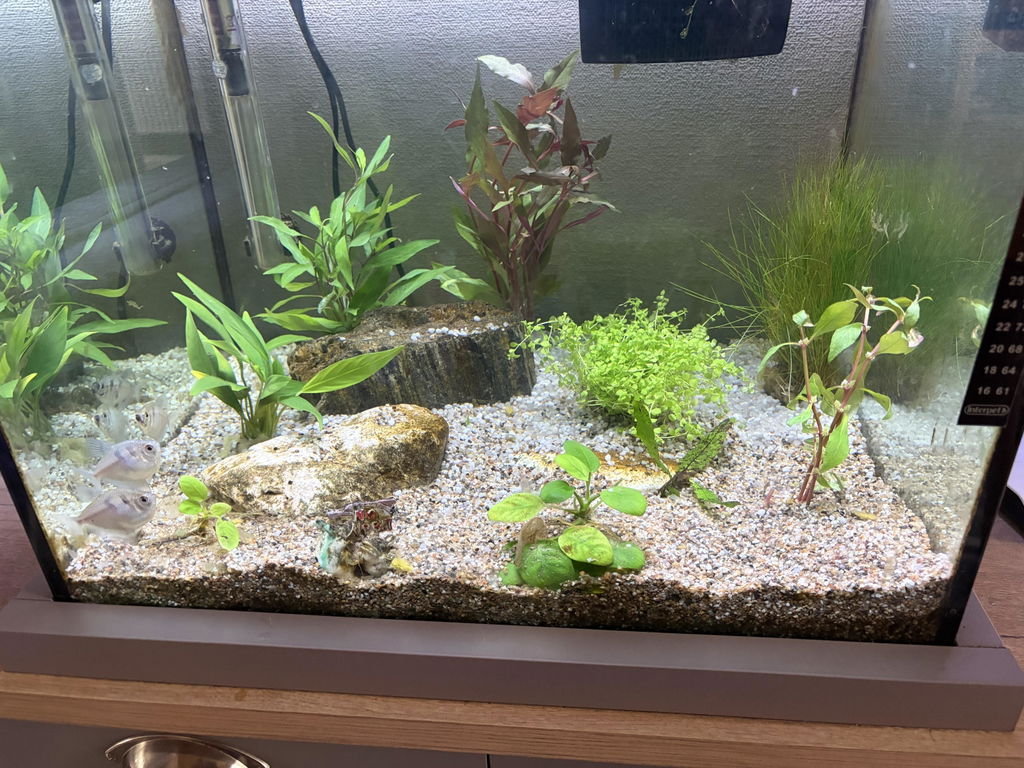


A splash of red in a planted aquarium stops you in your tracks — warm copper, rich burgundy, and intense magenta set against lush green foliage create exactly the kind of contrast that makes an aquascape genuinely eye-catching. But many aquarists find their red aquarium plants stubbornly stay green, or fade after a promising start. Getting vivid, lasting colour is absolutely achievable — it just requires understanding what these plants actually need.
Why Do Red Plants Turn Green?
Red and pink pigmentation in aquatic plants is largely the result of anthocyanins — pigments produced under specific conditions. In their natural environments, many red aquarium plants grow in shallow, brightly lit water with limited nutrients, particularly nitrogen. The red colouration is partly a photoprotective response and partly linked to nitrogen metabolism within the plant.
When placed in a typical aquarium with moderate light, ample nutrients, and no CO2, plants often have no reason to produce anthocyanins. They default to green because chlorophyll is more efficient for photosynthesis in lower light. To unlock red colouration, you need to shift the balance — more light, a tighter rein on nitrogen, and ideally pressurised CO2 to drive growth and pigmentation.
The Role of Nitrogen Levels
This is counterintuitive but important: excess nitrogen suppresses red pigmentation in many species. Keeping nitrate levels moderate — typically 5–15 ppm in a high-tech setup — can significantly intensify colour. That does not mean starving your plants; it means fine-tuning your fertiliser programme to keep phosphate, potassium, and micronutrients in balance without overdosing on nitrogen.
The Best Red Plants to Try
Alternanthera reineckii is probably the most well-known red plant in the hobby, and for good reason. Its lance-shaped leaves are rich burgundy-red on the underside with reddish-green tops, and under good conditions the whole plant glows with warm colour. It grows upright as a stem plant and works beautifully as a midground or background accent in Dutch and Nature Aquarium layouts alike.
For something more intense, Alternanthera cardinalis delivers bold red-purple colouration and an upright, architectural growth habit. It is slightly more demanding than standard reineckii but rewards the effort with stunning contrast against green neighbours. For aquarists who want that classic pinkish-red blush across a stem plant without the full demands of Alternanthera, Rotala rotundifolia is an excellent entry point — it is considerably easier to grow, tolerates a range of water parameters, and develops lovely pink-red tips when given sufficient light.
Ludwigia varieties round out the palette beautifully. Ludwigia palustris red and Ludwigia repens offer warm orange-red to deep red tones and are among the more forgiving red plants for aquarists still dialling in their setup. All of these species are available in our potted plant range.
From Aqua Essentials
Browse our full selection of red and purple aquarium plants — from classic Alternanthera and Rotala to striking Ludwigia varieties, all ready to add vivid colour to your aquascape.
Shop Red Plants →Light, CO2 and Fertilisers: Getting the Conditions Right
Light is the single biggest lever for red plant colour. Most red plants need medium to high intensity light to express their pigmentation reliably — typically upwards of 30 PAR at the substrate. This does not mean the most powerful lighting available; it means ensuring your plants receive consistent, quality light for 8–10 hours a day without major fluctuations that disrupt the photoperiod.
CO2 injection transforms red plant performance. With pressurised CO2, plants grow faster, consume more nutrients, and typically colour up far more intensely. If you are serious about growing red plants well, a pressurised CO2 system is one of the most effective upgrades you can make to a planted tank. The difference in leaf colour between a CO2-injected and non-injected tank growing the same Alternanthera can be remarkable — often the difference between green-tinged and genuinely vivid red.
On the fertiliser side, ensure you are providing a full spectrum of micronutrients including iron. Iron is particularly associated with pigment synthesis, and a deficiency can cause red plants to pale or lose intensity over time. Browse the fertiliser range at Aqua Essentials to find the right products for your tank size and plant load — a quality comprehensive fertiliser makes a noticeable difference.
Positioning Red Plants for Maximum Impact
Even perfectly grown red plants will have less visual impact if they are not positioned thoughtfully. Red and warm-toned plants create the strongest contrast when surrounded by green foliage — particularly fine-leaved green plants that provide a neutral backdrop. Avoid grouping multiple red species directly next to each other; instead, use them as accent points within a predominantly green layout to maximise the contrast effect.
Height matters too. Many of the best-known red plants, including Alternanthera and Rotala, are mid-to-background stem plants. Positioning them behind a foreground carpet or low-growing Anubias allows the red tones to dominate visually without being obscured by surrounding growth. A single, well-maintained group of Alternanthera reineckii in the middle-rear of a tank will draw the eye immediately — it does not take many plants to make a powerful visual statement.
Red plants are some of the most rewarding species in the planted tank hobby, and once the conditions are dialled in, the colour payoff is extraordinary. Explore the full range of red and purple aquarium plants at Aqua Essentials and find the right varieties to bring vivid contrast to your aquascape.