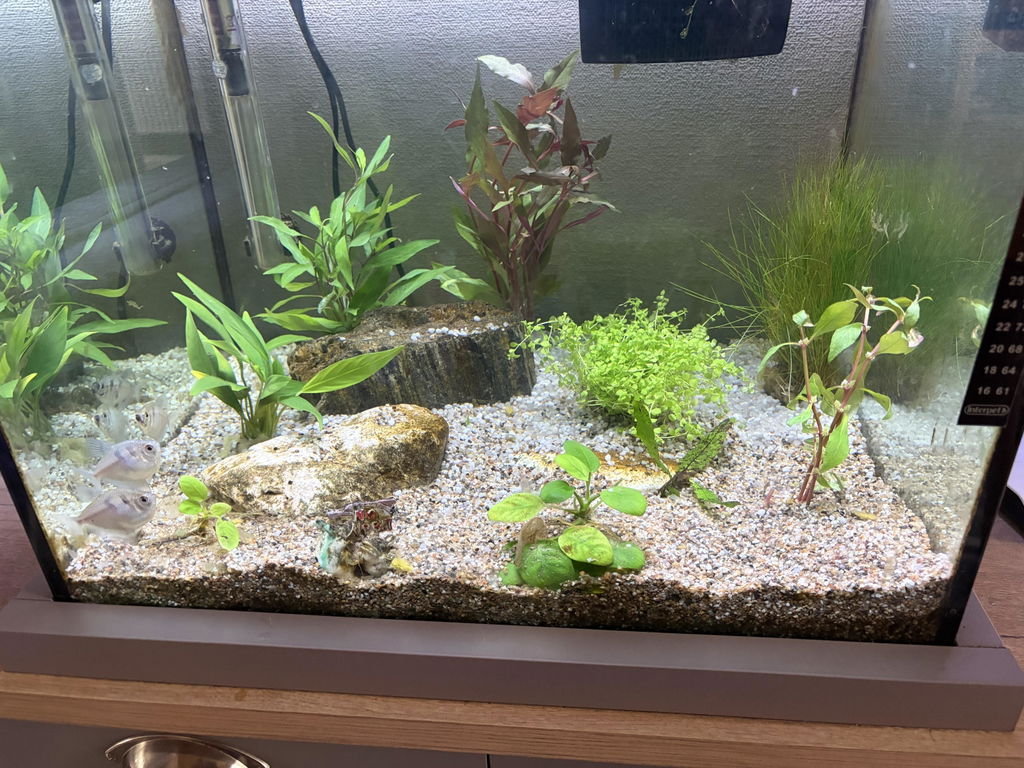


If you've been browsing aquarium plant options online, you'll have noticed tissue culture plants popping up everywhere. Sold in small sealed cups rather than pots or bunches, they're often pricier than traditionally grown stock — so the question is understandable: are tissue culture aquarium plants actually worth it? After years of helping hobbyists across the UK set up planted tanks, we think the answer is a clear yes — but with some important caveats that will save you money and frustration.
What Are Tissue Culture Plants, and How Are They Grown?
Tissue culture (TC) plants — also known by the Tropica brand name 1-2-Grow! — are cultivated in sterile laboratory conditions from a tiny fragment of plant tissue. The growing medium is a sealed gel that provides all the nutrients the plant needs during propagation. Because the entire process takes place in a contaminant-free environment, the end result is something remarkable: an aquatic plant that is completely free of algae, pest snails, planaria, and pesticide residues before it ever reaches your tank.
This matters far more than it might sound. Traditional aquarium plants, however well-grown, are submerged in water that may carry hitchhikers — snail eggs, algae spores, or traces of pesticide from the nursery. Introducing these into a carefully managed planted tank can set back weeks of work. TC plants eliminate this risk at source.
The Growth Stage Difference
TC plants are propagated in their emersed (above-water) growth form. When you introduce them to your aquarium, they go through a short transition period as they adapt to submerged growth — sometimes dropping their initial leaves before pushing out lush new submersed growth. This is completely normal and not a sign of poor health. Most TC plants are well-established within two to four weeks.
The Practical Benefits for UK Hobbyists
Beyond the clean-start benefits, tissue culture plants offer some practical advantages that are particularly relevant if you're setting up a new aquascape or maintaining a shrimp tank. Because they arrive in a sealed cup, they have a longer shelf life than cut stems or traditionally potted plants — a genuine advantage when ordering online and waiting for delivery. They're also ideal for carpeting plants such as Monte Carlo and Eleocharis, where you need dense, healthy starter material to achieve a proper mat.
Shrimp keepers benefit enormously from TC plants. Many ornamental shrimp — Neocaridina, Caridina, and breeding colonies in particular — are sensitive to pesticide traces that can survive normal water changes. Starting a shrimp tank with tissue culture plants from day one removes this variable entirely.
From Aqua Essentials
Our TC Mixed Box lets you try a curated selection of tissue culture plants in one order — perfect for filling out a new scape or building a shrimp-safe setup from scratch. Choose from 5, 10, 15, or 20 pots with a mix chosen for compatibility and visual balance.
Shop TC Mixed Boxes →Which Tissue Culture Plants Should You Start With?
With over 120 TC varieties available at Aqua Essentials, the choice can feel overwhelming. Here's where we'd point beginners and experienced aquascapers alike.
For carpeting and foreground work, Tropica Micranthemum Monte Carlo 1-2-GROW! is our most consistently popular TC plant. It forms a dense, bright-green carpet even in medium light without CO2 injection, making it one of the most accessible carpet plants for hobbyists who aren't running a pressurised CO2 system. For a finer, grass-like alternative, Tropica Helanthium tenellum Green 1-2-GROW! produces a delicate meadow effect and responds beautifully to good liquid fertiliser dosing.
For mid-ground and accent planting, the Tropica 1-2-Grow range includes a wide selection of Bucephalandra, Anubias nana varieties, Rotala, and Hygrophila. These tend to transition faster than carpet species and begin looking established within a fortnight of planting.
TC Plants in High-Tech vs Low-Tech Tanks
One persistent myth is that TC plants require CO2 injection to thrive. In reality, the vast majority of tissue culture varieties — including Monte Carlo, Helanthium, and the Anubias range — will grow happily in a low-tech tank with good lighting and regular fertiliser dosing. CO2 will accelerate growth and improve carpet density, but it is not a prerequisite for success with TC plants.
How to Introduce TC Plants to Your Aquarium
The process is straightforward but benefits from a little care. Remove the cup from its packaging and gently rinse the plant under lukewarm tap water to wash away the gel growing medium — any remaining gel can cloud your aquarium water initially if left on. Separate the plant mass into smaller portions (TC cups typically contain enough material for a 20–40cm planting zone for carpet species), and plant directly into your substrate using tweezers. Anchor portions firmly; TC plants can be slightly buoyant until roots take hold.
For the first two weeks, maintain stable water parameters, run your lighting on a consistent photoperiod, and avoid heavy pruning until the plants show new submersed growth. From there, tissue culture plants are as straightforward to maintain as any other aquatic variety — with the confidence that your tank started clean.