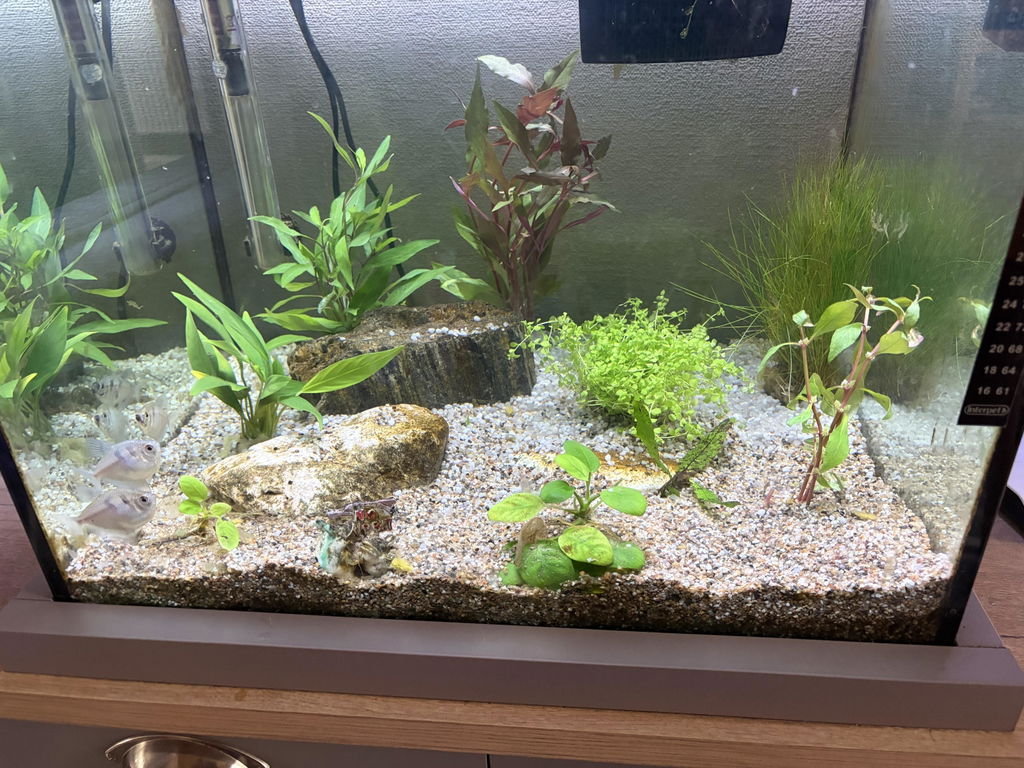


Shrimp and planted aquariums are a natural pairing. Shrimp graze on biofilm, help control nuisance algae, and add colour and movement that few small fish can match. But shrimp are also sensitive creatures — and setting up their tank correctly from the start makes the difference between a thriving colony and a frustrating one. Here's what you need to know.
Getting Water Chemistry Right Before Adding Shrimp
Shrimp are considerably more sensitive to water chemistry than most fish. The two most popular beginner species — Cherry Shrimp (Neocaridina davidi) and Amano Shrimp (Caridina multidentata) — have different requirements, but both benefit enormously from a well-established, stable environment.
Neocaridina shrimp (Cherry, Blue Velvet, Yellow) prefer slightly harder water: pH 6.5–7.5, KH 2–8, GH 4–8. Caridina shrimp (Crystal Red, Bee Shrimp) are more demanding and need softer, more acidic water. Before buying, research the species you want and match your tap water accordingly — or invest in a reverse osmosis unit and remineralise to your target parameters.
Most importantly, never add shrimp to a new tank. The aquarium needs to be fully cycled — meaning beneficial bacteria must be established in the filter — before shrimp go in. Ammonia and nitrite spikes that a fish might survive are often fatal to shrimp. Wait at least six to eight weeks, test your water thoroughly, and only then introduce your first batch.
Choosing the Best Plants for a Shrimp Tank
Good news: most aquarium plants are completely safe for shrimp. The ones to prioritise are those that provide plenty of surface area for biofilm — the microscopic coating of algae, bacteria, and organic matter that shrimp graze on constantly throughout the day.
Aquarium mosses are arguably the number-one plant choice for a shrimp tank. Java Moss, Weeping Moss, and Christmas Moss all create dense thickets that shrimp colonise instantly, providing cover and a constant supply of grazing material. Tie them to wood or rock and they'll spread naturally over time.
Epiphytes like Anubias, Java Fern, and Bucephalandra are another staple. Slow-growing, low-light, and utterly unfussy, they're safe for shrimp and provide broad leaf surfaces on which biofilm readily develops. Our Anubias on Driftwood is a popular ready-made option — place it directly in the tank and you're done.
The most important plant safety rule: avoid anything that may have been treated with pesticides. Many potted plants sold through general retailers may have residual treatments that can be lethal to shrimp. Tissue culture plants are the safest option — lab-grown in sterile conditions and guaranteed pesticide-free, they're the preferred choice of serious shrimp keepers.
From Aqua Essentials
Our Java Fern is a long-time favourite for shrimp tanks — low-light, easy to grow, and perfectly safe for even the most delicate Caridina species. Pair it with mosses and a shrimp hide for a complete setup.
Shop Shrimp Accessories →Creating Shelter and Hiding Spots
Shrimp moult regularly as they grow, and during and after a moult they are extremely vulnerable — soft-bodied, slow, and defenceless. Without adequate hiding places, newly moulted shrimp become easy targets for tank mates, and even otherwise peaceful fish can turn opportunistic when a helpless shrimp is in the open.
Purpose-Built Shrimp Hides
Dense planting provides the best shelter, but purpose-built hides add an extra layer of security and look great in the process. Our Java Moss Shrimp Shelter combines a ceramic hide with living moss — offering physical refuge and a grazing surface in one piece. The Coconut Arch with Java Moss is another excellent option: a natural coconut shell structure overgrown with moss that shrimp will use constantly, particularly around moulting time.
Providing plenty of hides also has a secondary benefit: during moulting, shrimp release hormones that can prompt other shrimp in the tank to moult simultaneously. A tank with adequate hiding spots gives each shrimp the space and security to complete this process without interference.
What to Avoid in a Shrimp Tank
A few common mistakes can undo an otherwise well-set-up shrimp tank. Copper is the big one — many fish medications and some aquarium fertilisers contain trace amounts of copper, which is highly toxic to invertebrates even at very low concentrations. Always read the label before adding anything to a shrimp tank, and choose shrimp-safe fertilisers from a trusted supplier.
Filtration is another area to get right. Shrimp fry are tiny and easily sucked into an uncovered filter inlet. Fit a sponge pre-filter or use a dedicated sponge filter to eliminate this risk entirely. If you're running CO2, be mindful of the pH swing between lights-on and lights-off — large swings can stress shrimp considerably, so keep CO2 levels moderate and ensure good surface agitation at night to prevent CO2 build-up.
Finally, choose tank mates carefully. Most small, peaceful community fish are fine with adult shrimp, but juvenile shrimp are at risk from almost any fish. If you want a thriving, reproducing colony, a species-only shrimp tank is the safest approach — and with the right plants and hides, it will be just as visually rewarding as any community setup.
Whether you're setting up your first shrimp tank or improving an existing one, the right combination of plants, shelter, and stable water chemistry makes all the difference. Browse our full range of shrimp accessories and beginner-friendly plants at Aqua Essentials and build a setup your shrimp will thrive in.