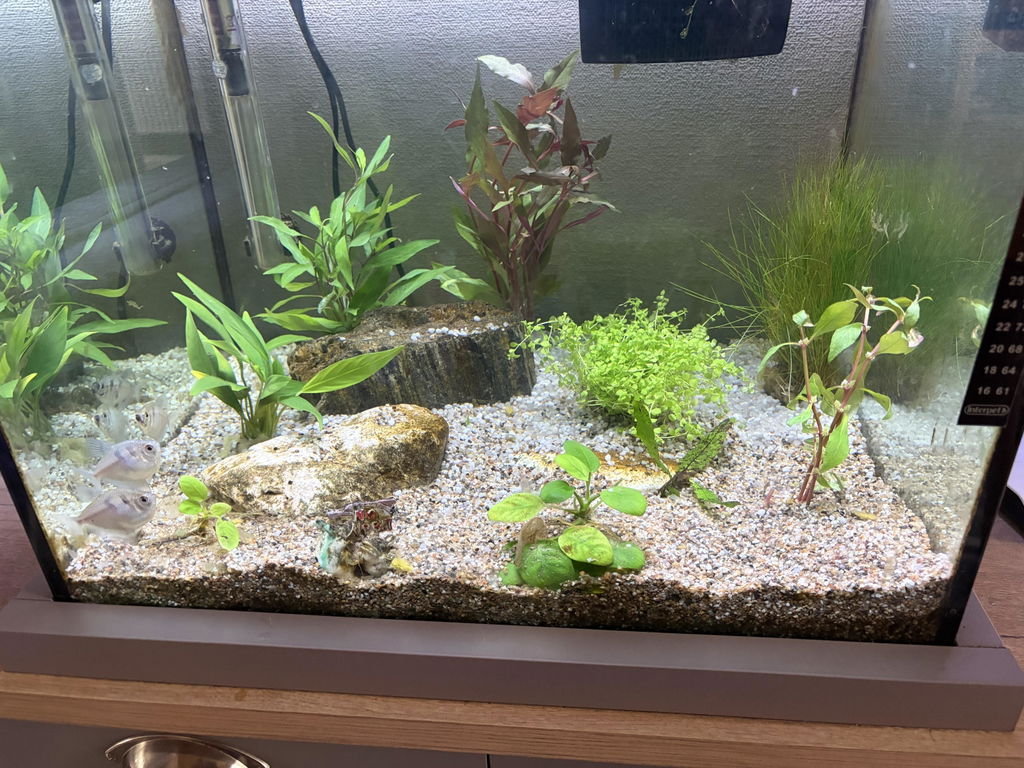


Axolotl tanks are different from standard tropical aquariums. They are usually cooler, lower light and more prone to disturbance because axolotls are not exactly graceful. They walk, push, dig, sit on plants and sometimes bulldoze anything that has been carefully placed in their way.
That means choosing live plants for an axolotl tank is not just about what looks good. You need plants that are suitable for cooler water, lower light and the behaviour of an active axolotl. The best aquarium plants for axolotls are usually tough, low-light plants that do not need CO2 or intense lighting.
This guide explains what to look for, which plants are commonly used in axolotl aquariums, and how to plant them in a way that gives them the best chance of surviving.
From Aqua Essentials
We’ve put together a dedicated Axolotl Safe Aquarium Plants collection — all the hardy, low-light, cooler-water plants that are commonly used in axolotl setups, in one place.
Browse Axolotl-Safe Plants →Do axolotls need live plants?
Axolotls do not need live plants to survive, but live plants can make their aquarium feel more natural and comfortable. Plants provide shade, cover and visual shelter, which can help create a calmer-looking setup.
Live plants can also support water quality by using some of the nutrients in the aquarium. They are not a replacement for proper filtration, water changes or tank maintenance, but they can be a useful part of a stable aquarium.
The important point is that axolotls need cooler water than most tropical fish. Many commonly sold aquarium plants are grown and sold for tropical tanks, so not every plant will thrive in an axolotl setup.
What temperature do axolotl tanks need?
Axolotl tanks are usually kept cooler than tropical aquariums. A commonly recommended range is around 16–18°C, which is cooler than many standard planted tropical tanks.
This matters because a plant that grows well at 24–26°C in a tropical aquarium may slow down, struggle or melt back in a cooler axolotl tank.
So when people ask, “Are these plants safe for axolotls?”, they often mean several things at once:
- Are they non-toxic?
- Will they cope with cooler water?
- Will they grow in lower light?
- Will the axolotl damage or uproot them?
- Are they soft enough not to scratch or irritate the axolotl?
This is why plant choice matters. A plant can be safe in the sense that it is not toxic, but still unsuitable if it needs warm water, strong light or delicate aquascaping conditions.
What makes an aquarium plant suitable for axolotls?
The best plants for axolotl tanks usually have a few things in common. They tolerate cooler water better than delicate tropical plants. They do not need strong lighting. They can grow without CO2 injection. They are not sharp, spiky or rough. They are also tough enough to cope with being knocked, sat on or disturbed.
Attached plants are especially useful. These are plants such as Java Fern and Anubias, which grow attached to wood, rock or aquarium decor rather than needing to be planted deeply into the substrate.
That matters because many axolotls dig or push through the substrate. A plant that is carefully planted in gravel today may be floating around the tank tomorrow looking betrayed.
Best aquarium plants for axolotl tanks
Java Fern
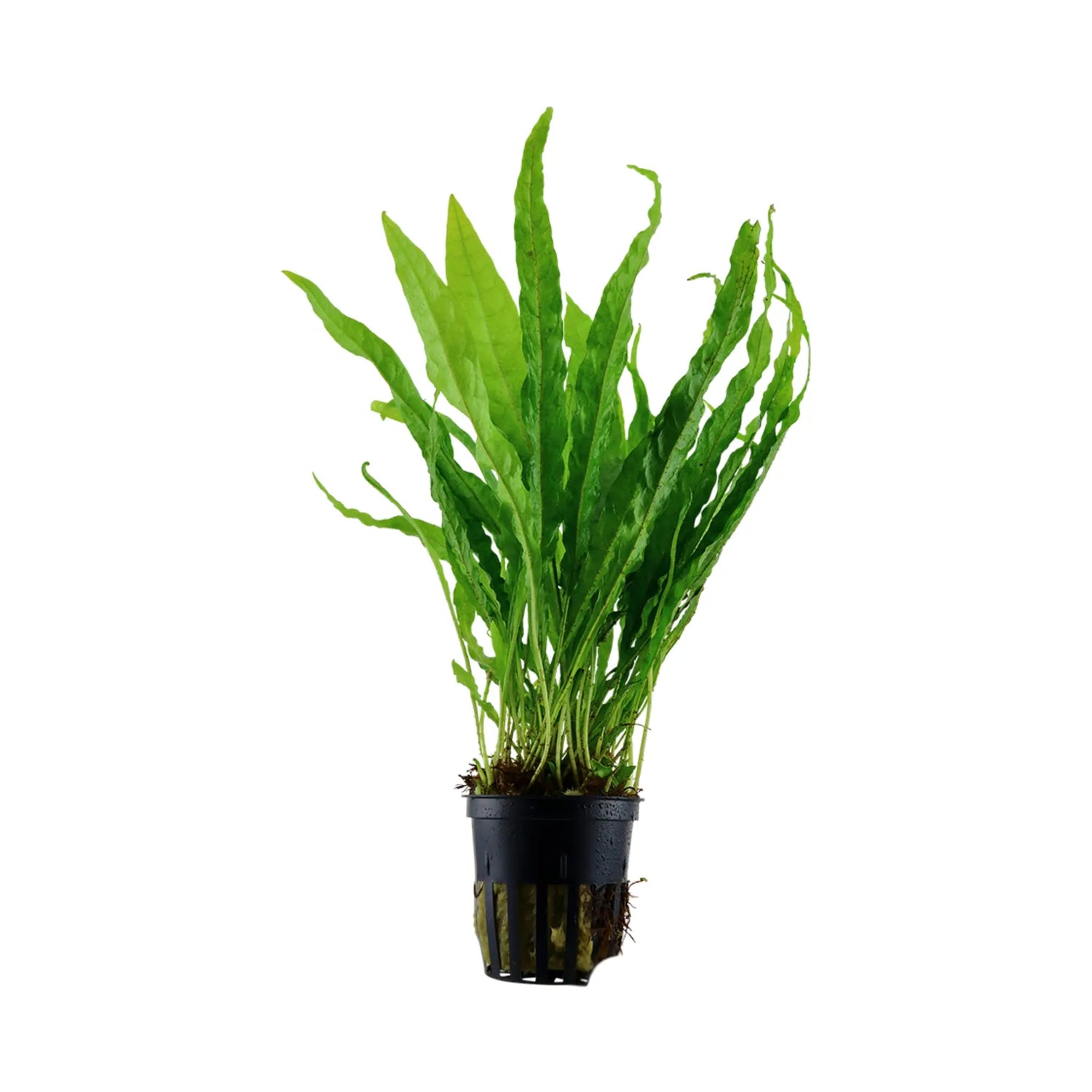
Java Fern is one of the best-known plants for axolotl tanks. It is hardy, low-light friendly and does not need to be planted in the substrate. Instead, it should be attached to wood, rock or aquarium decor.
This makes it useful for axolotl tanks because it is harder for the axolotl to uproot. The leaves are also fairly tough, so it can cope better with disturbance than many softer plants.
Java Fern is not a fast-growing plant, especially in cooler water, but that can be a benefit in low-maintenance setups. It is a steady, reliable choice rather than a dramatic one.
- Best for: attaching to wood, rocks or hides
- Light: low to medium
- CO2 needed: no
- Axolotl suitability: very good
Anubias
Anubias is another excellent choice for many axolotl aquariums. Like Java Fern, it grows attached to hardscape rather than needing to be buried in the substrate. It has thick, tough leaves and is very tolerant of lower light.
Anubias is often one of the safest recommendations because it is slow-growing, robust and less likely to fall apart in a cooler tank.
When planting Anubias, do not bury the rhizome. The rhizome is the thick horizontal stem where the leaves and roots grow from. If it is buried, the plant may rot. Attach it to wood, stone or decor instead.

Anubias has tough leaves and should be attached to wood or rock rather than buried in the substrate.
- Best for: attached planting, shaded areas and simple aquascapes
- Light: low to medium
- CO2 needed: no
- Axolotl suitability: excellent
From Aqua Essentials
Java Fern and Anubias are both available pre-attached to wood or rock — ready to place directly into your axolotl tank with no tying or waiting. Browse our full epiphytes collection or plants on rock for options that are impossible for an axolotl to uproot.
Browse Attached Plants →Java Moss
Java Moss can work well in axolotl tanks, especially when attached to wood, rocks or mesh. It provides a soft, natural look and can create extra cover in the aquarium.
However, moss can also trap debris, so it needs occasional cleaning. In an axolotl tank, where waste can be larger than in small fish tanks, this matters. Java Moss is best used in controlled patches rather than letting it spread everywhere.
- Best for: attaching to wood or rock, soft cover
- Light: low to medium
- CO2 needed: no
- Axolotl suitability: good, but keep it tidy
Hornwort
Hornwort, also known as Ceratophyllum demersum, is a popular option for cooler aquariums because it is adaptable and can be grown floating or loosely anchored. It grows quickly in the right conditions and can help absorb nutrients from the water.
For axolotl tanks, floating Hornwort can be useful because it does not rely on being rooted. It can also create shade, which axolotls often appreciate.
The downside is that Hornwort can sometimes shed needles, especially if conditions change. That does not make it unsuitable, but it is worth watching. If it starts shedding heavily, remove loose pieces during maintenance.

Hornwort can be floated or loosely anchored, making it useful in tanks where planted stems may be disturbed.
- Best for: floating cover, nutrient uptake and natural shade
- Light: low to medium
- CO2 needed: no
- Axolotl suitability: good, with regular tidying
Elodea / Egeria
Elodea Densa, also known as Anacharis, is often used in cooler aquariums and can be a good fit for many axolotl tanks. It can be planted, weighted or left floating depending on the setup.
It is fast-growing compared with many other low-tech plants, although growth will depend heavily on temperature and lighting. In very cool or dim tanks, it may slow down.
This plant is useful because it is easy to replace if damaged and good for adding quick greenery.

Elodea Densa can be floated or planted, depending on the aquarium setup.
- Best for: background cover, floating stems and simple planting
- Light: medium preferred, but can manage lower light
- CO2 needed: no
- Axolotl suitability: good
Vallisneria
Vallisneria can work in some axolotl tanks, especially larger aquariums where there is room for tall background planting. It produces long, grass-like leaves and can create a natural curtain effect.
However, Vallisneria is more likely to be uprooted than attached plants. It needs to be planted into the substrate, so it may not suit axolotls that dig heavily.
If using Vallisneria, plant it in the background, give it space, and consider protecting the base with larger smooth stones so the axolotl is less likely to pull it up.
- Best for: background planting
- Light: low to medium
- CO2 needed: no
- Axolotl suitability: good in stable tanks, less ideal with heavy diggers
Bolbitis
Bolbitis is a good option for cooler, shaded aquariums and can be attached to wood or rock in a similar way to Java Fern and Anubias. It has a more textured, fern-like appearance, which can make an axolotl tank look more natural.
It is generally slow-growing, especially in cooler setups, but it is a good choice if you want something more interesting than the usual beginner plants.
- Best for: attached planting and natural aquascapes
- Light: low to medium
- CO2 needed: no
- Axolotl suitability: good
Floating plants
Floating plants can be useful in axolotl tanks because they provide shade and help soften bright lighting. This is important because axolotls often prefer dimmer environments.
Good floating plant options may include Salvinia, Frogbit and Water Lettuce, depending on tank conditions. Floating plants are not always perfect, though. They can struggle with condensation under lids, strong surface movement or very cool rooms.
Use floating plants as a flexible option rather than a guaranteed permanent solution. If they grow well, they can be excellent. If they struggle, remove dying leaves before they decay in the aquarium.
- Best for: shade, surface cover and low-light comfort
- Light: moderate light usually helps
- CO2 needed: no
- Axolotl suitability: good, depending on setup
Plants to be careful with in axolotl tanks
Not every aquarium plant is a good fit.
Very delicate stem plants may struggle in cooler water or get damaged easily. High-light carpeting plants are usually a poor choice because axolotl tanks are not normally bright, warm CO2-injected aquascapes. Sharp, stiff or spiky plants should also be avoided where possible.
Be cautious with plants that need warm tropical temperatures, strong light, CO2 injection or rich planted substrates. They may look appealing online, but that does not mean they are right for an axolotl aquarium.
Also be careful with small loose pieces of decor, plant weights or sharp hardscape. Axolotls can accidentally ingest small objects, and they have delicate skin.
How to plant an axolotl tank
The best planting method depends on the plant.
For Java Fern, Anubias and Bolbitis, attach the plant to wood, rock or decor. You can use aquarium-safe thread, plant glue or gently wedge the roots into a suitable gap. Do not bury the rhizome.
For Hornwort, Elodea and Egeria, you can float the stems or loosely anchor them. Floating is often easier in axolotl tanks because the plant cannot be dug up in the same way.
For Vallisneria and other rooted plants, plant them into the substrate but avoid burying the crown too deeply. If your axolotl likes digging, use smooth stones around the base to reduce disturbance.
In general, simple is better. Axolotl tanks do not need complicated aquascaping. Focus on hardy plants, open floor space and safe hides.
Do axolotl plants need fertiliser?
Some aquarium plants may benefit from fertiliser, but axolotl tanks are best kept simple. Choose hardy, low-demand plants first rather than relying on heavy fertiliser dosing.
For rooted plants such as Vallisneria or some larger background plants, Neutro TerraTabs can be useful because they feed the roots directly. Use them carefully and follow the product instructions.
For attached plants like Anubias, Java Fern and Bolbitis, a liquid aquarium fertiliser may be more relevant because these plants take nutrients from the water column. Again, avoid overdosing and keep water quality stable.
The safest approach is to start with low-demand plants, observe how they grow, and only add fertiliser where needed.
From Aqua Essentials
Neutro TerraTabs are small root-feeding tablets you push into the substrate near plant roots — ideal for Vallisneria and any other rooted plants in your axolotl tank. One tab per plant, every 3–4 months.
Shop Neutro TerraTabs →Do axolotl tanks need strong light for plants?
No. In fact, strong lighting can be a problem. Axolotls often prefer dimmer conditions, and bright light can leave them exposed if the tank does not have enough shade or hides.
Choose low-light plants and use lighting that supports plant growth without making the tank harsh. Floating plants, tall background plants and shaded areas can all help.
If algae becomes a problem, reduce the lighting period before adding more products. In many axolotl tanks, too much light causes more trouble than too little.
Are aquarium plants toxic to axolotls?
Most common aquarium plants sold for fish tanks are not considered toxic to axolotls, but “safe” is still a word that needs care.
A plant can be non-toxic but still unsuitable if it has sharp leaves, falls apart in cold water, traps waste or needs conditions that do not suit axolotls. So the better question is not just “Is this plant safe?” but “Is this plant suitable for the way an axolotl tank is kept?”
That is why hardy, low-light, cooler-tolerant plants are the best place to start.
Best beginner plant list for axolotl tanks
For most axolotl keepers, these are sensible starting points:
- Java Fern
- Anubias
- Java Moss
- Hornwort
- Elodea Densa
- Bolbitis
- Vallisneria
- Selected floating plants such as Salvinia or Frogbit
If you are new to axolotls, start with just a few tough plants rather than filling the aquarium heavily straight away. See what grows well in your temperature and lighting, then add more.
Final thoughts
The best aquarium plants for axolotl tanks are not always the most colourful or dramatic. They are the plants that can cope with cooler water, lower light and the occasional axolotl-shaped bulldozer.
Java Fern, Anubias, Hornwort, Elodea, Java Moss and Bolbitis are good starting points because they are hardy, simple and widely used in low-tech aquariums. Floating plants can also help create shade and cover.
The key is to choose plants that match the tank, not just the photo on the product page. Axolotl aquariums work best when they are cool, calm, safe and easy to maintain.
FAQ
What are the best aquarium plants for axolotl tanks?
The best aquarium plants for axolotl tanks are hardy, low-light plants that can cope with cooler water. Good options include Java Fern, Anubias, Java Moss, Hornwort, Elodea, Bolbitis, Vallisneria and selected floating plants.
Are live plants safe for axolotls?
Most common aquarium plants are not toxic to axolotls, but not every plant is suitable. The best choices are soft, hardy plants that tolerate cooler water, lower light and disturbance from the axolotl moving around the tank.
Can axolotls live with Java Fern?
Yes, Java Fern is one of the most commonly recommended plants for axolotl tanks. It is hardy, low-light friendly and can be attached to wood, rock or decor instead of being planted in the substrate.
Can axolotls live with Anubias?
Yes, Anubias is a good plant for many axolotl tanks. It has tough leaves, grows well in low light and can be attached to wood or rock. Do not bury the rhizome, as this can cause the plant to rot.
Do axolotl tanks need cold water plants?
Axolotl tanks are usually kept cooler than tropical aquariums, so plant choice matters. Choose plants that are known to cope better with cooler water and avoid delicate tropical species that need warmth, strong light or CO2.
Will axolotls eat live plants?
Axolotls do not usually eat aquarium plants as food, but they may mouth them, sit on them or accidentally break pieces while moving around. Tough attached plants and floating plants are usually better choices.
Do axolotl plants need CO2?
No, the best plants for axolotl tanks are usually low-tech plants that do not need CO2 injection. Java Fern, Anubias, Java Moss, Hornwort and Elodea can all be grown without CO2 in suitable conditions.
Can I use fertiliser in an axolotl tank?
Aquarium plant fertiliser can be used carefully, but it is best to keep axolotl tanks simple and avoid overdosing. For rooted plants, Neutro TerraTabs can help feed the roots directly when used according to the instructions.