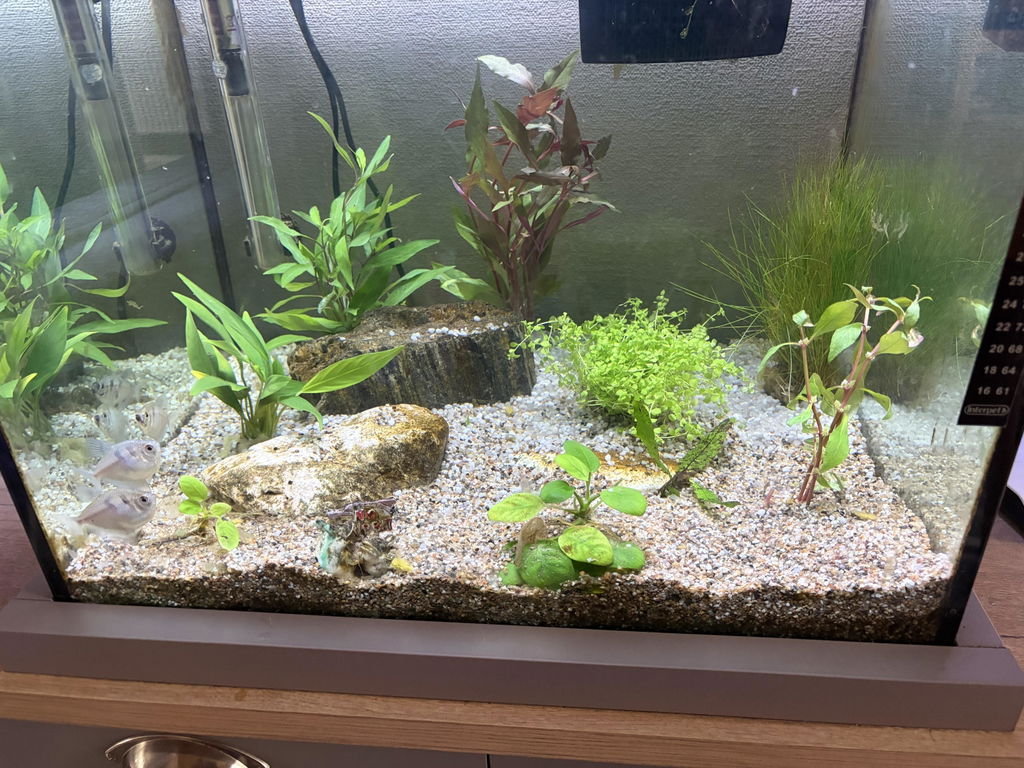


If you dream of a planted tank that genuinely turns heads — deep red stems, carpets of bright green, plants pearling oxygen like a mountain spring — then CO2 is the single biggest upgrade you can make.
Nothing else comes close.
You can have the best substrate, the right fertilisers, and a quality light. But without carbon, your plants are running on empty. They'll survive, sure. But they won't thrive the way you know they can.
This guide covers everything you need to know about aquarium CO2 systems in the UK in 2026: the different types, how to choose the right one for your tank size, how to set it up correctly, and exactly which products to buy. We've kept it practical, honest, and conversion-ready — because the goal here is a better tank, not a longer reading list.
Why Plants Need CO2 (And Why Most Tanks Are Deficient)
Aquatic plants are, at their core, carbon-based organisms. Around 90% of a plant's dry mass is carbon. In the wild, rivers and streams are constantly replenished with CO2 from the atmosphere, decomposing organic matter, and the respiration of aquatic life. In a closed aquarium, that supply is quickly exhausted.
When you provide supplemental CO2, you are giving your plants the primary building block of photosynthesis. The results are dramatic:
- Faster, denser growth — plants that previously crept along will visibly grow within days
- Richer colours — reds become deeper, greens become more vivid
- Pearling — the spectacular effect where plants produce so much oxygen it bubbles directly off the leaves
- Algae suppression — healthy, fast-growing plants absorb nutrients before algae can exploit them
The target CO2 concentration for a high-tech planted tank is typically 20–30 mg/L (parts per million). Tap water in the UK rarely exceeds 5 mg/L. That gap is exactly what your CO2 system needs to bridge.
The Three Types of CO2 Supplementation
There is no single "best" CO2 system. The right choice depends on your tank size, budget, experience level, and how seriously you want to pursue aquascaping. Here is an honest breakdown of all three approaches.
Option 1: Liquid Carbon — The No-Equipment Entry Point
Liquid carbon is not true CO2 gas, but it is a genuine and effective carbon supplement. Products like Neutro CO2 and Easy-Life EasyCarbo contain glutaraldehyde-based compounds that plants can absorb directly from the water column.
The advantages are significant: no equipment to set up, no cylinders to manage, no risk of CO2 overdose, and a secondary benefit as a mild algaecide when dosed daily. For low-tech tanks, nano setups, and beginners, liquid carbon is often the smartest first step.
The limitation is equally honest: liquid carbon cannot match the growth rates achievable with pressurised gas injection. For high-demand plants like Hemianthus callitrichoides (HC Cuba) or Eleocharis acicularis, you will eventually want to upgrade.
Ideal for: Tanks under 100L, low-tech setups, beginners, algae control.
 Neutro CO₂ — Liquid Carbon for Planted Aquariums
Aqua Essentials' own-brand liquid carbon. Rated 4.9/5 from 78 verified reviews. Available in four sizes from 500ml to 4 litres, with a Subscribe & Save option to keep costs down. Customers consistently report improved plant health and significant reductions in algae within days of starting.
From £10.99
BUY NEUTRO CO₂ Easy-Life EasyCarbo 500ml — Liquid Carbon & Algae Control
A trusted European brand with an excellent reputation in the hobby. Provides essential carbon for healthy plant growth and actively reduces algae on plants, hardscape, and glass. Rated 4.8/5 from 22 verified reviews. Safe for fish, shrimp, and snails when dosed correctly.
£9.99 (500ml) | £17.99 (1000ml)
BUY EASYCARBO 500MLOption 2: Chemical Reaction Reactors — The High-Tech Hybrid
The Colombo CO2 Reactor system sits in a fascinating middle ground. It generates genuine CO2 gas through a controlled chemical reaction between two components (Component A and Component B) mixed with water inside a stainless steel cylinder. The result is a steady, controllable stream of pure CO2 — just like a pressurised system — but without the need for high-pressure cylinders.
This approach is clever. The stainless steel reactor looks premium in your cabinet, the solenoid allows automated on/off control via a timer, and the refill components are inexpensive and easy to source. For medium-sized tanks where a pressurised cylinder feels like overkill, this is a genuinely compelling option.
The trade-off is that CO2 output can vary slightly depending on temperature and the freshness of the components. For very large or high-demand tanks, a pressurised system will always be more consistent.
Ideal for: Tanks from 50–200L, intermediate aquascapers, those who prefer a self-contained system.
 Colombo CO₂ Reactor Pro — Complete High-Tech Bundle
The most complete CO2 starter package available. Everything is included: stainless steel reactor, pressure regulator, magnetic solenoid valve, bubble counter, diffuser, Component A, Component B, CO2 indicator (drop checker), and Neutro Combo High Tech fertiliser. Rated 4.8/5 from 24 verified reviews.
"Even I found it simple and it is working perfectly" — Verified customer
£251.99 £239.99 Save £12
Already own the reactor? Keep it running with the refill components:
 Colombo CO₂ Component A Refill pouch for the Colombo Reactor. Mix with tap water to generate CO2. £8.99 BUY NOW
 Colombo CO₂ Component B The second part of the chemical reaction. Always used alongside Component A. £8.99 BUY NOW
Option 3: Pressurised CO2 Systems — The Professional Standard
This is the setup that serious aquascapers use. A high-pressure cylinder filled with liquid CO2, stepped down through a precision regulator to a controllable, consistent flow of gas. It is the most reliable, most scalable, and most effective method of CO2 supplementation available.
The key components of a pressurised system are:
| Component | Purpose |
|---|---|
| CO2 Cylinder | Stores liquid CO2 under high pressure. Available in various sizes. |
| Pressure Regulator | Steps down the high pressure to a safe, usable level. The needle valve controls flow rate. |
| Solenoid Valve | An electrically operated valve that opens and closes on a timer. Turns CO2 on with your lights, off at night. |
| Bubble Counter | Counts the bubbles of CO2 per second so you can measure and adjust your flow rate. |
| Diffuser | Breaks the CO2 into tiny micro-bubbles that dissolve efficiently into the water. |
| Drop Checker | Monitors the actual CO2 concentration in the water via a colour-changing indicator fluid. |
A complete pressurised system will last for months before the cylinder needs replacing, and the running costs are minimal.
Ideal for: Tanks from 50L upwards, serious aquascapers, anyone who wants the most consistent and scalable CO2 delivery available.
 Colombo CO₂ Advanced Set 95gm — Best Entry-Level Pressurised Kit
A compact, complete pressurised system ideal for smaller tanks. Contains a 95g CO2 cylinder, pressure regulator with needle valve, and a 3-in-1 diffuser with integrated bubble counter. Everything you need to get started with pressurised CO2 straight out of the box.
Best for tanks up to approximately 100L.
£119.99 £94.99 Save 21%
 Colombo CO₂ Profi Set — The Mid-Range Workhorse
The CO2 Profi Set contains all the components needed to set up a professional CO2 system. With an 800g disposable cylinder, you will have enough CO2 gas to last for weeks. The system can be extended with a solenoid (sold separately) to stop the supply of CO2 during the night.
Suitable for aquariums from 50–400L.
£175.99
BUY THE PROFI SETBuilding a Custom Pressurised Setup?
If you prefer to build your own system — perhaps because you already have a cylinder, or you want to upgrade individual components — the Colombo FloraGrow Profi Regulator M10 (£79.99) is an excellent standalone regulator. It features an M10 thread, an adjustable open/close knob, and an easy-to-use needle valve for precise flow control.
Pair it with the Colombo 1200g CO₂ Bottle (£53.99) for a long-lasting, high-capacity setup. The 1200g cylinder is a disposable, single-use bottle that will keep your system running for months.
How to Monitor CO2 Levels: The Drop Checker
Injecting CO2 is only half the job. You also need to know how much is actually in your water. Too little and your plants won't benefit. Too much and you risk suffocating your fish.
The only reliable way to monitor CO2 levels on a daily basis is with a drop checker.
A drop checker is a small glass vessel that hangs inside your aquarium. It contains a special indicator solution (Bromo Blue) that changes colour based on the CO2 concentration in the surrounding water:
| Colour | Meaning | Action |
|---|---|---|
| Blue | CO2 too low | Increase bubble rate |
| Green | CO2 perfect (20–30 mg/L) | No change needed |
| Yellow | CO2 too high | Reduce bubble rate immediately |
Critical note: Drop checkers have a 2-hour lag time. They show you what your CO2 levels were two hours ago, not right now. Always make small, incremental adjustments and wait before changing again.
 Aquarium CO₂ Drop Checker Rated 4.6/5 from 37 reviews. Requires Bromo Blue solution (sold separately). £11.99 BUY NOW
 Colombo CO₂ Indicator Stylish design, 2-year supply of indicator fluid included. Takes seconds to set up. £13.99 BUY NOW
 Neutro Bromo Blue — 100ml The indicator solution for your drop checker. Non-evaporating formula.
 How to Set Up CO2 in Your Aquarium: A Step-by-Step Guide
Setting up a pressurised CO2 system is more straightforward than it looks. Here is a simple, practical overview.
-
Assemble your system. Connect the regulator to the CO2 cylinder. Attach the solenoid (if using one) and bubble counter to the regulator output. Run CO2 tubing from the bubble counter to your diffuser inside the tank.
-
Position the diffuser. Place the diffuser near the bottom of the tank, ideally in an area of good flow. The micro-bubbles need to travel through the water column to dissolve fully. Avoid placing it directly under a powerhead outlet, as this can cause micro-bubbles to be blown around the tank before dissolving.
-
Set your timer. Connect the solenoid to a plug-in timer. Set the CO2 to come on 1–2 hours before your lights turn on, and to switch off 1 hour before the lights go out.
-
Dial in your bubble rate. Start with 1–2 bubbles per second and use your drop checker to monitor the results over 24–48 hours. Adjust slowly until your drop checker reads green during the photoperiod.
-
Watch your fish. When you first start using CO2, pay close attention to your fish in the morning. They should be completely fine, but it is good practice to monitor them as you dial in your system.
Which CO2 System is Right for Your Tank? A Quick Guide
| Tank Size | Recommended Approach | Suggested Product |
|---|---|---|
| Under 50L | Liquid carbon | Neutro CO₂ 500ml — £10.99 |
| 50–100L | Pressurised entry-level or reactor | Colombo CO₂ Advanced Set 95gm — £94.99 |
| 100–200L | Chemical reactor or mid-range pressurised | Colombo CO₂ Reactor Pro Bundle — £239.99 |
| 200–400L | Pressurised system with large cylinder | Colombo CO₂ Profi Set — £175.99 |
| 400L+ | Custom pressurised with large bottle | Colombo FloraGrow Regulator M10 + 1200g Bottle |
Our Recommendation
If you are starting from scratch and want the best all-in-one setup with no guesswork, the Colombo CO₂ Reactor Pro Complete Bundle at £239.99 is exceptional value. It includes every component you need — reactor, regulator, solenoid, bubble counter, diffuser, drop checker, refill components, and fertiliser — in one box. Rated 4.8/5 from 24 verified reviews.
If budget is a consideration, the Colombo CO₂ Advanced Set 95gm at £94.99 (currently 21% off) is a brilliant entry point into pressurised CO2 for smaller tanks.
And if you are not quite ready to commit to a full system, start with Neutro CO₂ Liquid Carbon at £10.99. You will see a genuine improvement in your plants and get a feel for what CO2 supplementation can do — before stepping up to a pressurised setup when the time is right.
Frequently Asked Questions
Is CO2 injection safe for fish?
Yes, when managed correctly. The key is using a solenoid on a timer so CO2 is only injected during the photoperiod (when the lights are on). Always use a drop checker to monitor levels and ensure they stay in the green zone.
How long does a CO2 cylinder last?
It depends on the cylinder size and your bubble rate. A 95g cylinder might last 2–4 weeks at 1 bubble per second. An 800g cylinder can last several months. A 1200g cylinder will last even longer.
Do I need a solenoid?
Technically no, but it is strongly recommended. Without a solenoid, CO2 runs 24/7, which wastes gas and can cause dangerous CO2 build-up overnight. A solenoid with a timer is a small investment that makes a big difference to safety and running costs.
Can I use liquid carbon alongside a pressurised system?
Yes, but it is rarely necessary. If you are running a pressurised system correctly, your plants will have all the carbon they need. Some aquascapers use liquid carbon as a spot treatment for algae on specific areas of hardscape.
What is the difference between a diffuser and a reactor?
A diffuser releases CO2 micro-bubbles into the water column where they dissolve gradually. A reactor (inline or external) forces water through a chamber where CO2 is dissolved before returning to the tank — achieving near 100% dissolution efficiency. For most setups, a quality diffuser is perfectly adequate.
Ready to Transform Your Planted Tank?
CO2 is the single biggest upgrade you can make to a planted aquarium. Whether you start with a bottle of liquid carbon or go straight to a professional pressurised setup, the difference in your plants will be immediate and undeniable.
BROWSE THE FULL CO2 RANGEAny questions? Drop us a message — we have been in the planted tank hobby for 25 years and we are always happy to help.