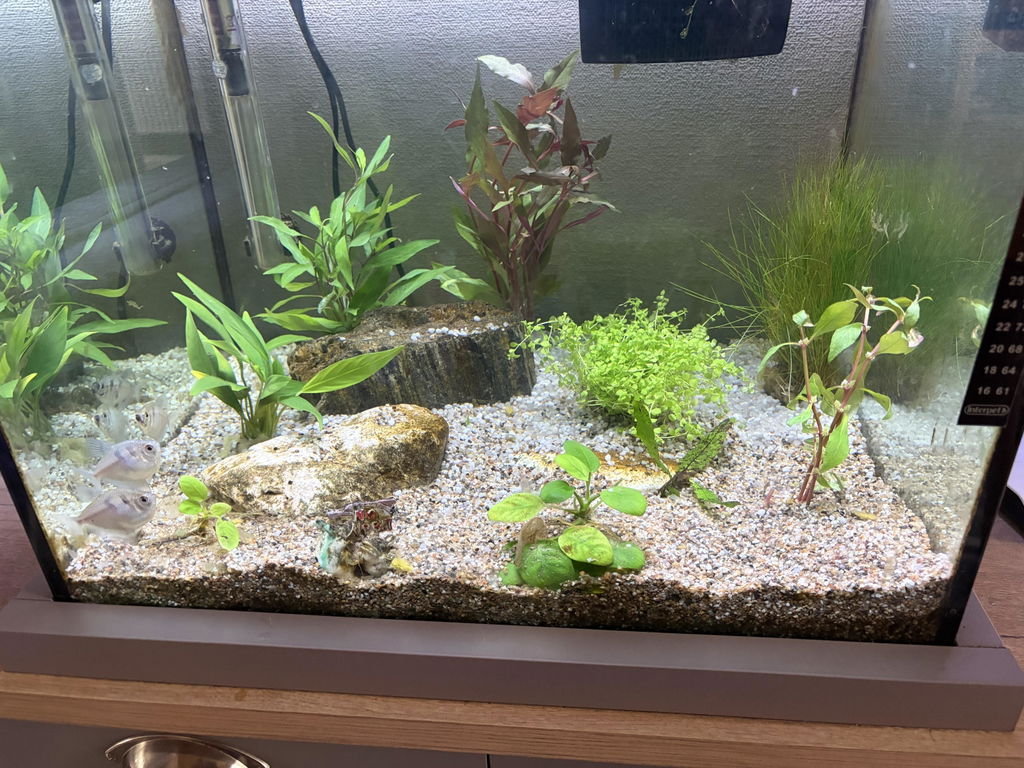


Your substrate is the foundation of every planted tank. It's the single decision that influences whether your plants thrive or merely survive—and yet it's the one thing most people rush through when setting up a new aquarium.
If you've been searching for the best substrate for a planted tank in the UK, you've probably noticed there are three main categories: aqua soil, sand, and gravel. Each has distinct advantages, and the right choice depends entirely on what you're trying to grow and how much maintenance you're willing to do.
In this guide, we'll break down exactly how each substrate type works, which plants they suit, and—most importantly—which specific products we recommend from 25 years of experience growing and selling aquarium plants.
Why Your Substrate Choice Matters More Than You Think
Think of your substrate as the soil in a garden. You wouldn't try to grow tomatoes in concrete, and you shouldn't try to grow demanding aquatic plants in plain gravel without nutrient support.
Your planted tank substrate does three critical jobs:
- Anchoring — Providing physical support for root systems to grip and spread.
- Nutrition — Supplying essential macro and micronutrients directly to the roots (if using an active substrate or nutrient base layer).
- Water chemistry — Some substrates actively buffer pH and soften water, creating ideal conditions for tropical fish and plants.
Get this right from day one and you'll save yourself months of frustration, unnecessary algae battles, and wasted money on plants that fail to establish.
Aqua Soil: The Gold Standard for Serious Plant Growth
If your goal is a lush, densely planted aquascape—especially one featuring carpeting plants, demanding stem plants, or vibrant reds—then aqua soil is the substrate you need. No question.
Aqua soils are active substrates. They're manufactured from baked natural earth and volcanic materials, loaded with bioavailable nutrients that plant roots can access immediately. Unlike inert substrates, aqua soil actively lowers your pH and softens your water, creating the slightly acidic (pH 5.5–6.5) conditions that the vast majority of tropical aquarium plants and fish prefer.
When to choose aqua soil:
- You want to grow carpeting plants (Monte Carlo, Dwarf Hairgrass, Glossostigma)
- You're keeping demanding red stem plants (Rotala, Ludwigia)
- You want explosive growth from day one without waiting months for nutrients to build up
- You're running CO2 injection and high lighting (high-tech setup)
- You keep soft-water fish like Tetras, Rasboras, or shrimp (especially Caridina)
Our Top Pick: Tropica Aquarium Soil

Tropica Aquarium Soil (9L)
The industry benchmark for planted tank substrate in the UK. A complete bottom layer—no other substrate needed beneath it. The 2-3mm grain size makes planting effortless, and it actively stimulates red colouration in plants.
Lowers pH to approximately 5.5-6.5. Requires 25-50% water changes twice weekly for the first 4 weeks as it releases initial ammonia.
£29.99 (9L) | £16.99 (3L)
Pro Tip: Growing a carpet? Choose the Tropica Aquarium Soil Powder (£31.99). The finer 1-2mm grain size makes it dramatically easier for tiny carpeting plant roots to grip and spread. It's the difference between a carpet that fills in within weeks versus months.
How much aqua soil do you need?
Here's the simple formula: Length (cm) x Width (cm) x Depth (cm) ÷ 1000 = Litres needed
For a standard 60cm tank with 5cm substrate depth: 60 x 30 x 5 ÷ 1000 = 9L. One bag of Tropica Soil 9L covers you perfectly. For a 90cm tank, you'll want two bags. Always slope the substrate higher at the back (8-10cm) and shallower at the front (3-4cm) for visual depth.
Gravel: The Reliable, Low-Maintenance Foundation
Natural aquarium gravel is an inert substrate. It won't alter your pH, won't leach nutrients, and won't break down over time. This makes it incredibly predictable and easy to maintain—perfect for beginners and anyone who values simplicity.
The trade-off? Gravel alone provides zero nutrition to plant roots. But that doesn't mean you can't grow plants in it. Pair gravel with a nutrient base layer underneath (more on that below), and you get the best of both worlds: easy maintenance on top, serious nutrition below.
When to choose gravel:
- You're running a low-tech planted tank (no CO2, moderate lighting)
- You keep bottom-dwelling fish like Corydoras or Loaches that sift through substrate
- You want easy gravel-vacuuming during water changes
- You're growing hardy plants like Anubias, Java Fern, Crypts, or Amazon Swords
- You want full control over your water parameters without substrate interference
Our Top Pick: Natural Aquarium Gravel

Aquarium Gravel 3.5kg — Natural Inert Substrate (3-8mm)
A versatile, natural-looking gravel with a 3-8mm grain size. Completely inert—won't alter pH or water chemistry. Safe for bottom-dwelling fish and excellent for beneficial bacteria colonisation.
£5.99
Buy Natural Gravel NowWant something with more visual punch? The Betta Choice Aquarium Gravels (5kg, £9.99) come in seven colour options including Jet Black, Gunmetal Mix, and Natural River—letting you match your gravel to your hardscape aesthetic.
Fine Substrates & Dark Sand Alternatives
The sleek, dark look of fine sand is hugely popular in modern aquascaping. It creates stunning contrast against green plants and makes fish colours pop. However, traditional fine sand can compact over time, creating anaerobic pockets that produce harmful hydrogen sulphide gas.
The solution? A purpose-made fine decorative substrate that gives you the dark, clean aesthetic of sand without the compaction risks.
Our Top Pick: Colombo Mano Base Black

Colombo Mano Base Black (5L & 10L)
A natural dark substrate that provides an ideal base for plants to anchor in. Rinses clean with minimal clouding, holds plants securely, and delivers a premium, natural look underwater. Rated 4.8/5 by our customers.
£14.99 (5L) | £20.99 (10L)
The Secret Weapon: Nutrient Base Layers
Here's where experienced aquascapers separate themselves from beginners. If you want to use inert gravel or sand as your visible top layer but still grow demanding root-feeding plants, you need a nutrient base layer underneath.
The concept is simple: lay down 1-2cm of nutrient-rich substrate on the bare tank floor, then cap it with 3-5cm of your chosen gravel or sand. Plant roots grow down into the nutrient layer and feed directly, while the inert cap prevents nutrients from leaching into the water column (which would fuel algae).
Option 1: Tropica Plant Growth Substrate

Tropica Plant Growth Substrate
A concentrated blend of clay and sphagnum that acts as a long-term nutrient reserve beneath your gravel. Iron-rich and designed to feed heavy root feeders like Cryptocorynes and Echinodorus for years.
Must be capped with 3-4cm of gravel. Not a standalone substrate.
From £5.99 (1L, 2.5L, 5L sizes)
Buy Tropica Base LayerOption 2: Colombo Nutri Base

Colombo Nutri Base (5L)
Developed over 25 years by commercial aquarium plant growers Aquafleur in the Netherlands. The open structure maximises water flow through the bed for optimal bacterial growth. Contains all essential nutrients and minerals for explosive plant growth.
Must be topped with gravel, sand, or decorative substrate. 5L covers a 60x40cm base.
£14.99
Buy Colombo Nutri BasePower Move: For the ultimate planted gravel tank, layer Colombo Nutri Base on the bottom, then cap with Colombo Mano Base Black on top. This combination gives you professional-grade nutrition with a stunning dark aesthetic. Your plants will fly.
Quick Comparison: Aqua Soil vs Sand vs Gravel
| Feature | Aqua Soil | Fine Substrate / Sand | Gravel |
|---|---|---|---|
| Contains nutrients | Yes — packed with them | No (inert) | No (inert) |
| Lowers pH | Yes (pH 5.5–6.5) | No | No |
| Best for carpeting plants | Excellent | Moderate | Poor (too coarse) |
| Ease of cleaning | Cannot gravel-vac | Moderate | Very easy |
| Lifespan | 2-3 years (nutrients deplete) | Indefinite | Indefinite |
| Setup complexity | Requires cycling (ammonia spike) | Rinse and use | Rinse and use |
| Cost (60cm tank) | £29.99 (Tropica 9L) | £20.99 (Colombo 10L) | £5.99 (3.5kg) |
| Our pick | Tropica Soil 9L | Colombo Mano Base | Natural Gravel 3.5kg |
Our Recommendation: Match Your Substrate to Your Setup
After 25 years of selling aquarium plants, here's our honest recommendation based on what we see working best for our customers:
High-Tech Planted Tank (CO2, high light, demanding plants)
Go with Tropica Aquarium Soil. Nothing else comes close for sheer plant performance. Use the Powder version if you're carpeting.
Low-Tech Planted Community Tank
Layer Colombo Nutri Base or Tropica Plant Growth Substrate on the bottom, then cap with Natural Gravel or Colombo Mano Base Black. You get easy maintenance with solid plant growth.
Minimalist Aquascape (Epiphytes & Hardscape Focus)
Use Colombo Mano Base Black or Natural Gravel alone. If you're only growing Anubias, Java Fern, and Bucephalandra attached to wood and rock, you don't need substrate nutrients at all.
Frequently Asked Questions
Can I mix aqua soil and gravel in the same tank?
Yes, and many aquascapers do exactly this. A common technique is to use aqua soil in the planted areas (especially the background) and cosmetic gravel or sand in the foreground paths. Use small rocks or substrate dividers to keep them separated.
How deep should my substrate be?
For aqua soil: 4-8cm (sloping from front to back). For gravel over a nutrient base: 1-2cm base layer plus 3-4cm gravel cap. Deeper substrate at the back creates visual depth and gives roots more room.
Does aqua soil need replacing?
Active aqua soils gradually deplete their nutrients over 2-3 years. After that, you can supplement with root tabs or liquid fertilisers. Many aquascapers rescape and replace substrate every 2-3 years anyway.
Can I add fish immediately after adding aqua soil?
No. Aqua soil releases ammonia during the first 2-4 weeks as it cycles. You must perform frequent water changes (25-50% twice weekly) during this period. Only add fish once ammonia and nitrite read zero.
What's the best substrate for shrimp?
For Caridina shrimp (Crystal Reds, Taiwan Bees), aqua soil is essential—they require the soft, acidic water it creates. For Neocaridina (Cherry Shrimp), any substrate works as they tolerate a wider pH range.
Ready to build your perfect planted tank?
All substrates are in stock at our UK warehouse. Order before 4pm for same-day dispatch — most orders arrive within 1-2 working days.
Shop All Substrates