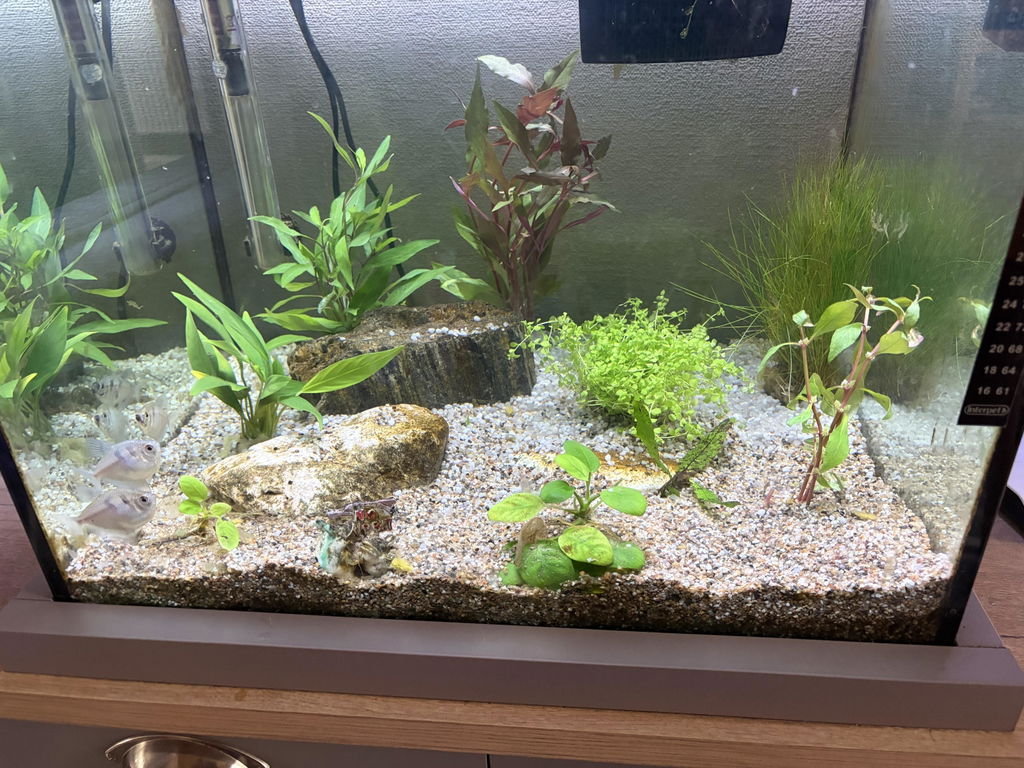


If you've ever spotted tufts of dark, bristly growth clinging to your plant leaves, filter pipes, or hardscape, you're looking at black beard algae — one of the most stubborn algae types in the planted aquarium hobby. The good news is that it's beatable. The better news is that understanding why it appeared is the key to making sure it doesn't come back.
What is black beard algae?
Black beard algae (BBA) is a common name for Audouinella sp., a type of red algae — despite looking black or dark grey in your tank. It grows in dense, brush-like tufts usually 2–5mm long, and anchors itself so effectively to plant leaves, rocks, wood, and equipment that physical removal alone won't fix the problem.
Unlike green algae that wipes away easily, BBA requires a proper strategy: fix the cause, treat the outbreak, prevent the return.
Why does black beard algae appear?
Fluctuating or low CO2
This is the single biggest trigger. BBA thrives when CO2 levels are inconsistent — too low overall, or swinging up and down across the day. If your solenoid turns on late, your diffuser placement is poor, or you're running no CO2 at all, you're creating the exact instability BBA exploits.
Slow or stagnant water flow
BBA almost always establishes in dead spots first — corners, the underside of broad leaves, around filter intakes. If water isn't moving through these areas, BBA has the perfect conditions to settle and spread.
Organic waste and nutrient imbalance
Decomposing plant matter, uneaten food, and inconsistent fertiliser dosing all contribute. BBA doesn't need much — but fluctuating nutrient levels give it exactly the foothold it needs.
New plant introductions
BBA can hitch a ride on new plants. It's worth checking every new addition carefully before it goes into your main tank.
How to get rid of black beard algae
Step 1 — Remove what you can physically
Scrub affected rocks and wood with a stiff toothbrush under running water, away from the tank. For affected plant leaves, trim and discard the worst-affected ones. Heavily infested leaves won't recover cleanly — removing them is faster than treating them.
Step 2 — Apply liquid carbon directly to the BBA
This is the most effective spot treatment available without resorting to harsh chemicals. Turn off your filter, then use a syringe or pipette to apply liquid carbon directly onto the affected areas. Leave for 5 minutes, then restart the filter. Repeat every 2–3 days — the BBA will turn pink or red as it dies, then becomes easy to brush away.
Neutro CO2 — Liquid Carbon
Use daily for stable carbon in low-tech tanks, and apply direct with a syringe for BBA spot treatment. One of our best-selling algae control products.
Add to basket →Step 3 — Stabilise your CO2
If you're running pressurised CO2, check your drop checker reading throughout the day. It should sit in the green zone consistently from about an hour before lights on until an hour before lights off. If readings swing or you're getting BBA despite CO2, check your diffuser placement — the CO2 needs to reach every part of the tank.
If you're not running CO2, consistent daily liquid carbon dosing makes a real difference. It won't replace a pressurised system for high-tech tanks, but it provides stable carbon that directly discourages BBA growth in low-tech setups.
If CO2 instability is your root cause — and it often is — a quality pressurised set is the most permanent fix.
CO2 Pressurised Sets
Everything you need for stable, consistent CO2 in one kit — regulator, solenoid, diffuser, and tubing. The permanent fix for CO2-driven algae outbreaks.
Browse CO2 Sets →Step 4 — Improve water circulation
Reposition your filter outlet or add a small circulation pump to eliminate dead spots. Every corner of the tank should have gentle visible movement. If BBA keeps forming on your filter intake, that's a clear sign flow is too low for your tank size.
Circulation Pumps for Planted Tanks
Eliminate dead spots and improve flow throughout your aquascape. A common fix for recurring BBA in the corners and around hardscape.
Shop Circulation Pumps →Step 5 — Review your fertiliser routine
Inconsistent dosing creates the nutrient fluctuations BBA exploits. Switch to a consistent daily or every-other-day schedule with a quality all-in-one fertiliser. For most low-to-medium tech setups, a balanced liquid fertiliser used consistently closes the last gap.
Aquarium Fertilisers
Consistent nutrition reduces the fluctuations BBA thrives on. Our Neutro range is formulated specifically for planted tanks — from low-tech to high-tech CO2 setups.
Shop Fertilisers →Long-term prevention
Once you've cleared the outbreak, the goal is to remove the conditions that allowed it.
- Keep CO2 stable — avoid turning it off for weekends or holidays if possible.
- Maintain good flow — aim for 10–15x the tank volume per hour in total turnover for planted tanks.
- Don't skip water changes — weekly 25–30% changes keep waste from accumulating.
- Add fast-growing plants — Vallisneria, Hygrophila, and floating plants compete directly with algae for nutrients. Particularly effective in the weeks immediately after an outbreak.
- Add Amano shrimp — the best natural BBA deterrent in the hobby. A small group will graze on early-stage BBA before it gets a grip.
Anti-Algae Range
Browse our full selection of algae treatments — including products for BBA, green spot, hair algae, and more.
Browse Anti-Algae →The short version
BBA is a symptom, not a random event. Fix the cause — usually CO2 instability or poor flow — and it won't come back. For the outbreak itself, liquid carbon spot treatment combined with physical removal is the fastest effective approach.
If you're seeing BBA regularly despite good flow and stable CO2, look hard at your fertiliser consistency. A daily routine with a reliable product usually closes the last gap.
Any questions about treating an outbreak in your specific setup? Get in touch — we're happy to help.
Products mentioned in this article
Add to basket →
Browse CO2 Sets →
Shop Anti-Algae →
Shop Fertilisers →