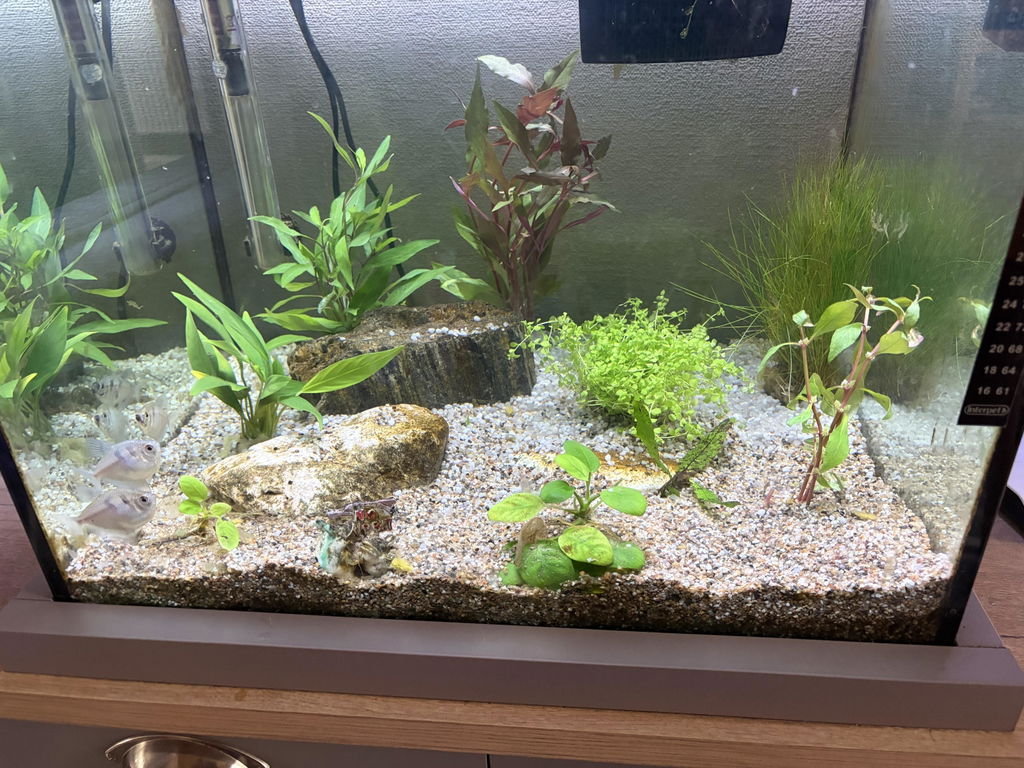


The Dutch aquascape is the original art form of the planted tank hobby — a style refined over nearly a century that remains one of the most demanding and rewarding approaches to aquarium design. Where an Iwagumi uses stone and minimalist planting to evoke mountain landscapes, the Dutch style takes the opposite path: dense, structured plantings with no hardscape at all, just a beautifully curated underwater garden.
What Makes a Dutch Aquascape Different?
Developed in the Netherlands in the 1930s and formalised by the NBAT (the Dutch aquarium society), the Dutch style is defined by design principles that create order within apparent abundance. The key idea is contrast: between leaf shapes (broad versus needle-like), between textures (smooth versus crinkled), and crucially between colours (lush greens set against red and warm-toned plants to create visual drama).
There is no exposed substrate, no driftwood, no rocks. Every centimetre of the tank floor should eventually be covered by plant growth. The aquascape is divided into distinct species groups — sometimes called "streets" — each containing a single plant, arranged to lead the eye towards a focal point. It takes planning, patience, and regular trimming to maintain, but the results are genuinely spectacular.
The Golden Rules of Dutch Layout
The front of the tank holds low-growing plants that create a sense of depth. The midground uses medium-height stem plants and rosettes for layering. Tall background plants frame the composition and fill the upper water column. Groups are planted in clear blocks at slight angles to the viewer, and adjacent groups must contrast clearly — you would never place two similarly shaped green species side by side without a colour or texture break between them.
Choosing Plants for a Dutch Aquascape
Plant selection is everything in a Dutch scape. You need a wide variety of species, and each one must earn its place through a clear visual contribution. Start by mixing broad-leaved rosette plants like Echinodorus rose — with its warm copper and rose-pink new growth — alongside finer-leaved stem plants to create the contrast that defines this style.
Hygrophila corymbosa varieties are Dutch aquascape staples: bold, fast-growing, and easy to maintain through regular topping. Hygrophila corymbosa Thailand makes an excellent background choice, with its large textured leaves creating strong visual interest at the rear of the tank. In the midground, Bacopa amplexicaulis is a classic Dutch plant with neat, compact leaves and a tidier, more deliberate growth habit — perfect for creating structure between bolder neighbours.
Red and pink plants are essential for colour contrast. Without them, even a well-planted Dutch scape can look monotone. Rotala, Alternanthera, and Ludwigia all feature heavily in traditional Dutch layouts, providing the warm hues that make potted aquarium plants such a rewarding way to build out a Dutch composition.
From Aqua Essentials
Our potted plant range includes many of the classic Dutch aquascape species — from Hygrophila and Bacopa to Echinodorus and Rotala. Browse the full collection to plan your layout.
Shop Potted Plants →Substrate, Fertilisers and CO2
A Dutch aquascape relies on dense, sustained plant growth, which means getting the fundamentals right from the start. A nutrient-rich planted tank substrate is strongly recommended — an aqua soil or dedicated plant substrate will give roots the nutrition they need to establish quickly and support the vigorous growth that Dutch-style trimming demands.
Fertilisation is equally important. In a densely planted tank, nutrients are consumed rapidly, and deficiencies will appear quickly as pale or stunted leaves. A comprehensive liquid fertiliser programme — covering both macro and micronutrients — is essential for long-term colour and health. Browse the fertiliser range at Aqua Essentials to find the right products for your tank size and plant load.
CO2 injection is not strictly mandatory, but it makes a dramatic difference. Dutch scapes contain many demanding, fast-growing stem plants, and pressurised CO2 will accelerate growth, improve colour in red plants, and help maintain the dense planting structure that defines the style. Without it, progress will be slower and some species may underperform — but a well-chosen selection of easier Dutch-style plants can still produce impressive results on low-tech setups.
Maintenance: The Art of the Dutch Trim
A Dutch aquascape is never truly finished — it is maintained. Regular trimming is the key discipline. Stem plants are topped (the upper section cut and replanted) to prevent leggy growth and encourage bushy, full coverage. Rosette plants like Echinodorus are trimmed back to remove outer leaves and keep them in proportion with neighbouring groups.
The aim is always to preserve the clear demarcation between species groups. As plants grow and spread, they naturally try to merge — the aquarist's job is to prevent that, keeping each species in its designated zone. It sounds demanding, and it is, but it is also deeply satisfying. Once you find the rhythm of a Dutch aquascape, maintenance becomes a weekly ritual rather than a chore. The payoff is a tank that looks genuinely unlike anything else in the hobby.
Whether you are planning your first Dutch aquascape or looking to refine an existing layout, Aqua Essentials has the plants, substrates, fertilisers, and CO2 equipment to support you every step of the way. Explore the full range at aquaessentials.co.uk and start planning your Dutch planted tank today.