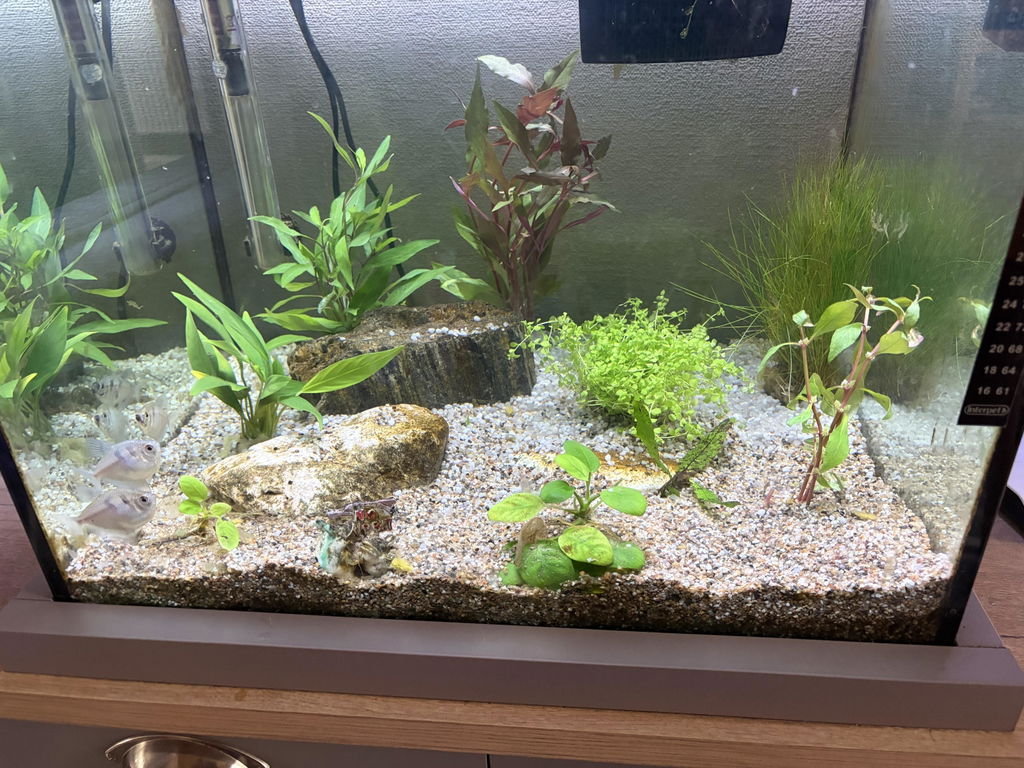


Of all the aquascaping styles, Iwagumi is the one that makes people pause. Deceptively simple — a few carefully placed stones, a seamless carpet of green — it demands more skill and patience than it first appears. Developed in the 1980s by Japanese photographer Takashi Amano, the style draws on Zen principles of Japanese garden design and has become the gold standard for planted aquarium aesthetics. If you've been admiring these layouts online and wondering how to create one, this guide covers everything from stone selection to plant choice and setup.
The Philosophy Behind Iwagumi
Iwagumi — which translates roughly as “rock formation” — is built around the idea that a beautiful landscape can be expressed through restraint. Unlike nature-style aquascapes packed with diverse textures and species, Iwagumi uses a single carpeting plant and an odd number of stones arranged according to traditional Japanese compositional rules.
The three key stones each play a distinct role. The Oyaishi is the main stone — the tallest and most prominent, placed slightly off-centre to avoid symmetry. The Fukuishi are companion stones that support the Oyaishi compositionally. The Soeishi are smaller accent stones that create depth and visual balance. Three or five stones is considered ideal; even numbers are avoided as they create an uncomfortable tension in the layout.
Before filling the tank, move your stones around on dry substrate until the arrangement feels settled and natural. Take photographs from the front and check the balance from multiple angles. The stones should look as though they’ve always been there.
Choosing the Right Rocks
Stone selection is everything in an Iwagumi. You want rocks with strong visual character — dramatic lines, angular faces, interesting texture — but they must work together coherently as a group. The classic choice is Seiryu stone: a hard, blue-grey rock with sharp edges and pale veining that photographs beautifully and suits the clean, graphic aesthetic Iwagumi demands.
Our Mini Landscape Rock (Seiryu Stone) is a perennially popular choice for Iwagumi builds, offering the fine detailing and consistent colouring the style calls for. Dragon Stone is another excellent option — warmer in tone and more organic in texture, it works especially well when paired with earthy substrates. When buying, choose pieces from the same batch where possible so colour and grain remain consistent across your layout.
From Aqua Essentials
We stock a wide range of aquarium rocks ideal for Iwagumi layouts, including Seiryu Stone and Dragon Stone — sold by the kilogram so you can order precisely what your tank requires.
Shop Aquarium Rocks →Plant Selection: The Art of Using Just One Species
Iwagumi typically uses a single carpeting plant species — and this restraint is precisely what gives the style its power. The challenge is choosing a species that carpets densely enough to look lush without overwhelming the stones.
The Best Plants for an Iwagumi Layout
Micranthemum Monte Carlo is the most popular choice for beginners attempting Iwagumi. It grows in compact rosettes with fresh green leaves and carpets well even in moderate CO2 conditions. The Tropica Micranthemum Monte Carlo 1-2-GROW! tissue culture version is a particularly clean choice: it arrives pest-free and algae-free, ready to plant directly into substrate without any preparation.
Hemianthus callitrichoides (HC Cuba) is the more advanced option — its tiny leaves and incredibly dense growth make it the go-to for high-tech Iwagumi tanks, but it demands strong light, stable CO2, and a rich substrate. Eleocharis pusilla (dwarf hairgrass) gives a more naturalistic, meadow-like carpet and is slightly more forgiving. Whichever you choose, plant densely from the outset — bare substrate in an Iwagumi is an open invitation for algae. Browse the full range of carpeting plants to find the right match for your lighting and CO2 setup.
Substrate, CO2 and Getting the Setup Right
A nutrient-rich planting substrate is non-negotiable for an Iwagumi. Carpeting plants draw heavily on substrate nutrients, and a proper planting soil — rather than inert gravel — makes the difference between a carpet that races away and one that stalls for months. Aim for at least 6cm depth in the foreground, building up to 8–10cm at the rear to create natural perspective.
CO2 injection is strongly recommended. Most Iwagumi carpeting plants require good CO2 levels to grow fast enough to outcompete algae during the critical early weeks. Without it, slow plant growth leaves the substrate vulnerable to green spot algae and BBA before the carpet closes over. A pressurised CO2 kit needn’t be expensive to be effective, and it’s one of the single biggest improvements you can make to the outcome of an Iwagumi build.
Run the CO2 from a couple of hours before lights-on and stop it an hour before lights-off. Keep photoperiods to around eight hours initially to reduce algae risk while plants are establishing. The first few weeks are always the most nerve-wracking — resist the urge to interfere and maintain regular water changes of around 50% weekly instead. Patience is the single most underrated Iwagumi technique.
Iwagumi rewards careful preparation more than almost any other aquascaping style. Get the stone composition, substrate depth, and CO2 right from the start, and you’ll be rewarded with one of the most striking displays in the freshwater hobby. Start exploring the aquarium rocks and carpeting plants at Aqua Essentials to begin planning your layout.