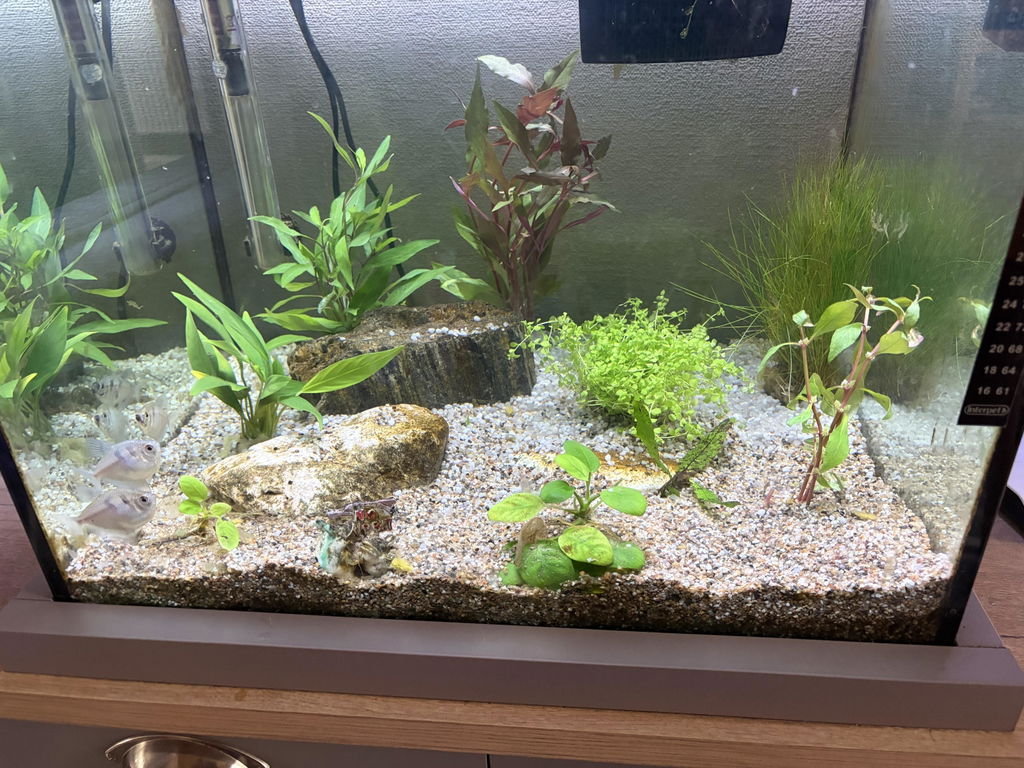


Plants need more than light and CO2 to thrive in an aquarium — they also need a steady supply of nutrients to fuel healthy growth and vibrant colour. Yet fertilising is the aspect of the planted tank hobby that trips up beginners most often. Too little and plants yellow and stall; too much and algae takes hold. This guide explains exactly what aquarium fertilisers do, which type suits your setup, and how to dose correctly from the start.
Why Aquarium Plants Need Fertilising
In nature, rivers and lakes receive a constant input of nutrients from organic matter, fish waste, and decaying plant material. A home aquarium is a closed system — nutrients are consumed by plants and removed during water changes, so they must be regularly replenished. The nutrients plants require fall into two groups: macronutrients and micronutrients.
Macronutrients are needed in larger quantities. Nitrogen (N), phosphorus (P), and potassium (K) — collectively known as NPK — drive the core processes of plant growth. Nitrogen fuels leaf production, phosphorus supports root development and energy transfer, and potassium is involved in a wide range of enzyme functions.
Micronutrients (or trace elements) include iron, manganese, boron, zinc, copper, and others. Though required in far smaller amounts, deficiencies show up quickly — most commonly as yellowing leaves, stunted growth, or pale new growth. Iron deficiency in particular causes a distinctive chlorosis where new leaves emerge pale yellow rather than green.
Liquid Fertilisers vs Root Tabs: Which Do You Need?
Aquarium fertilisers come in two main forms, and most planted tanks benefit from using both in combination.
Liquid Fertilisers
Liquid fertilisers are added directly to the water column and absorbed through the leaves. They’re ideal for plants that feed primarily through their foliage — epiphytes like Anubias and Java Fern, mosses, and most stem plants. They’re also the easiest type to dose consistently: add a measured amount at each water change (or daily in a high-tech setup) and plants receive a continuous supply.
Neutro+ is a comprehensive all-in-one liquid fertiliser for high-tech tanks, supplying NPK plus trace elements in a single bottle. For low-tech setups, a lower-nutrient liquid fertiliser such as Neutro T is more appropriate — high doses of nitrogen and phosphorus in a low-light, low-CO2 tank can drive algae rather than plant growth.
Root Tabs
Root tabs are slow-release fertiliser capsules pushed into the substrate directly beneath heavy root-feeders: plants like Echinodorus (swords), Cryptocoryne, Vallisneria, and stem plants that develop strong root systems. Neutro TerraTabs are small concentrated capsules that provide long-lasting nutrition at the roots without clouding the water or spiking nutrients in the water column. Aim to replace them every six to eight weeks, or when you notice older leaves beginning to pale.
From Aqua Essentials
The Neutro Combo High Tech bundles Neutro+ and Neutro CO2 together at a slight saving — a simple way to cover both liquid carbon and full nutrient dosing in one order.
Shop Fertilisers →How to Dose: High-Tech vs Low-Tech Tanks
The right dosing approach depends on your setup. The key variables are lighting intensity, whether you’re injecting CO2, and how fast your plants are growing.
In a high-tech tank — strong light, pressurised CO2 injection, fast-growing plants — nutrient demand is high and dosing must keep pace. The most common approach is to add liquid fertiliser daily in small amounts, or to give a larger dose immediately after each water change. Frequent water changes of around 50% weekly prevent nutrients from building up to problematic levels.
In a low-tech tank — moderate or low light, no CO2, slower-growing species — you need far less fertiliser. Over-dosing in a low-energy tank is one of the most common causes of algae outbreaks. Dose once or twice a week rather than daily, use a fertiliser formulated for low-tech setups, and rely more heavily on root tabs to feed substrate-feeding species without raising water column nutrient levels unnecessarily.
Reading the Signs: Common Deficiency Symptoms
Yellowing of older leaves usually signals nitrogen deficiency — increase your liquid fertiliser dose slightly and see whether new growth recovers. Pale or white new growth typically indicates iron or manganese deficiency; check you’re using a fertiliser that includes chelated trace elements, as these are far more bioavailable than unchelated forms. Purple or reddish undersides on leaves can indicate phosphorus deficiency in some species, though this can also simply be a genetic characteristic of certain red plants.
One important point: deficiency symptoms can just as often be caused by inadequate light or insufficient CO2 as by a lack of nutrients. A tank that doesn’t have enough light or carbon will struggle to absorb fertiliser regardless of how much you add. Before increasing your dose, rule out those other factors first. Browse the full range of aquarium fertilisers at Aqua Essentials to find the right product for your planted tank, and don’t hesitate to get in touch if you’d like advice on your specific setup.
Getting fertilisation right takes a little trial and error, but once you find the balance your plants will reward you with noticeably stronger growth and deeper colour. Start conservatively, watch how your plants respond, and adjust from there — that’s the approach that works every time.