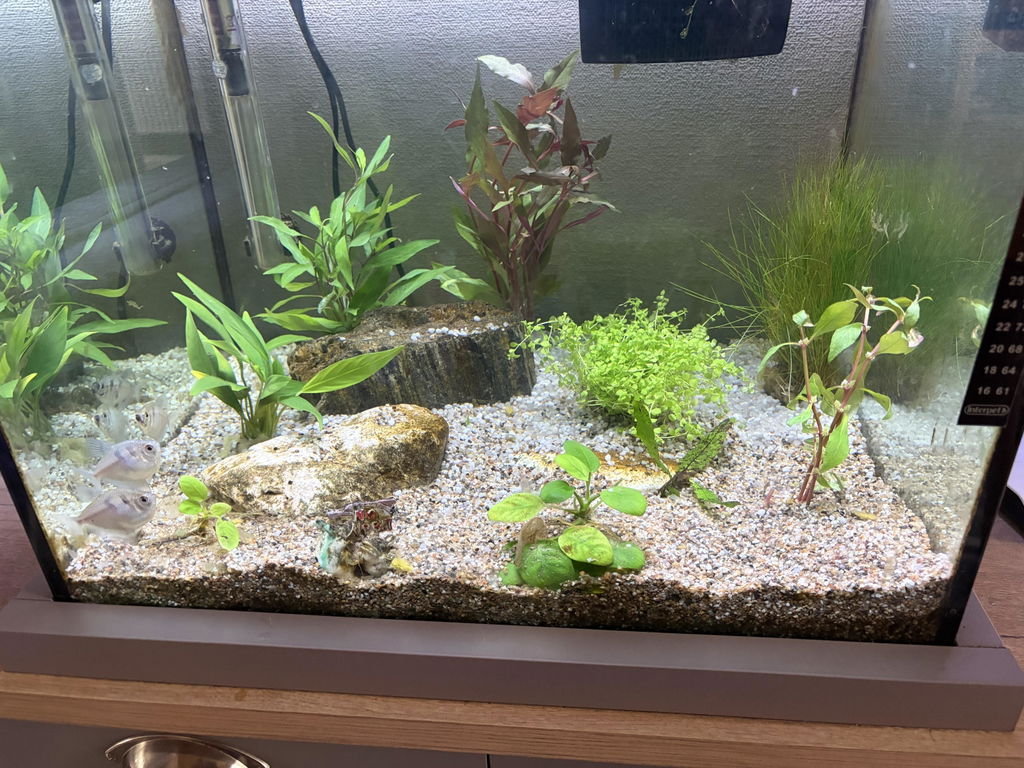


Gravel is the most common aquarium substrate in the UK — and one of the most misunderstood when it comes to plants. The short answer is yes, plenty of plants grow in gravel. But there’s one mistake most beginners make that kills plants unnecessarily. Here’s what you actually need to know.
Gravel Is Inert — Which Means It Does Nothing
Unlike soil or aquarium-specific substrates, plain gravel contains no nutrients. It’s just rock. This matters because plants get their nutrients from two places: the water column and their roots.
Some plants feed almost entirely through their leaves — they barely use their roots for nutrition at all. Others are heavy root feeders and need nutrient-rich substrate to thrive. Knowing which type you’re dealing with is the difference between success and frustration in a gravel tank.
Java Fern and Anubias: Do NOT Plant These in Gravel
This is the mistake that trips up most beginners. Java Fern and Anubias are epiphytes — they attach to hard surfaces like rocks and wood rather than rooting in substrate.
If you bury their rhizome (the thick horizontal stem) in gravel, it rots. The plant turns yellow, the rhizome goes black, and it dies — usually within a few weeks. This is extremely common and almost always misdiagnosed as a lighting or nutrient problem.
The fix is simple: tie or wedge them against a rock or piece of wood so the rhizome sits above or against the surface. They’ll attach on their own within a few weeks. Java Fern and Anubias are otherwise some of the easiest plants you can keep — they just need to be positioned correctly.
From Aqua Essentials
We stock a range of epiphytes that thrive in any gravel tank — Java Fern, Anubias Nana, Bucephalandra, and more. Many come pre-attached to rock or wood if you want them ready to drop straight in.
Browse Epiphytes →Cryptocoryne: The Best True Gravel Plant
Cryptocorynes are genuine gravel plants — they root into the substrate and feed from it. The good news is they’re also extremely tolerant. They grow in a wide range of water parameters, handle low light, and once established they’re very hard to kill.
Cryptocoryne wendtii is the most popular variety — it forms attractive rosettes and comes in green, brown, and red forms. Cryptocoryne walkeri is shorter and works well as a foreground or midground plant.
One thing to expect: Crypts often melt when first planted, dropping leaves within the first week or two. This is normal — they’re adjusting to new water parameters. The roots stay healthy and new growth emerges within a few weeks. Don’t bin them at this stage.
Amazon Sword: Impressive but Hungry
Amazon Sword (Echinodorus bleheri) is one of the most striking aquarium plants you can buy — it can reach 50cm tall, with broad green leaves that fill the background of a tank beautifully. It roots heavily and is a strong gravel grower.
The catch: it’s a heavy root feeder. In plain gravel with no additives, it struggles. It grows slowly, produces pale leaves, and eventually stops doing much at all. To get the best from an Amazon Sword in gravel, you need to feed it at the roots.
From Aqua Essentials
Neutro Terra Tabs are small root fertiliser tablets you push into the gravel near the roots. For a gravel tank with Amazon Swords or Crypts, they make a significant difference — one tab per plant every 3–4 months is usually enough.
Shop Root Tabs →Feeding Your Gravel Tank Plants
In a planted tank, nutrients get consumed and need to be replaced. In a gravel tank, this matters more than in a soil setup because the substrate doesn’t hold much in reserve.
A good starting approach is a combined liquid fertiliser that covers both the water column (for epiphytes and floating plants) and the root zone (for Crypts and Swords). You don’t need to overthink it — a simple weekly dose makes a noticeable difference.
From Aqua Essentials
The Neutro Combo pairs a liquid all-in-one fertiliser with a liquid carbon supplement — a simple weekly routine that covers most plant needs in a low-tech gravel tank.
Shop Neutro Combo →Quick Plant Summary for Gravel Tanks
Here’s the honest overview of what works and what doesn’t in a plain gravel tank:
Works well without modification: Java Fern, Anubias, Cryptocoryne wendtii, Cryptocoryne walkeri, Java Moss, Hornwort, Elodea
Works well with root tabs: Amazon Sword, Vallisneria, most large rosette plants
Needs liquid ferts too: Stem plants, red plants, faster growers
Difficult in gravel (better in soil): Hemianthus callitrichoides (HC Cuba), Glossostigma, most carpeting plants
Thinking About Upgrading Your Substrate?
Gravel works perfectly well for the plants listed above. But if you’re thinking about carpeting plants, heavy stem plant displays, or just want the easiest possible start for a planted tank, a proper aquatic soil substrate removes most of the work. It holds nutrients, buffers water chemistry, and supports a wider range of plants from the start.