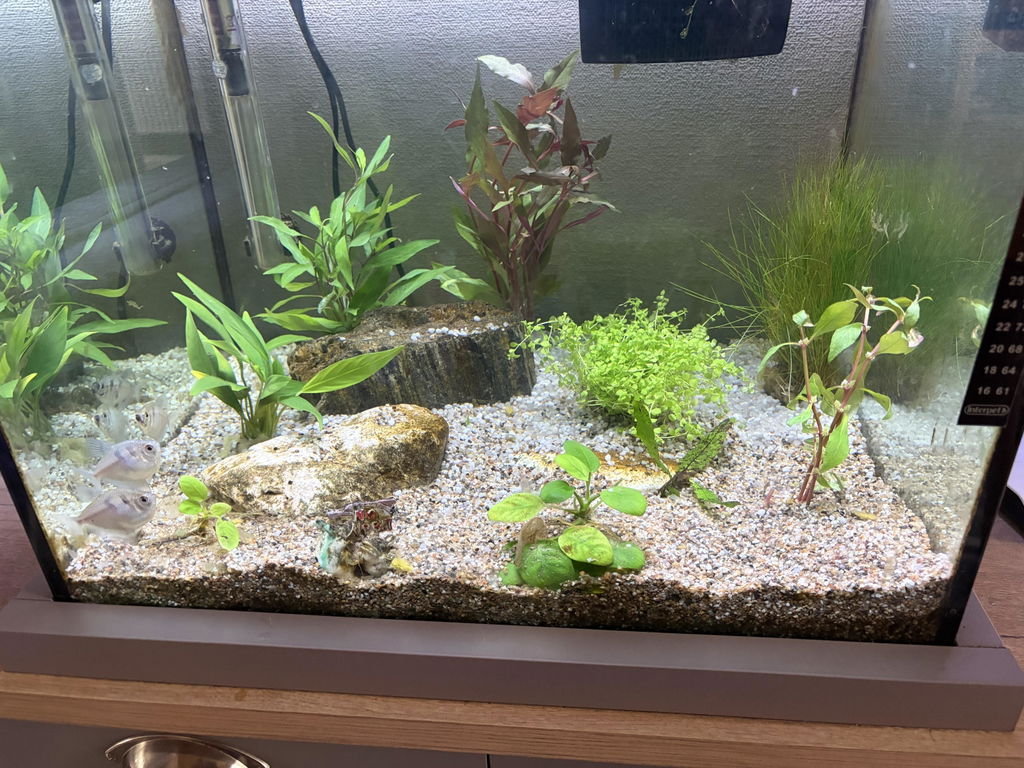


Whether you’ve just set up your first tank or you’re looking to move from plastic decorations to something more natural, choosing the right live aquarium plants can feel overwhelming. With hundreds of species available, knowing which ones are forgiving, low-maintenance, and genuinely beautiful is the key to starting your planted tank journey on the right foot.
This guide walks you through the most reliable freshwater aquarium plants suited to beginners in the UK, what makes each one ideal, and how to give them a great start.
Why Add Live Plants to Your Aquarium?
Live plants aren’t just decorative — they actively compete with algae by consuming the same nutrients, help oxygenate the water, provide shelter for fish and invertebrates, and contribute to a more stable, balanced ecosystem.
Once you experience the difference between a tank with silk plants and one full of live aquarium plants, it’s almost impossible to go back.
What Makes a Good Beginner Aquarium Plant?
The best plants for newcomers share a few key traits. They tolerate a wide range of water parameters — UK tap water varies from region to region and beginner plants need to cope with that. They have low light requirements, so you don’t need specialist lighting from day one. They grow without CO2 injection, though CO2 enhances almost everything. They are resilient — they recover well from being moved, trimmed incorrectly, or placed in less-than-perfect conditions.
With these criteria in mind, here are the standout picks.
1. Java Fern (Microsorum pteropus) — The Classic Starter Plant
If you ask any experienced UK aquarist which single plant they’d recommend to a complete beginner, Java Fern would top most lists. It’s a slow-growing, hardy plant that tolerates a wide range of water conditions and light intensities.
What makes it especially beginner-friendly is that it doesn’t need to be planted in substrate at all. Instead, it attaches to rocks, driftwood, or decorations using thread or aquarium-safe glue. Its long, leathery leaves sway gently in the current and instantly give a tank a more natural look.
It’s happy in low to moderate lighting, doesn’t require pressurised CO2, and tolerates cooler temperatures too — useful if you’re running an unheated tank. If you’d like to explore other cold water-tolerant options, take a look at our top 5 cold water aquarium plants.
Care summary: Tie to wood or rock. Low to moderate light. No CO2 needed. Temperature: 18–28°C.
2. Anubias Nana — The Indestructible Beauty
Anubias nana is a compact, slow-growing plant native to tropical West Africa and one of the most widely recommended aquarium plants for beginners. Its dark, glossy leaves are attractive and stay looking good for a long time — even in less-than-ideal conditions.
Like Java Fern, Anubias is an epiphyte — it draws nutrients from the water column rather than through substrate roots. It should be attached to wood or rock rather than buried in gravel (the rhizome must always be kept above the substrate). This makes it incredibly flexible: you can reposition it without disturbing your substrate at all.
It thrives in low to moderate light and doesn’t require CO2. Its thick, tough leaves aren’t easily nibbled or damaged, making it highly fish-compatible. For more on how to secure epiphytes like Anubias and Java Fern, our guide on how to anchor live aquarium plants covers all the best methods.
Care summary: Attach to wood or rock (never bury the rhizome). Low to moderate light. No CO2 needed. Temperature: 22–28°C.
From Aqua Essentials
Java Fern and Anubias Nana are two of the hardiest plants in the hobby and the ideal starting point for a first planted tank. Both are available individually or pre-attached to wood and rock for easy placement.
Browse Epiphytes →3. Java Moss (Taxiphyllum barbieri) — Versatile and Forgiving
Java Moss is one of those plants that seems to grow almost anywhere — on rocks, wood, in the substrate, or even floating freely. It’s widely used in aquascaping for creating lush green carpets, covering decorations, and providing shelter for fry and shrimp.
For beginners, it offers several advantages. It tolerates a surprisingly wide range of temperatures including cooler water, thrives in low light, and requires no CO2 or specialist substrate. Simply attach it to decor using thread or fishing line, and let it spread at its own pace.
It’s particularly popular in shrimp tanks where its structure provides refuge and foraging ground for invertebrates. It can also be used creatively — trained over driftwood or stone to create a naturalistic, overgrown look.
Care summary: Attach to decor or leave floating. Low to moderate light. No CO2 needed. Temperature: 15–28°C.
4. Vallisneria (Vallisneria spiralis) — The Easy Background Plant
Vallisneria is a fast-growing, grass-like plant that forms lush green curtains at the back of the aquarium. It’s nearly indestructible, propagates rapidly by throwing out runners, and looks incredible planted in groups.
It does well in a wide range of lighting conditions and doesn’t require CO2. As a rooting plant, it draws nutrients from the substrate, so planting in a good-quality aquarium substrate or using root tabs will help it flourish. It’s a great choice for adding height without constant maintenance — largely self-sufficient once established.
Care summary: Plant in substrate. Low to high light. No CO2 needed. Temperature: 15–30°C. Propagates via runners.
5. Cryptocoryne (Cryptocoryne wendtii) — The Reliable Midground Plant
Cryptocorynes (or “crypts”) are a large family of aquatic plants and Cryptocoryne wendtii is one of the easiest to grow. Available in green, brown, and red forms, they make excellent midground plants that fill out a tank beautifully.
One thing to know: crypts can experience “crypt melt” when introduced to a new tank. Leaves may deteriorate in the first couple of weeks as the plant adjusts to its new conditions. This looks alarming but is entirely normal — simply remove the melting leaves and wait. New, healthy growth follows. Once established, crypts are among the most reliable plants for beginners, tolerating low light, variable water parameters, and infrequent fertilisation.
Care summary: Plant in substrate. Low to moderate light. No CO2 needed. Temperature: 22–28°C. Expect an adjustment period when first introduced.
6. Amazon Sword (Echinodorus bleheri) — A Statement Background Plant
If you want a dramatic, full-looking background plant that’s still easy to care for, the Amazon Sword is hard to beat. It produces large, broad leaves that can fill the rear of a tank with greenery and creates an impressive centrepiece even in a modest setup.
It’s robust and adaptable, but benefits from nutrient-rich substrate and root tabs since it’s a heavy root feeder. In good conditions it can grow quite large, so bear tank size in mind — it’s best suited to aquariums of 60 litres or more.
Care summary: Plant in substrate. Moderate light. Root feeding beneficial. No CO2 needed but enhances growth. Temperature: 22–28°C.
From Aqua Essentials
Vallisneria, Crypts, and Amazon Swords all root into the substrate and benefit from root feeding. Neutro TerraTabs are small fertiliser tablets you push into the gravel near plant roots — one tab per plant every 3–4 months makes a noticeable difference.
Shop Root Tabs →7. Elodea / Egeria Densa — The Fast-Growing Oxygenator
Elodea Densa (also sold as Egeria densa or Anacharis) is one of the most widely available and affordable aquarium plants in the UK. It grows quickly, oxygenates the water effectively, and is almost impossible to kill under normal conditions.
It’s a stem plant supplied in a bunch — simply plant it into the substrate or let it float and it will start growing almost immediately. Its rapid growth actively outcompetes algae by consuming excess nutrients from the water. It also does well in cooler water, making it suitable for unheated freshwater setups.
Care summary: Plant in substrate or float. Low to high light. No CO2 needed. Temperature: 10–26°C.
8. Monte Carlo (Micranthemum tweediei) — The Beginner Carpeting Plant
That lush, lawn-like covering across the substrate is one of the most sought-after aesthetics in planted tanks. Most carpeting plants require CO2 and high light, which puts them out of reach for many beginners. Monte Carlo is the exception.
It features small, round leaves that spread horizontally across the foreground and is generally considered one of the easier carpeting species to grow. While it performs best with some CO2 and decent lighting, it’s far more forgiving than alternatives like Hemianthus callitrichoides. If you’re curious how carpeting plants compare, take a look at our carpeting plants guide.
Care summary: Plant small portions across the foreground. Medium to high light preferred. CO2 helpful but not essential. Temperature: 20–26°C.
Do Beginner Plants Need Fertiliser?
The short answer is yes — but it doesn’t have to be complicated. Epiphytes like Anubias and Java Fern feed primarily from the water column, so a good liquid fertiliser added weekly makes a real difference to their colour and growth rate. Rooting plants like Cryptocoryne, Vallisneria, and Amazon Sword benefit from fertiliser delivered closer to the root zone via root tabs.
For low-tech tanks without pressurised CO2, quality liquid fertiliser and root tabs are often all you need. You can explore our full range of aquarium plant fertilisers to find options suited to your setup.
Does CO2 Help Beginner Plants?
CO2 injection accelerates growth in virtually every plant species, but none of the plants in this guide require it to survive. However, adding a liquid carbon supplement can make a noticeable difference even in a low-tech tank, particularly when it comes to keeping algae at bay and encouraging healthier, more compact growth.
If you’re interested in moving towards CO2 supplementation as you gain confidence, our liquid carbon range is a great starting point before investing in a full pressurised system.

How to Plant Your Aquarium Plants Correctly
Getting planting right from the start saves a lot of frustration. Epiphytes (Anubias, Java Fern, Java Moss) should never be buried in substrate — attach them to wood or rock using thread or glue. Rooting plants should be pushed gently into substrate with around 20mm of root retained, giving them about 30mm of space between each plant.
For a step-by-step walkthrough, our how to plant aquarium plants guide covers everything from removing rockwool to spacing and substrate depth.
Where to Buy Aquarium Plants in the UK
Quality matters enormously. Plants that arrive healthy, pest-free, and properly grown take far better in a new tank than those that have been stressed or poorly handled during transit.
At Aqua Essentials, all plants are picked, packed, and dispatched from our UK facility in Crediton, Devon — no drop shipping, no delays. Most orders arrive next day, and our plants are supplied without pesticides, so there’s no need to worry about harm to fish or invertebrates.
From Aqua Essentials
Not sure where to start? Browse our full Beginner Aquarium Plants collection — filtered to easy-care species that suit the setups described in this guide, with next-day UK delivery.
Shop Beginner Plants →Final Thoughts
Starting a planted freshwater aquarium is one of the most rewarding things you can do as a fishkeeper. The key is choosing plants that suit your setup and your experience level — and every plant in this guide is an excellent place to begin.
As your confidence grows, you’ll naturally want to explore more challenging species, try carpeting plants, experiment with CO2, or branch out into aquascaping. But for now, a tank planted with Java Fern, Anubias, Vallisneria, and Java Moss will look genuinely beautiful and thrive with minimal intervention.
If you have questions about any of the plants in this guide or need advice on what would work best in your specific setup, don’t hesitate to get in touch with the team at Aqua Essentials — we’re always happy to help.