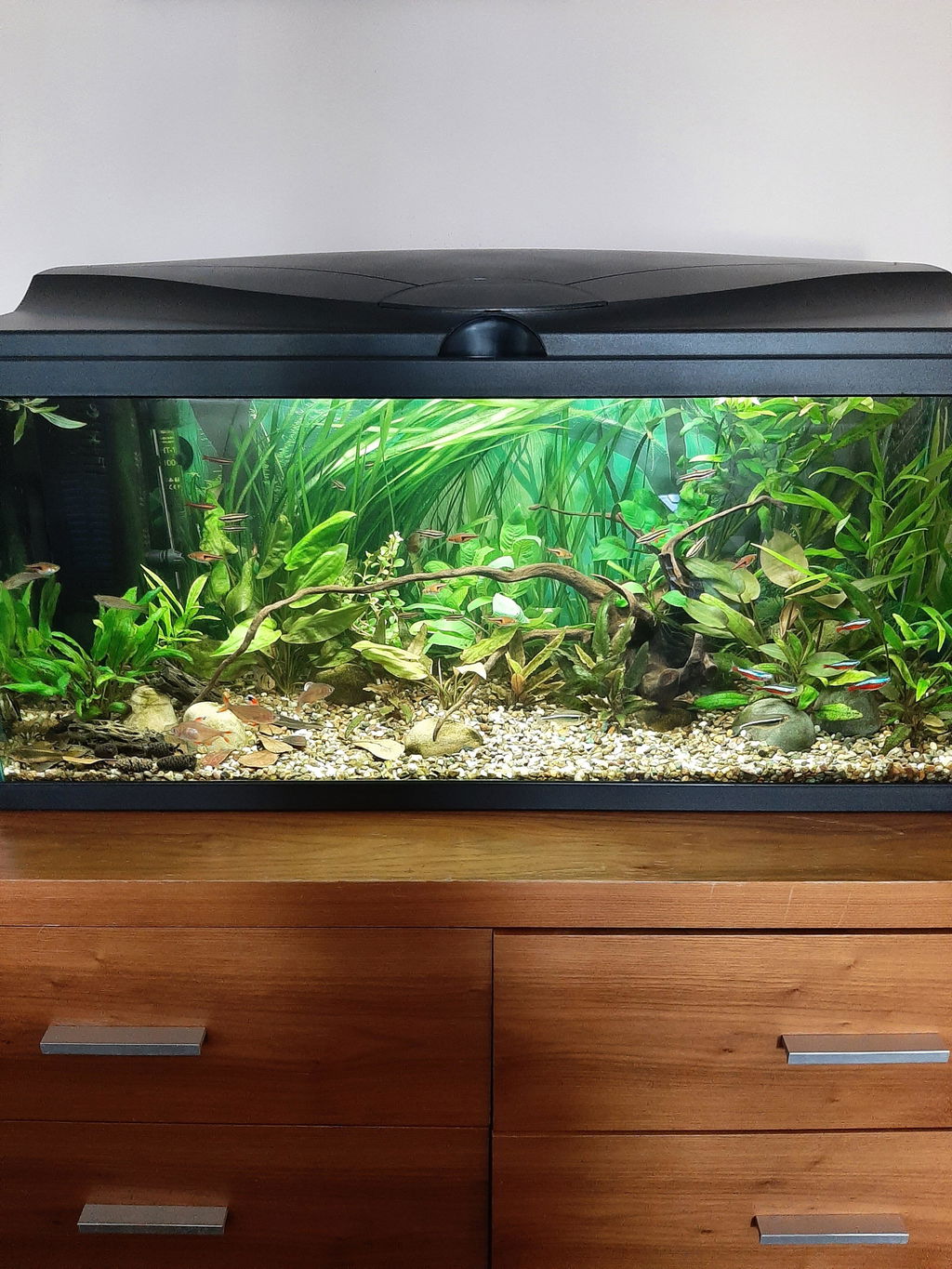


Knowing how to cycle a fish tank is the single most important skill for any new aquarium owner. You have set up the tank, planted it and the water is clear — so why can’t the fish go in yet? Because a new tank has no beneficial bacteria to deal with waste, and cycling is how you build that biological engine. Here is how to do it, with a planted-tank twist.
What Cycling a Fish Tank Actually Means
Fish, food and decaying plant matter all produce ammonia, which is toxic even in small amounts. Over time, two groups of bacteria colonise your filter media, substrate and hardscape: one converts ammonia into nitrite, the other converts nitrite into nitrate. Nitrate is far less harmful and is used by your plants as food. A tank is “cycled” when those colonies are large enough to process ammonia and nitrite as fast as they appear.
Planted tanks have a head start, because plants absorb ammonia directly. That does not mean you can skip the process, though. Plants help buffer the cycle, but a fully stocked tank can still overwhelm them, especially in the first few weeks while roots establish.
Why a Fishless Cycle Is Kinder
Cycling with fish in the tank means they sit in ammonia-laced water while the bacteria catch up. A fishless cycle avoids that entirely: you add an ammonia source, wait for the bacteria to multiply, and only introduce livestock once the tank can cope. It takes patience, but it is the approach we recommend.
Setting Up for a Planted Cycle
Start with your planted tank substrate and hardscape in place, fill the tank with dechlorinated water and switch the filter on. Run it continuously from day one — bacteria need a steady flow of oxygenated water to survive. Keep the lights on a modest photoperiod of around six hours to discourage early algae.
Plant heavily at the start. Fast-growing stem plants are brilliant for soaking up nutrients, but even hardy, slower plants help. The Cryptocoryne wendtii Brown is a tough, forgiving choice, and the Java fern can be attached to wood or rock and left to settle without fuss. If you are after more ideas, our beginner aquarium plants are all easy to grow without CO2.

Cryptocoryne wendtii Brown — hardy and happy in low light

Java fern — attach it to wood or rock rather than burying the rhizome
From Aqua Essentials
Starting a new tank? Our beginner plants are hardy, low-light and happy to settle in while your filter matures.
Shop beginner plants →Feeding the Cycle and Testing Progress
You need a source of ammonia to feed the bacteria. Options include pure liquid ammonia (with no additives, perfumes or surfactants), a few pinches of fish food left to decay, or a piece of raw prawn in a mesh bag. Aim for roughly 2 ppm of ammonia if you are using a bottled source. Do not overdo it, as too much ammonia can stall the bacteria.
Helping the Cycle Along
A new filter is the slowest part of the process, so many hobbyists use a conditioner to give it a push. Easy-Life Filter Medium is a natural product that Easy-Life says boosts biological activity in the tank and helps break down nitrite, which can shorten the time a new aquarium takes to mature. It is also designed to stabilise water quality and support plant growth, so it earns its place in a planted tank long after the cycle is done. It does not replace testing or patience, but it is a sensible addition to a new set-up.

Easy-Life Filter Medium — a natural boost for a new filter
Testing Your Water
Test your water every few days so you can see where the cycle has got to. A dip-stick kit such as the Colombo 7 in 1 Test Kit is quick and handy: dip, wait a minute and compare the colours. It covers nitrite and nitrate (the two readings that tell you how far along the cycle is) plus pH, KH, GH and chlorine, with 50 tests in the pack. It does not measure ammonia, so you will want a separate ammonia test as well, particularly in the first couple of weeks.

Colombo 7 in 1 Test Kit — 50 dip tests for nitrite, nitrate, pH and more
Typically you will see ammonia rise first, then fall as nitrite appears, and finally nitrite drops as nitrate climbs. Expect the whole process to take four to eight weeks, though it can be quicker with seeded filter media from an established, healthy tank.
Your cycling checklist
Test kit to track nitrite and nitrate, Easy-Life Filter Medium to support the filter, and hardy plants to soak up nutrients while it all settles.
Shop the test kit →Shop Filter Medium →How to Know Your Tank Is Cycled
Your tank is cycled when you can dose ammonia and see both ammonia and nitrite read zero within 24 hours, with nitrate present. At that point, do a large water change to bring nitrate down to a sensible level before adding fish.
Common Cycling Mistakes to Avoid
The most frequent error is rushing. Adding a full stock of fish after a week is the quickest way to a crash. Add livestock gradually, a few at a time, so the bacteria can keep up with the growing bioload.
Another is over-cleaning. Never rinse filter media under the tap, as chlorine kills bacteria; swish it in old tank water instead. Keep up with small, regular water changes using a good Superfish siphon, and keep an eye on nutrients — new tanks are prone to early algae, especially if you dose fertilisers too generously before the plants are growing. If algae does appear, patience and balance usually beat chemicals.
Cycling is the quiet, unglamorous part of the hobby, but it is what separates a tank that thrives from one that struggles. Take your time, test often and let your plants do some of the heavy lifting. When you are ready to plant up, you will find everything you need at aquaessentials.co.uk.